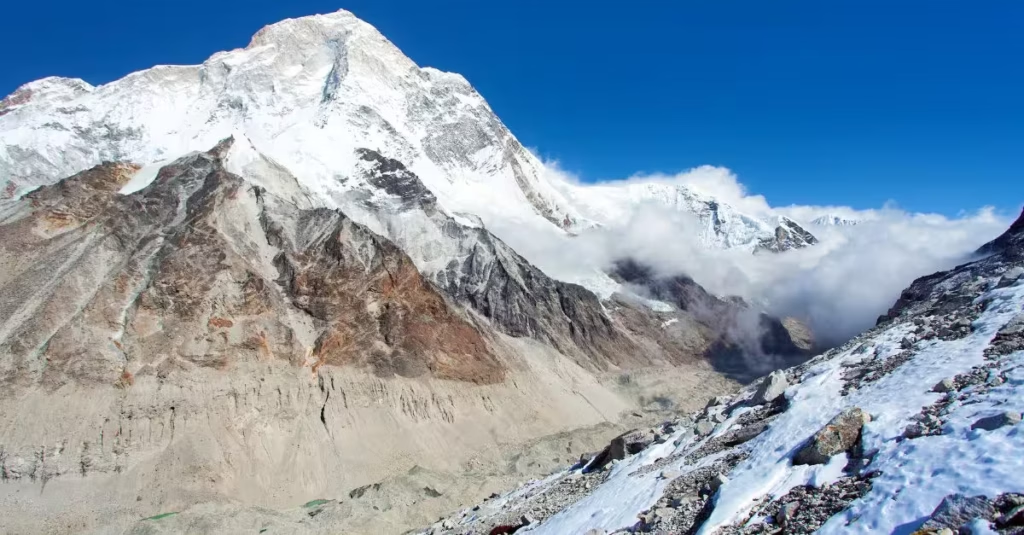

In the high valleys of the Khumbu, above 4,700 meters, a glacial lake can appear an intense blue that contrasts with the grey moraines and rock faces. Under a clear autumn sky, the water of Gokyo Cho, fed by the Ngozumpa, sometimes takes on a milky turquoise tint that seems almost artificial. This phenomenon is neither an optical illusion nor a simple reflection of the sky. It results from a precise physical process linked to glacial erosion and the way light interacts with water laden with mineral particles.
Three main shades are generally distinguished. Deep blue appears when the water is relatively clear and deep: red light is absorbed over a long distance, allowing blue wavelengths to dominate. Turquoise, which is brighter and more opaque, occurs when fine particles remain in suspension. Milky green or greyish often corresponds to a higher sediment load, which scatters more green light while opacifying the water. These variations are not fixed. They change depending on sediment concentration, depth, the angle of the sun, and the season.
In Nepal, these colors are particularly visible in basins fed by large glaciers: the Gokyo lake chain in the Khumbu, Lake Tilicho in the Annapurna massif, waters originating from the Langtang glaciers, or even certain bodies of water formed at the front of retreating glaciers such as Imja Tsho. None of these sites exhibit a constant color. The same lake can shift from deep blue to turquoise depending on the conditions of the day and the melting period.
The real scientific explanation: glacial flour
Himalayan glaciers do not simply melt. Under their own weight, they move slowly and grind the underlying rock. This mechanical abrasion process produces extremely fine mineral particles, about the size of silt or clay, called glacial flour or rock flour. These grains, often composed of quartz, feldspar, and other minerals from the Himalayan substrate, are so small that they remain suspended in meltwater for a long time rather than quickly settling to the bottom.
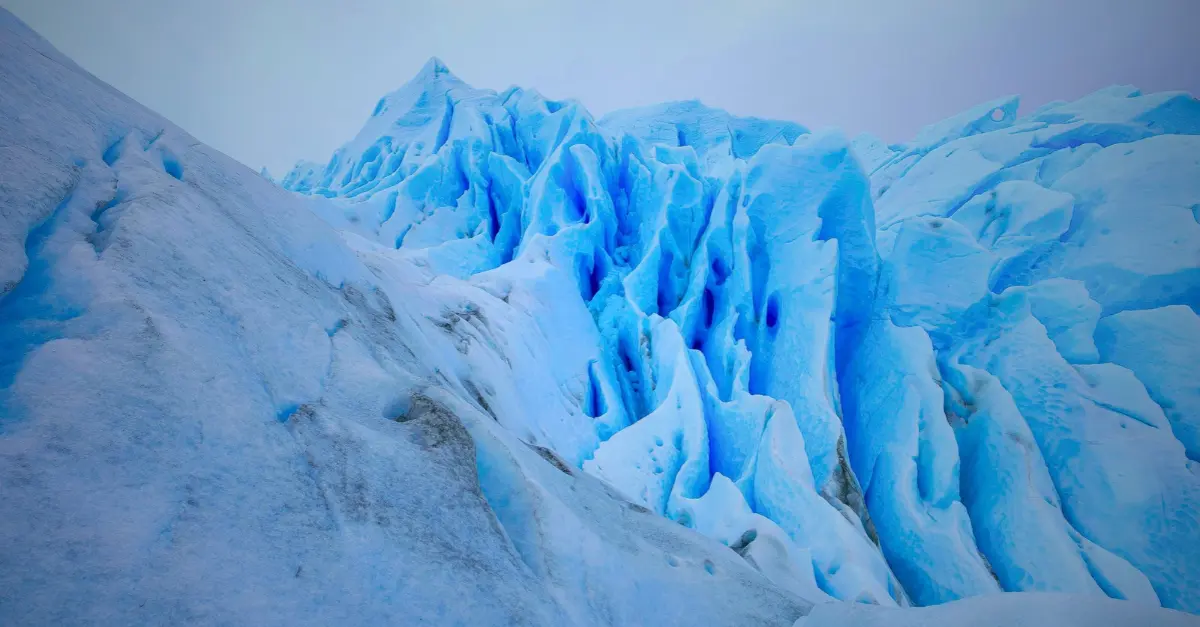
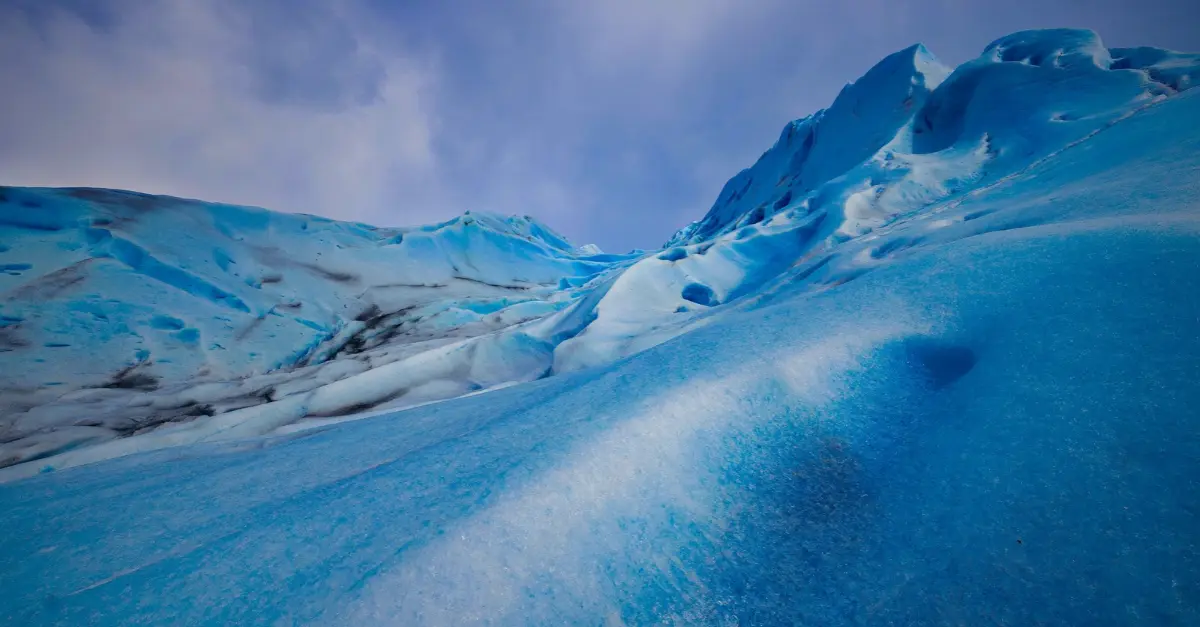
When this laden water joins a lake or watercourse, the particles act as light-scattering centers. The phenomenon combines two effects. On the one hand, pure water preferentially absorbs long wavelengths (red, orange, yellow) and transmits more blue; this is why a very deep and clear lake appears blue. On the other hand, glacial flour particles efficiently scatter short wavelengths, notably blue and green, while contributing to the absorption of reds. The result is often a characteristic turquoise, more opaque and saturated than the blue of perfectly clear water.
This scattering is not a chemical coloration. The particles do not “tint” the water in a pigmentary sense; they modify how light is reflected back to the observer. Satellite observations and field studies on high-altitude glacial lakes confirm that the presence of this suspended matter is the dominant factor in the turquoise hue of many Himalayan basins. When the concentration is low, the blue linked to pure water absorption dominates. When it increases, scattering reinforces the turquoise. Excessive loading can make the water look greyish or milky because too many particles scatter light in all directions and reduce transparency.
Why does the water sometimes appear turquoise or milky green?
Particle concentration is the primary parameter. A moderate load produces the most vibrant turquoise because the grains remain in the photic zone and efficiently reflect blue-green. A low load reveals the deeper blue linked to the selective absorption of pure water. A very high load opacifies the water and turns it grey-green or milky white, an aspect often called “glacial milk”.
Depth also plays a role. In a shallow lake, light does not have time to be heavily absorbed in the red; the color depends more on particle scattering. In a deeper lake, pure water absorption reinforces the blue, even in the presence of glacial flour. The observation angle and sun position further modify perception: at dawn or dusk, low light can accentuate contrasts or make the water darker; at midday, under a high sun, turquoise shades are often more saturated. Cloud cover dampens the effect by reducing intensity and altering the incident spectrum.
Three situations must therefore be distinguished. Clear, deep water appears blue mainly through selective absorption. Water loaded with coarse sediment is rather turbid and brown or grey. Glacial water containing fine flour in suspension produces the characteristic turquoise through the scattering of short wavelengths combined with the absorption of long ones. This mechanism explains why certain Himalayan lakes appear almost unreal while others, although fed by glaciers, remain a more discreet blue or temporarily turn milky.
Nepal’s most beautiful glacial landscapes
The Gokyo Lakes
In the Gokyo Valley, parallel to the Khumbu Valley, a chain of glacial lakes stretches between approximately 4,710 and 4,950 meters in altitude. They are mainly fed by meltwaters from the Ngozumpa, often described as Nepal’s longest glacier (around 36 km according to various sources). The site was designated a Ramsar site in 2007. Gokyo Cho, also called Dudh Pokhari, is located near the village of Gokyo, at around 4,730-4,790 meters according to surveys.
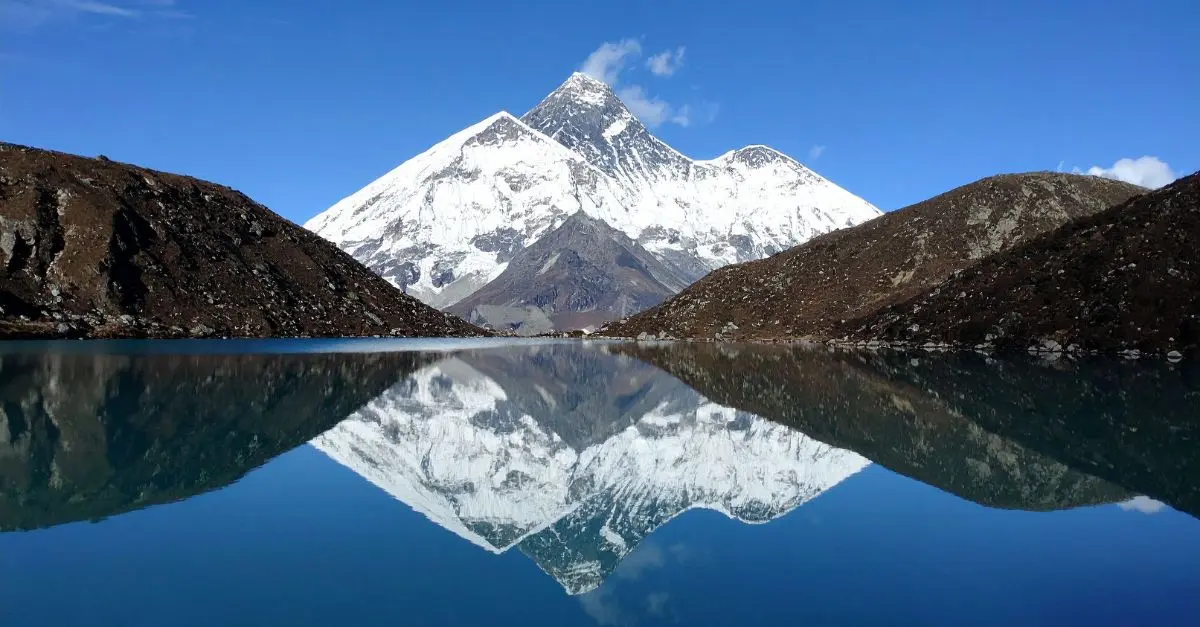
Its water frequently appears turquoise or milky blue due to suspended glacial flour, but the hue varies significantly with light and season. In autumn, after a period of low sediment input, the blue may be deeper; in spring or during active melting periods, turquoise or milky green sometimes dominates. Higher lakes, such as Thonak Cho or Ngozumpa Cho, offer similar variations in an even more mineral environment, framed by the glacier and the peaks of the massif.
Lake Imja
Imja Tsho is located in the Khumbu, at about 5,004-5,010 meters altitude, at the foot of the Imja and Lhotse Shar glaciers. It formed during the 1950s-1960s when meltwaters accumulated behind a terminal moraine. It is one of the fastest-expanding glacial lakes in the Himalayas.
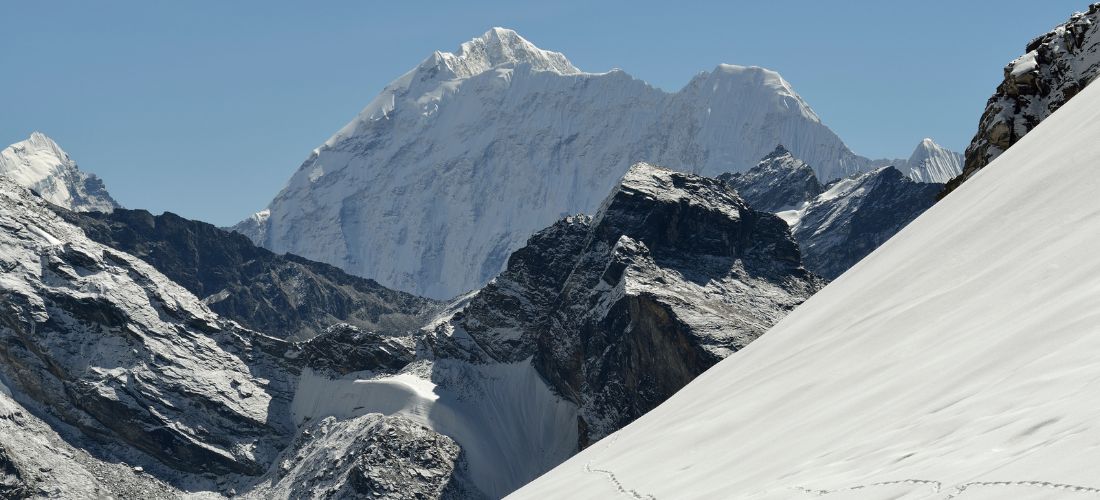
Its appearance is often greener or milkier than that of the Gokyo lakes, due to a high sediment load and its location in direct contact with retreating glacier fronts. The color is not uniform and can change according to melting inputs and observation conditions. The lake underwent a controlled drainage operation in 2016 to lower its level and reduce the risk of overflowing.
Lake Tilicho
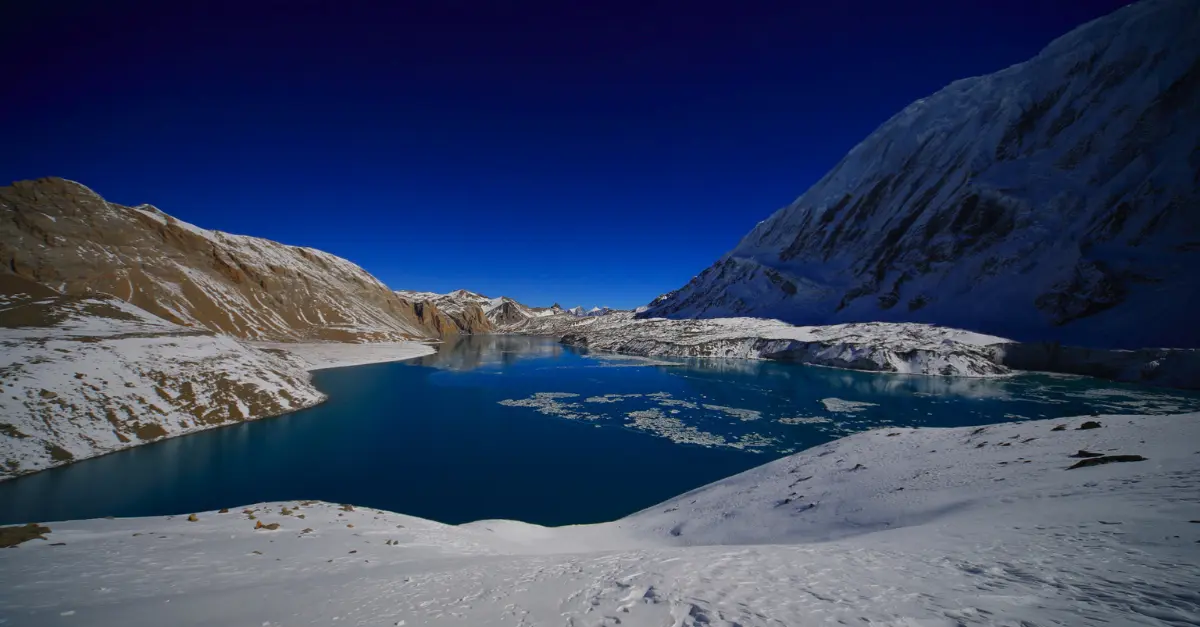
In the Annapurna massif, Lake Tilicho is located at 4,919 meters (some sources indicate around 4,949 meters). It is a large glacial body of water, about 4 km long, in a desert alpine environment north of the main range. Its water often appears intensely blue or turquoise under a clear sky, but it can also be partially frozen or ice-covered depending on the season. The presence of glacial flour from surrounding glaciers contributes to the bluish hues, while the depth and relative clarity of the water reinforce the blue. Access is from Manang, and the lake is known for its significant visual changes between morning and afternoon.
Glacial landscapes of the Khumbu and Langtang
In the Khumbu, beyond the sites already mentioned, waters originating from the Khumbu glacier and other glacial tongues often exhibit milky hues in torrents and small water bodies formed on or downstream from moraines. In the Langtang region, Lake Gosaikunda (about 4,380 meters) and other high-altitude water bodies show blue or blue-green shades. The torrents of the upper valley, fed by the glaciers of Langtang Lirung and other massifs, regularly transport glacial flour, giving a turquoise appearance to white waters. As everywhere, these colors are not permanent and depend on melt inputs and sedimentation.
The role of seasons in lake color
Before the monsoon, in spring, snowmelt and the onset of glacial melt increase discharge and sediment transport. Lakes and rivers can then appear milkier or turquoise. During the monsoon, rains bring additional sediments from the slopes and can temporarily alter the color by making it more turbid or greenish. After the monsoon, in autumn, inputs often decrease; some of the fine particles settle, and certain lakes regain clearer water and a deeper blue, especially in sunny weather.
The glacial melt itself varies. A warm period increases the volume of water laden with flour. In winter, freezing reduces flows and some lakes partially cover with ice, which radically changes their appearance. Throughout the same day, morning can offer more saturated colors under low light, while midday, with a higher sun, often intensifies the turquoise. In late afternoon, shadows and declining light attenuate the hues.
Is spectacular water necessarily safe to drink?
The pure or turquoise appearance of glacial water does not guarantee potability. Glacial flour particles themselves are generally non-pathogenic, but they can come from areas where animals or humans circulate. On trekking routes in Nepal, watercourses and lakes are exposed to microbiological contamination (bacteria, protozoa such as Giardia) originating from yak pastures, campsites, or upstream villages. Even at high altitude, clear water can contain pathogens.
Trekkers must therefore filter, boil, or chemically treat all water intended for consumption, including water that appears to come directly from a glacier. Filtration systems adapted to fine sediments, tablets, or UV devices are commonly used. Boiled water in lodges is a frequent option. It is also prudent to let water heavily loaded with sediments settle before filtration to avoid clogging filters. These precautions apply equally in the Khumbu, Annapurna, and Langtang regions.
Climate change is transforming Nepal’s glacial landscapes
Himalayan glaciers are retreating and thinning. ICIMOD reports indicate that the Hindu Kush-Himalayan region lost about 12% of its glacier area between 1990 and 2020, and that the rate of ice loss has approximately doubled since 2000 compared to the late 20th century. In Nepal, this trend translates into the expansion of numerous glacial lakes. Inventories have identified more than 2,000 glacial lakes in the country, several dozen of which are considered potentially dangerous due to the risk of overflowing or moraine dam breaches (GLOF).
The example of Imja Tsho illustrates this dynamic: formed recently, it has expanded rapidly. Other lakes, such as Tsho Rolpa or those linked to the Ngozumpa, are monitored. Past events, such as the breach of Dig Tsho in 1985, caused damage downstream.
Scientific projections indicate a continuation of glacier retreat and a potential increase in GLOF risks in the coming decades, with consequences for valley populations, infrastructure, and trekking routes. It is important to distinguish documented observations (measured retreat, lake expansion, past events) from future scenarios, which depend on climatic pathways.
These transformations also modify sedimentary inputs and potentially the intensity and frequency of observed turquoise colors. A rapidly retreating glacier can temporarily release more flour before melt volumes decrease in the longer term.
Observing glacial waters without damaging the environment
The banks of glacial lakes are fragile environments. Walking off established trails, camping too close to the water, or leaving waste can accelerate erosion and introduce contaminants. Photographers and trekkers are encouraged to stay on marked paths, pack out their trash, and avoid any pollution of the water bodies. In high-altitude areas, alpine vegetation and soils are particularly sensitive to trampling.
Near potentially unstable lakes, such as certain water bodies in the Khumbu, local authorities’ and guides’ recommendations regarding safety distances and viewing areas should be respected. Lodge water resource management and the use of treatment systems reduce pressure on natural sources. These practices help preserve both ecosystems and the visual quality of the landscapes.
The blue of glaciers, a natural wonder to understand
The blue and turquoise of Nepal’s glacial waters are not merely an aesthetic effect. They result from the interaction between mechanical glacial abrasion, the suspension of ultrafine mineral particles, and the optical properties of light in water. Understanding this mechanism allows for a more precise appreciation of the landscapes of the Khumbu, Annapurna, and Langtang while measuring their fragility.
These spectacular colors are tied to transforming glaciers. The documented retreat of Himalayan ice masses, lake expansion, and associated risks remind us that these environments are changing rapidly. Observing the turquoise water of a Gokyo lake or the blue of Tilicho also means witnessing the geological and climatic processes that shape—and sometimes threaten—these high-altitude environments.
Knowledge of physical phenomena and ongoing dynamics offers a more complete reading of these landscapes, beyond their immediate appearance.