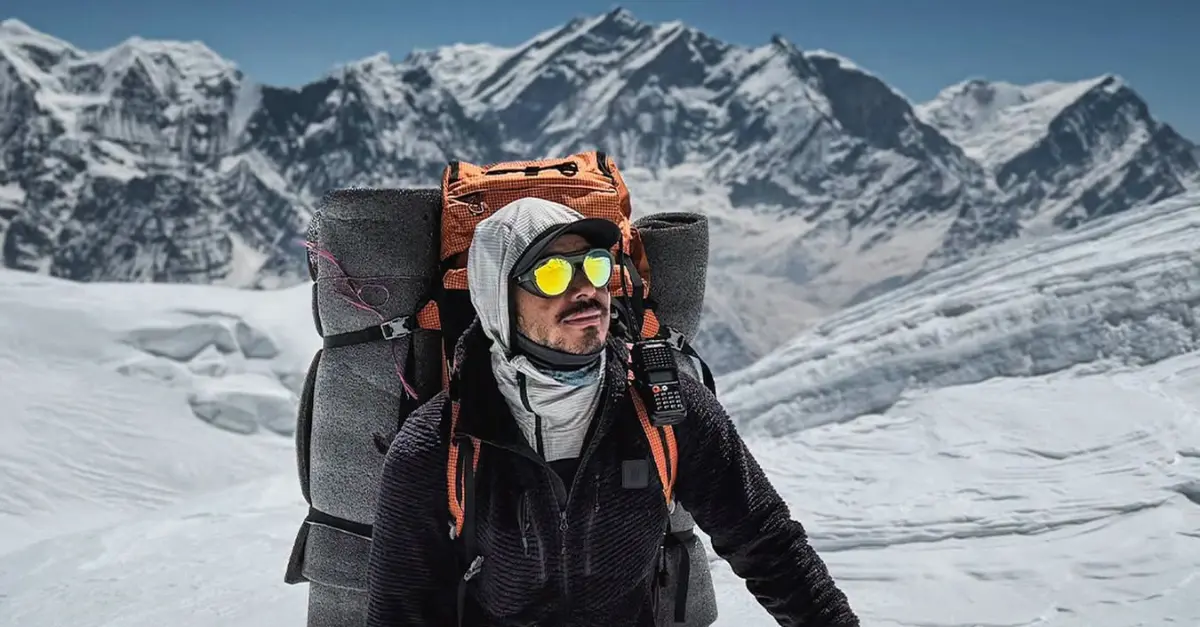
Makalu alpine style is back in the Himalayan spotlight this autumn 2026. Two Russian climbers, Denis Aleksenko and Artem Tsentsevitsky, are heading back to the world’s fifth highest peak, but this time with a completely different approach than last year. No more fixed ropes on the exposed sections: this attempt will be light, fast, and without any outside assistance or supplemental oxygen. On a mountain as unforgiving as Makalu, that choice borders on a genuine gamble.
I always pay close attention to expeditions like this one, because they tell us something deeper than a simple race to the top. They reveal where Himalayan mountaineering actually stands today, caught between runaway commercialization and a quiet return to a purer philosophy of climbing. The Russian duo clearly belongs to the second category, and their journey is worth following closely.
These are not newcomers to high-altitude climbing. Both men come from a small-team climbing culture, inherited from a Russian school that has always valued personal commitment over heavy logistics. Their first attempt on Makalu, the previous year, already set the tone: near-total self-sufficiency, no high-altitude porters beyond base camp, and a fully assumed approach to risk management all the way through.
On social media, they summed up their philosophy without hesitation: “This year we have radically changed our climbing strategy, and we are preparing to climb Makalu in alpine style.” A short sentence, but one that says a lot about the ambition behind this project.
A school of mountaineering that refuses shortcuts
What stands out about these two climbers is their consistent refusal of logistical shortcuts. Many current expeditions on Nepal’s 8000-meter peaks rely on Sherpa teams who fix the route in advance, install ropes from base camp all the way to the summit, and carry gear through organized load-ferrying. Aleksenko and Tsentsevitsky have chosen the opposite path, one closer to the original spirit of Himalayan mountaineering before the explosion of high-altitude tourism.
Looking back at last year’s turnaround, or rather, lesson learned
Their first attempt was far from a casual trial run. Last year, the duo opted for a traditional method, fixing a few rope lengths at the most technical passages. For the rest of the climb, they were entirely on their own on the mountain, a fairly common situation in autumn, a season much quieter than spring on this side of Nepal.
Conditions gave them no favors. They had to break their own trail through deep, unstable snow, going up and down repeatedly to secure their progress and acclimatize properly. On their final push that season, they reached roughly 7,700 meters before turning back, just under 800 meters short of the summit. A tough call, but a clear-headed one, showing a kind of risk management that’s actually rare in a world where the pressure to perform often pushes climbers to push on past reasonable limits.
It’s precisely that accumulated experience that seems to have shaped their new strategy. Rather than repeating the same approach and hoping for a different outcome, they rebuilt their plan from the ground up.
Why alpine style changes absolutely everything on an 8000-meter peak
For anyone outside the world of mountaineering, the difference between a traditional expedition and alpine style might sound like a minor detail. It isn’t. The so-called traditional, or Himalayan-style expedition relies on progressively installed fixed camps linked by ropes, with repeated back-and-forth trips to acclimatize the body and move gear up the mountain. It’s safer, slower, but also far heavier in terms of logistics.
Alpine style flips that logic entirely. Climbers move in a single continuous push, without retreating, carrying their own gear, generally without fixed ropes or supplemental oxygen. This is the method that built the legend of figures like Reinhold Messner, and more recently climbers like Ueli Steck. It demands flawless physical condition, near-perfect weather reading, and a much higher tolerance for risk, since there’s essentially no safety net if things go wrong at high altitude.
The protocols to follow before the final push
Staying true to this demanding discipline, Aleksenko and Tsentsevitsky didn’t simply jump straight onto Makalu. They’re following a strict acclimatization protocol, an absolute requirement for anyone hoping to attempt an 8000-meter peak without oxygen and without multiple rotations. In practical terms, that means:
gradually acclimatizing on another Himalayan giant before the final objective
keeping time spent at high altitude to a strict minimum to preserve the body
watching weather windows extremely closely, since a single attempt has to succeed
cutting gear weight down to the bare essentials
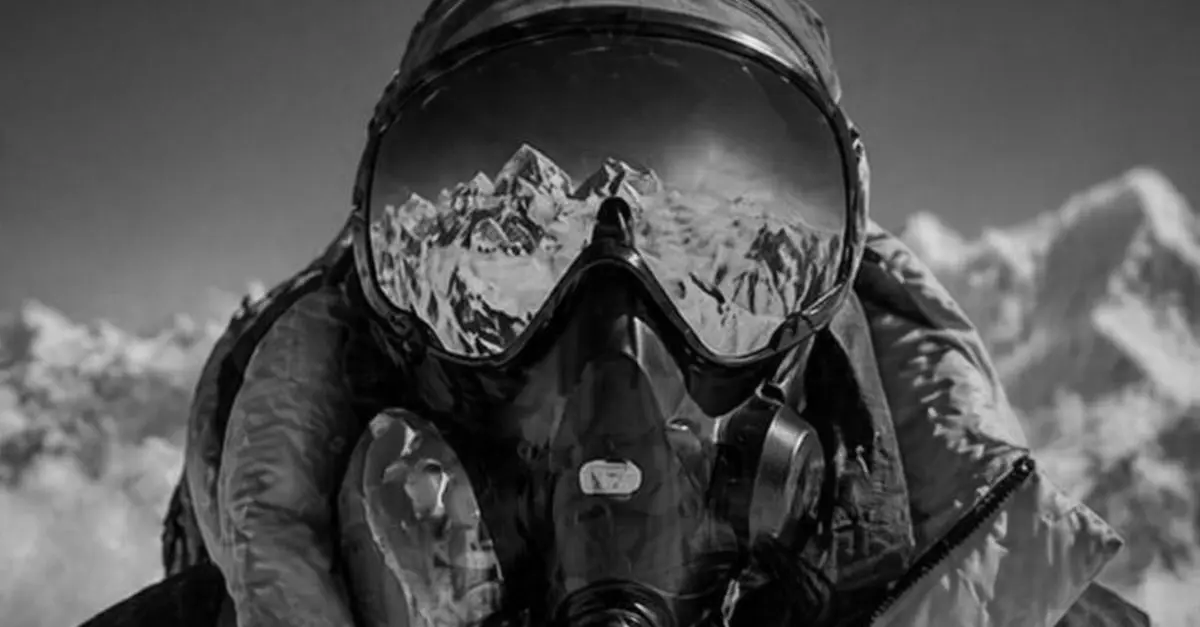
forgoing any supplemental oxygen during the summit push
That checklist looks simple on paper, but it demands iron discipline in the field, where every gram matters and the smallest misjudgment can prove costly.
Acclimatizing on Manaslu, a strategic move
To prepare their bodies for altitude without exhausting themselves on Makalu itself, the two Russians chose to acclimatize on Manaslu, which stands at 8,163 meters. They flew into Samagaon earlier this week, leading a small climbing team, and are currently at base camp.
That choice is far from random. Manaslu is regularly used by top-level climbers as a stepping stone before a more demanding objective, since it allows the body to work at altitudes close to those it will later face, without burning the energy needed for the final ascent of the main target. It’s a strategy commonly seen among climbers aiming for fast ascents or linked climbs on the world’s highest peaks.
Once this phase wraps up, the duo will descend to rest before shifting their focus to Makalu, for the final attempt, one that has to be a single, uninterrupted push, with no turning back.
Makalu, a peak apart among Nepal’s giants
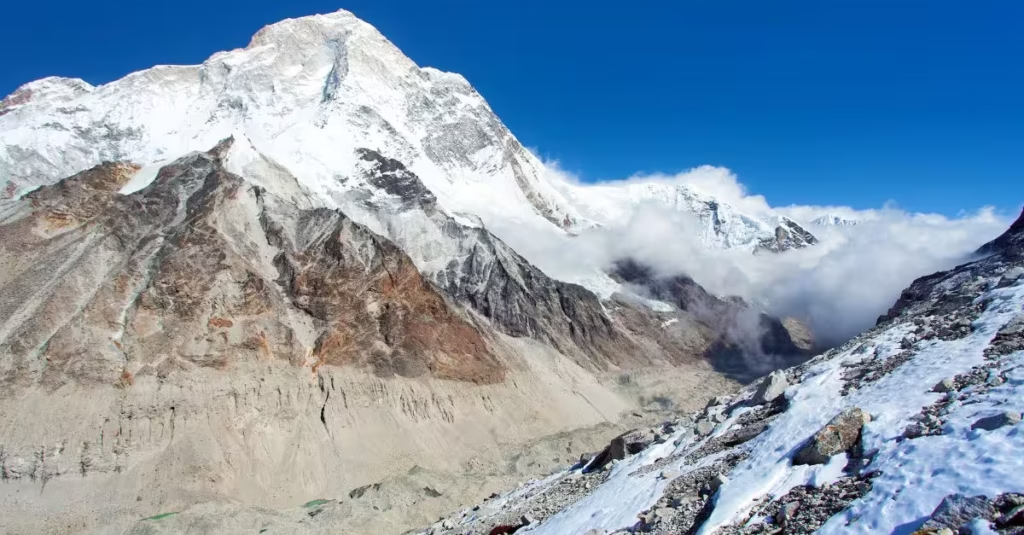
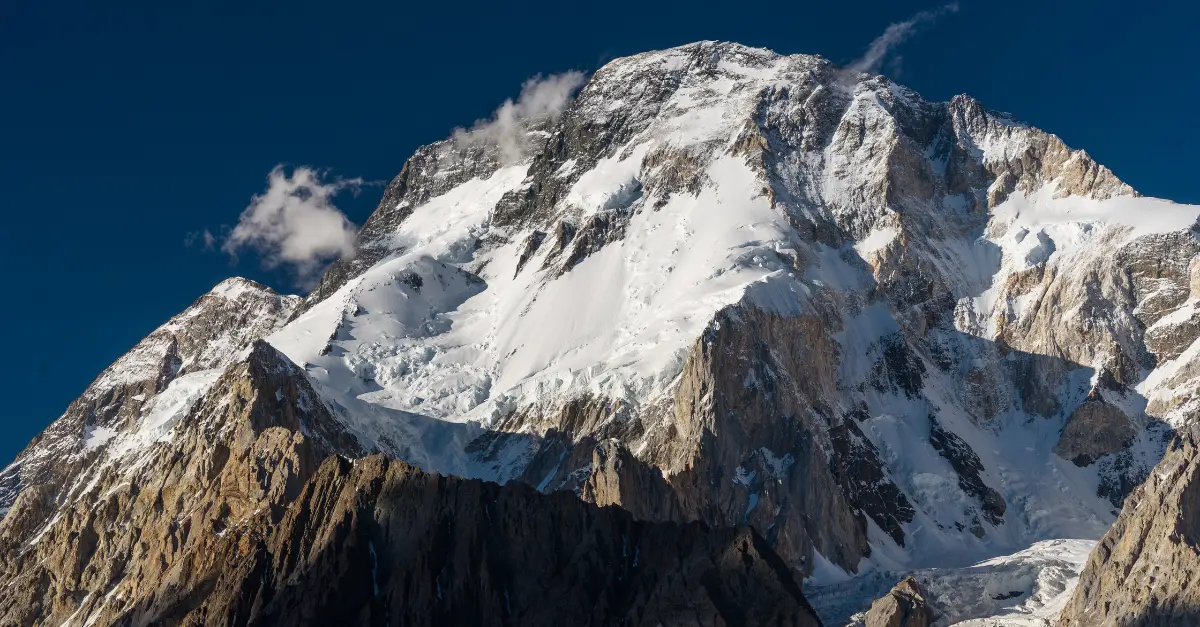
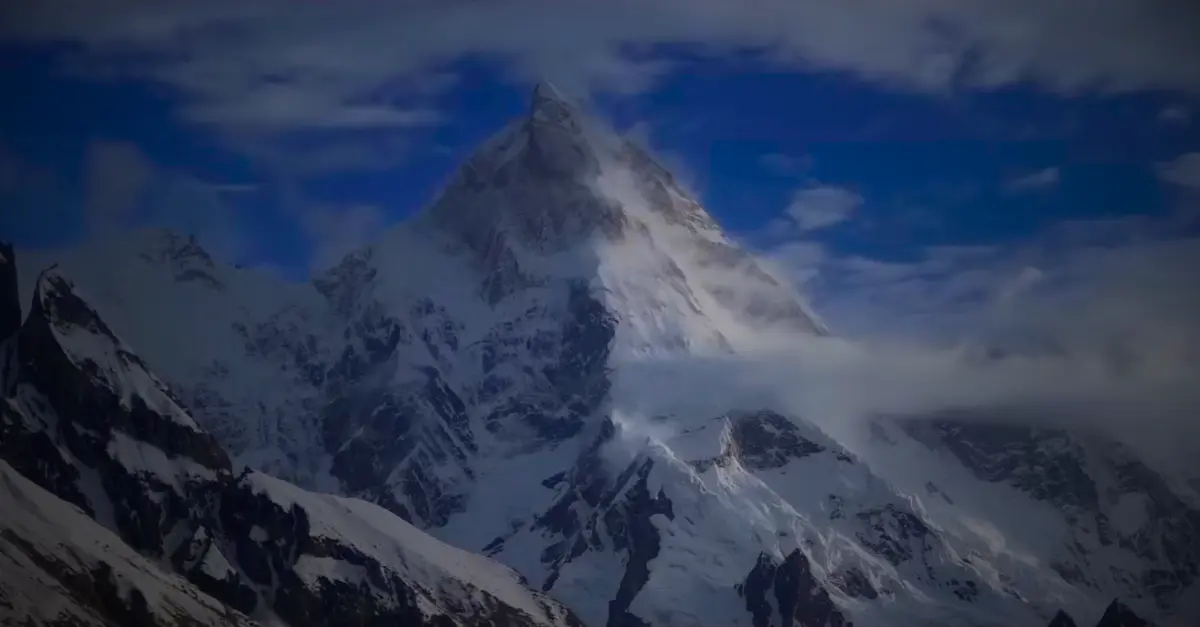
Standing at 8,463 meters, Makalu ranks fifth in the world by height, but it stands out mostly for its shape: a sharp, slender pyramid with knife-edge ridges that leave little room for error. Unlike Everest or Manaslu, whose traffic has exploded in recent years, Makalu remains a relatively quiet mountain, especially in autumn.
That low traffic has a direct downside for an alpine-style expedition: no other teams means no pre-broken trail, no ropes already fixed by others, and no camps already set up to fall back on if needed. That’s exactly the point that stands as the main challenge of the Russian project right now.
Alone on the mountain, a real logistical puzzle
The paradox is almost cruel: for an alpine-style ascent to retain its full sporting meaning, ideally no other expedition should have already fixed the route beforehand. But in practice, the total absence of other teams also makes the task considerably harder, since there’s simply no one else to break trail through fresh snow or to secure the trickiest sections.
Some local operators have announced Makalu expeditions for this autumn, but as things stand, only the two Russians currently hold a permit to climb this 8,463-meter peak. Barring a last-minute change, they’ll be completely alone on the mountain, unable to rely on anyone else’s groundwork or count on outside help if something goes wrong.
My take on this bold gamble
I’ve followed several alpine-style expeditions over recent seasons, and I have to say this project really resonates with me. What strikes me most is the coherence of the approach: rather than rushing into repeated attempts, Aleksenko and Tsentsevitsky took the time to analyze last year’s setback, draw real lessons from it, and rebuild an entire strategy around that experience.
I fully back their decision to acclimatize on Manaslu rather than wear themselves out directly on Makalu’s slopes. It reflects genuine alpine maturity, far removed from the urgency that sometimes pushes climbers to skip steps just to save a few days. That said, I remain cautious about the outcome: being completely alone on the mountain is a double-edged sword. It guarantees the purity of the style, but it also removes any safety net in case of a sudden storm or an altitude injury, a scenario that’s unfortunately common on less-frequented 8000-meter peaks.
What this means for the autumn 2026 season on Nepal’s 8000ers
Beyond the personal outcome for these two climbers, this attempt says something bigger about where Himalayan mountaineering is heading. Over the past several seasons, there’s been a renewed interest in small-team, oxygen-free ascents, far from the commercial model that now dominates Everest or Annapurna in spring. Makalu, with its technical difficulty and quiet autumn season, stands out as prime terrain for this kind of project.
If the Russian duo pulls it off, it will be one of the very few true alpine-style ascents completed on this peak in recent years, and a strong signal to an entire generation of climbers still searching for a mountaineering built on commitment rather than numbers. On the other hand, another failed attempt wouldn’t undermine the value of their approach at all: on Makalu, turning back at the right moment is often the smartest decision a climber can make.
FAQ
What does alpine style mean in high-altitude climbing? Alpine style refers to an ascent completed in a single continuous push, without pre-fixed ropes, generally without supplemental oxygen, and with minimal gear carried by the climbers themselves, as opposed to the traditional method, which relies on multiple camps and repeated rotations.
Why is Makalu considered such a difficult peak? At 8,463 meters with a sharp, pyramid-like shape and highly exposed ridgelines, Makalu offers very little easy ground. Its limited traffic, especially in autumn, also means routes aren’t prepared by other teams, which significantly raises the level of commitment required from climbers.
Why are the Russians acclimatizing on Manaslu before Makalu? Manaslu, at 8,163 meters, serves as an acclimatization platform ahead of the main objective. It lets the body adjust to altitude without using up the physical energy needed for the final ascent, a strategy commonly used by climbers aiming for an alpine-style performance.
When will the final Makalu attempt take place? No exact date has been announced. The duo must first finish acclimatizing on Manaslu before shifting to Makalu, where the final attempt will mainly depend on the weather windows available late in the autumn season.
Passionate about trekking, hiking, and the wilderness, I share my outdoor adventures across mountains, trails, and wide-open landscapes. Between exploration, travel, and pushing my limits, I experience every expedition as a new discovery of the natural world.