Broad Peak: seven decades of death on the world’s 12th highest mountain
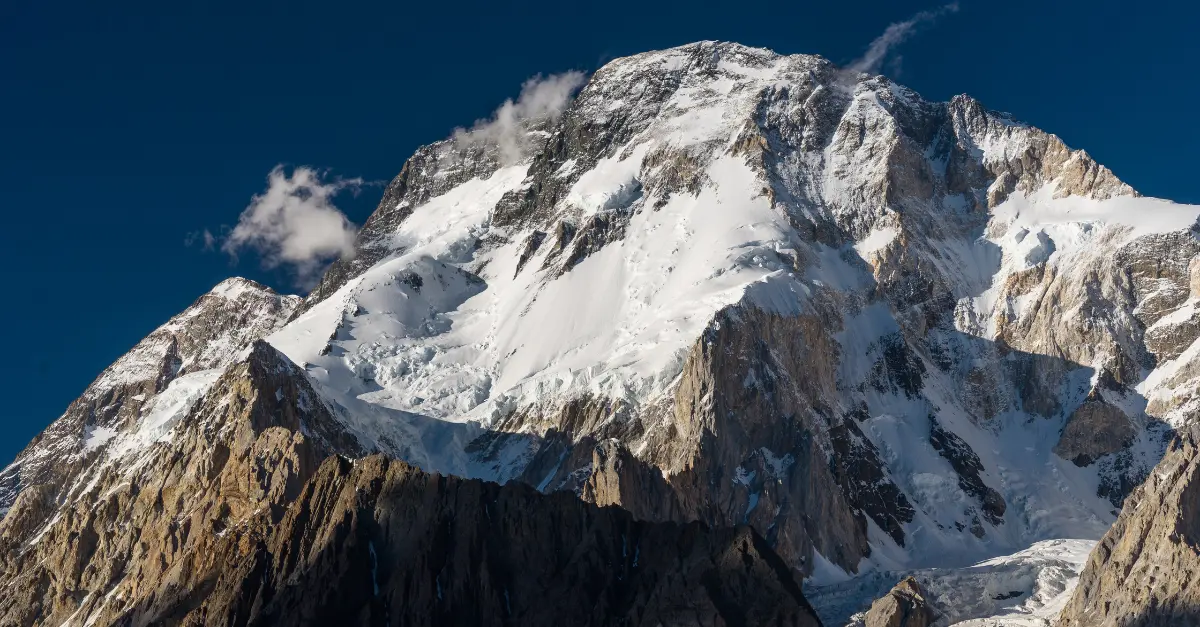
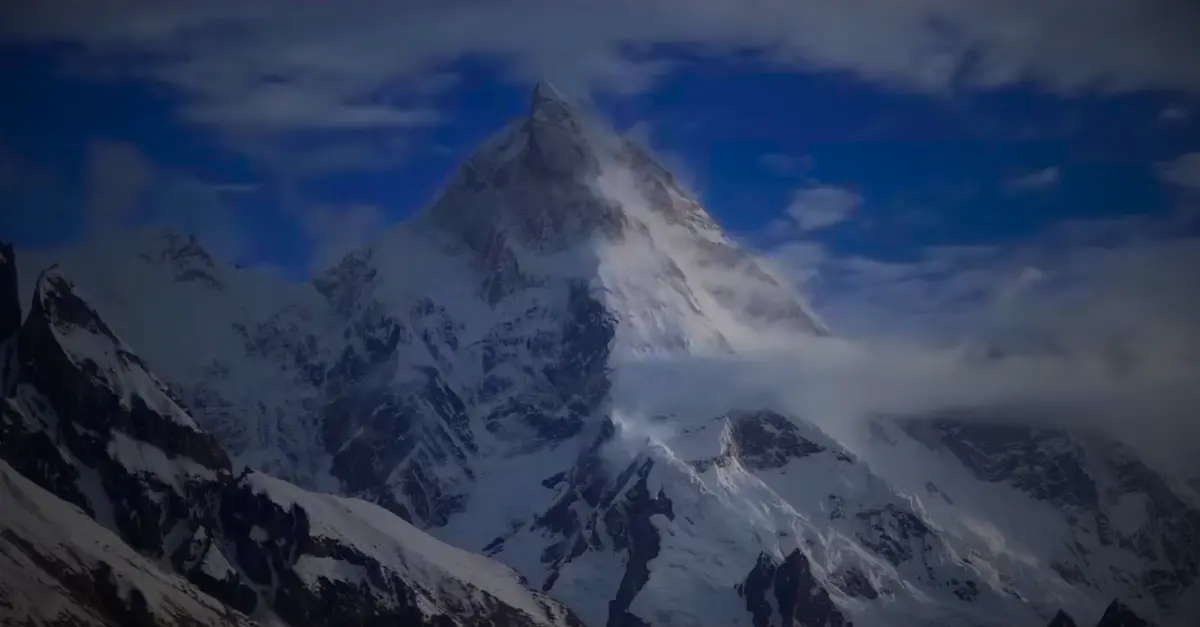
**Broad Peak** has once again plunged the Himalayan climbing community into mourning. Last week’s avalanche, which claimed the lives of ten climbers, now stands as the deadliest disaster ever recorded on this Karakoram peak. But this tragedy is sadly just the latest chapter in a long history that has been written across its slopes for nearly seven decades.
I’m one of those who follows Himalayan news closely, between my own expeditions, and I’ll admit this peak has always fascinated me as much as it has unsettled me. Rising to 8,051 meters, Broad Peak sits on the border between Pakistan and China, and it has drawn climbers ever since its first ascent in 1957. Its normal route, which follows the west spur from the Godwin-Austen Glacier before joining an endless, exposed summit ridge, has seen generations of mountaineers pass through. Some came back changed for the better. Others never came back down.
In this article, I look back at the major categories of death that have marked Broad Peak’s history: avalanches, falls, exhaustion, disappearances, and a few rarer causes. Understanding these patterns also helps explain why this mountain, without being the deadliest of the 8000ers, keeps claiming its toll year after year.
A formidable but underestimated peak
What strikes you when you study Broad Peak’s history is how often it’s perceived as “accessible” compared to other 8000ers. Technically less committing than its neighbor K2, it draws a profile of climbers who are sometimes less experienced, drawn in by its reputation as a “doable” summit. My take, after spending time going through expedition reports and talking with climbers who’ve attempted it: that reputation is largely misleading.
The long summit ridge, exposed to violent winds and often swallowed in fog, forgives no lapse in judgment. It’s precisely this combination of apparent accessibility and very real objective dangers that explains the steady toll of victims recorded since 1957.
Avalanches, a constant threat
Avalanches represent one of the most feared dangers on Broad Peak, particularly on the lower and middle sections of the normal route, where slopes load up with snow and give way without warning.
History records several notable tragedies. In May 1985, Canadian climber Hans Frick lost his life in an avalanche. Three years later, in August 1988, it was South Korean Yong-il Jang’s turn. On June 16, 1997, a slide swept away American Jeffrey Ian Bubb and Japanese climber Fukuzo Yokotagawa at around 7,000 meters, as they were descending between Camp 3 and Camp 2. In July 2015, Pakistani climber Qamber Ali Jangjupa met the same fate.
These accidents most often occur while moving between camps, or while fixing ropes, where the terrain naturally channels snow and ice into narrow gullies. The zones between Camp 2 and Camp 3, as well as the areas around the high camps, have long been identified as prone to slab slides and serac collapses after storms. Even seasoned teams have been caught out there, despite conditions that seemed stable.
The recent tragedy on July 30 shows just how violent these phenomena can be: a climber can be swept **800 to 1,600 meters in barely two minutes**. At that speed and over that distance, survival is close to a miracle.
Falls, the silent enemy of the descent
While avalanches strike suddenly and dramatically, falls are the most common cause of death on Broad Peak, and the vast majority happen during the descent. It’s often after the euphoria of the summit, once fatigue sets in and focus starts to slip, that the danger is greatest.
The mountain’s very first major tragedy falls into this category. In late July 1975, a Polish expedition reached the previously unclimbed central summit of Broad Peak for the first time. But the descent turned into a nightmare: as weather conditions deteriorated and darkness fell, Bohdan Nowaczyk vanished while setting up a rappel. After a desperate overnight bivouac in the storm and extreme cold, Marek Kesicki and Andrzej Sikorski slipped on bare ice and died the following day. Of the five climbers who reached the summit, only two made it back down alive.
The following decades confirmed this grim pattern:
- Catalan climber Enric Pujol died in a fall in August 1981, shortly after completing the first Spanish ascent of the summit alongside Manuel Hernandez, who was injured but survived thanks to a radio call to base camp
- British climber Liam Scott Elliott fell in August 1986
- German climber Kurt Lyncke-Krueger died in a fall in July 1990
- South Korean climber Hyun-jae Park met the same fate in July 1995
- Italian climber Cristina Castagna, already a veteran of peaks above 8,000 meters, slipped at around 7,800 meters in July 2009 and fell into a crevasse; her body still lies on the mountain today
- Hong Kong climber Jeffrey Wai Hung Chung disappeared into a crevasse in July 2011, followed by Pakistani climber Muhammad Baqir in July 2012
- South Korean climber Kim Hong-bin, who had already lost several fingers to frostbite, suffered a fatal fall from the summit ridge in July 2021, after having reached the top
- British climber Gordon Henderson fell near the summit in July 2022
Kim Hong-bin’s story left a particular mark on the climbing community, given how intense the rescue effort led by Vitaly Lazo’s team was before ultimately proving futile. This kind of tragedy always reignites the debate over the limits of rescue at extreme altitude, where every minute counts and conditions can sometimes make any intervention impossible.
Exhaustion and altitude sickness
Above 7,500 meters, the human body enters what’s known as the “death zone.” It’s precisely in this zone that exhaustion and altitude-related illness have taken the lives of many climbers on Broad Peak.
British climber Peter Thexton died of pulmonary edema on June 29, 1983. Czech climber Bohuslav Bilek succumbed to the same condition on June 11, 1994. But the best-documented case in this category is probably that of Austrian climber Markus Kronthaler, in July 2006. A former police officer and seasoned high-altitude mountaineer, he reached the summit before collapsing from exhaustion and dehydration along the summit ridge. His partner, Sepp Bachmair, tried to save him, but couldn’t prevent his death the following morning. Kronthaler’s body remained on the mountain for a full year, until his brother Georg organized a recovery expedition at 7,900 meters — at the time, the highest-altitude body recovery ever carried out.
Other similar tragedies mark the more recent history: South Koreans Dong-keun Han, Jae-mo Yang, and Sun-taek Lim in July 1996; French climbers Pascale Bessières and Éric Escoffier in July 1998; South Korean Seung-Kwon Hur in 1999; Czech climber Zuzana Hofmannova in 2012.
2013 stands out as a particularly dark year in the mountain’s history. During the very first winter ascent of Broad Peak, Polish climbers Maciej Berbeka and Tomasz Kowalski got separated during the descent after reaching the summit in extreme cold, and never made it back to Camp 4. Four months later, three Iranian climbers partially opening a new route on the southwest face — Aidin Bozorgi, Pouya Keivan, and Mojtaba Jarahi — became disoriented on the descent, ran out of food and water after several forced bivouacs at altitude, and disappeared without a trace.
Other causes, rarer but no less real
Danger doesn’t only wait at high altitude. In August 1985, Polish climber Barbara Kozlowska drowned in a glacial torrent above base camp. German climber Dana Heide met the same fate in July 2013. More recently, in August 2024, rockfall killed Pakistani climber Murad Sadpara, while in July 2022 his compatriots Sharif Sadpara and Imran Karim also lost their lives.
These incidents are a reminder of something I always try to get across when talking about high-altitude expeditions: the danger is never confined to the summit zone. A simple glacial meltwater torrent, a rock breaking loose without warning — and tragedy can strike just a few hundred meters from the relative comfort of base camp.
A pattern repeating itself since 1957
Stepping back across nearly seventy years of history, a fairly clear pattern emerges. Most fatal accidents happen on the descent, when fatigue builds up and the long summit ridge leaves no room for error. Avalanches strike the lower and middle sections with sudden violence, as tragically seen last week. Falls take those who lose their footing on bare ice or fragile cornices. Exhaustion and altitude sickness finish off climbers who have only just reached their dream. And disappearances are often tied to sudden storms or navigation errors in an environment where every visual landmark can vanish within minutes.
Broad Peak has never been the deadliest of the 8000ers, unlike Annapurna or K2 in terms of fatality rate. But its relative accessibility, combined with very real objective hazards, has produced a steady, recurring flow of tragedies across nearly seven decades.
Broad Peak against mountaineering’s great catastrophes
Until last week, Broad Peak’s history was defined mostly by individual and small-group losses, unlike other mountains marked by collective catastrophes of a far greater scale.
The deadliest avalanche in mountaineering history remains the one on Lenin Peak, on July 13, 1990. An earthquake in Afghanistan triggered a serac collapse on neighboring Peak Chapaev, setting off a massive landslide that buried Camp 2. Of the 45 climbers present, 43 died, and many bodies still lie beneath the glacier today.
On the night of January 3–4, 1991, seventeen climbers died on Kawagarbo, in China, when a colossal avalanche — estimated at more than 300,000 tons of snow and ice — buried their Camp 3. Most of the bodies weren’t recovered until years later, uncovered by the glacier’s gradual melt.
On Everest, the Khumbu Icefall claimed the lives of sixteen Sherpas in a serac collapse on April 18, 2014, while the 2015 Nepal earthquake triggered deadly avalanches all the way into Everest Base Camp, killing at least twenty-two people.
With last July 30’s avalanche and its ten victims, Broad Peak has now entered that grim list of major Himalayan disasters — a mountain that, until now, had only known more isolated tragedies.
What to remember
Since 1957, Broad Peak has accumulated deaths tied to avalanches, falls during descent, high-altitude exhaustion, and storm-related disappearances. Last July 30’s avalanche, with ten victims, has become the deadliest disaster in the mountain’s history, placing it alongside the great collective tragedies of the Himalaya and Karakoram, such as those on Lenin Peak or Kawagarbo.
FAQ
Is Broad Peak dangerous for a beginner climber? Yes, despite its reputation as an “accessible” peak compared to neighboring K2, Broad Peak carries very real objective dangers: avalanches on the lower and middle sections, a summit ridge exposed to violent winds, and areas prone to serac collapse between Camp 2 and Camp 3.
What is the most common cause of death on Broad Peak? Falls during the descent have historically been the most common cause, often linked to exhaustion and a lapse in vigilance after summiting.
What is the deadliest disaster to have occurred on Broad Peak? Last July 30’s avalanche, which killed ten climbers, is the deadliest tragedy ever recorded on this mountain in nearly seven decades of history.
When was Broad Peak first climbed? Broad Peak’s main summit was first climbed in 1957, while its central summit, long considered harder to reach, wasn’t reached until 1975 by a Polish expedition.