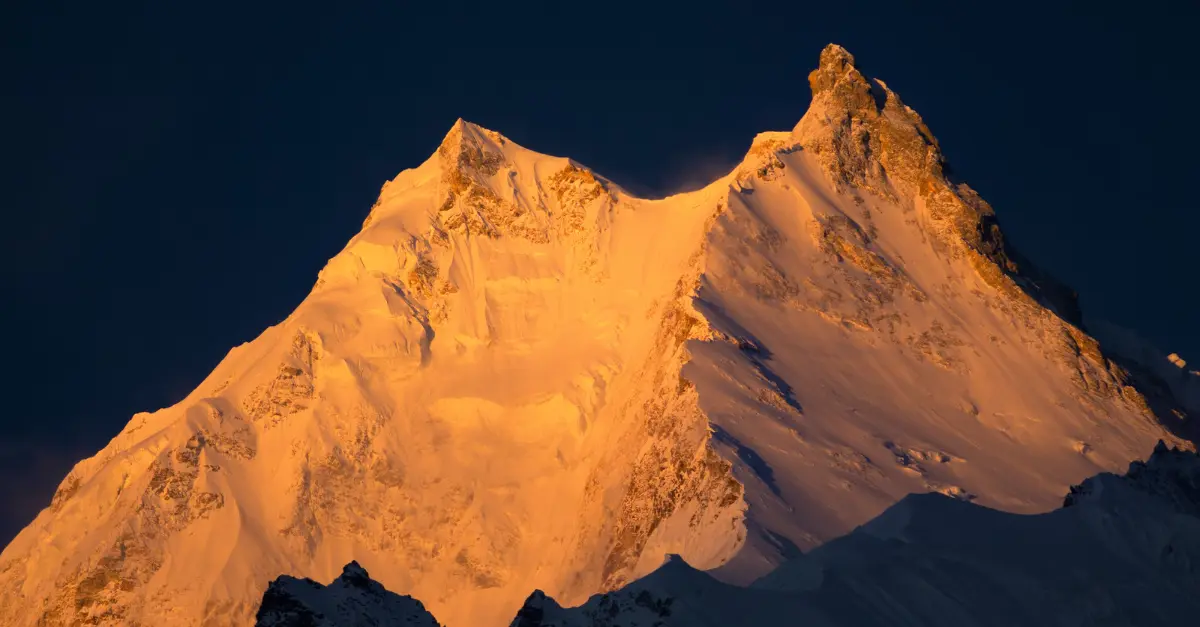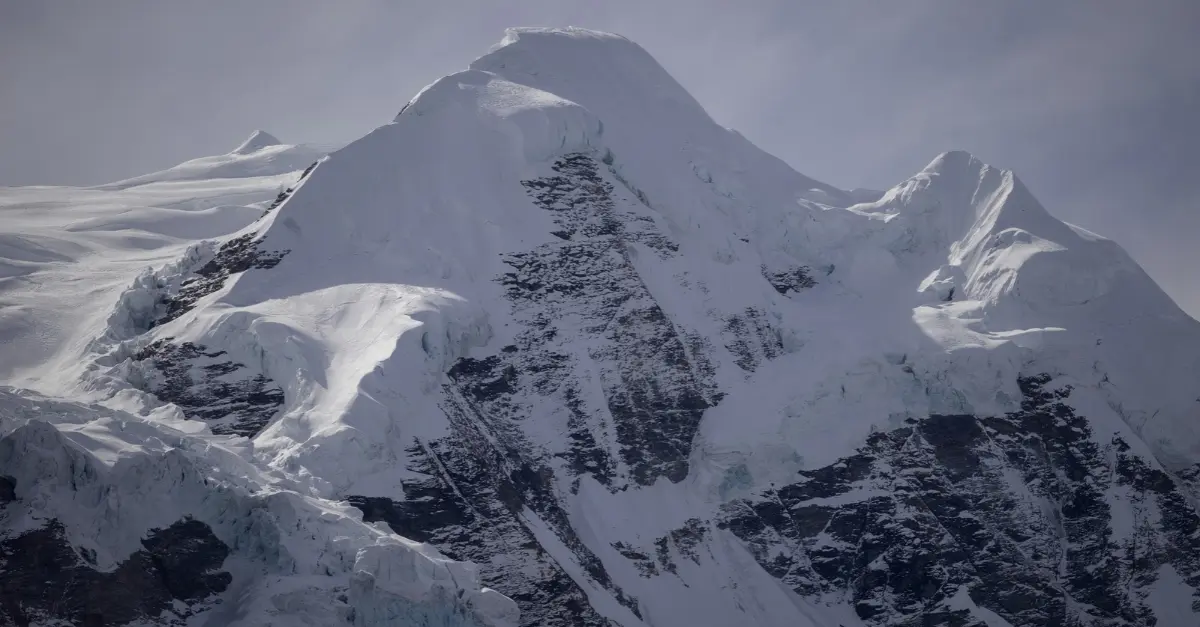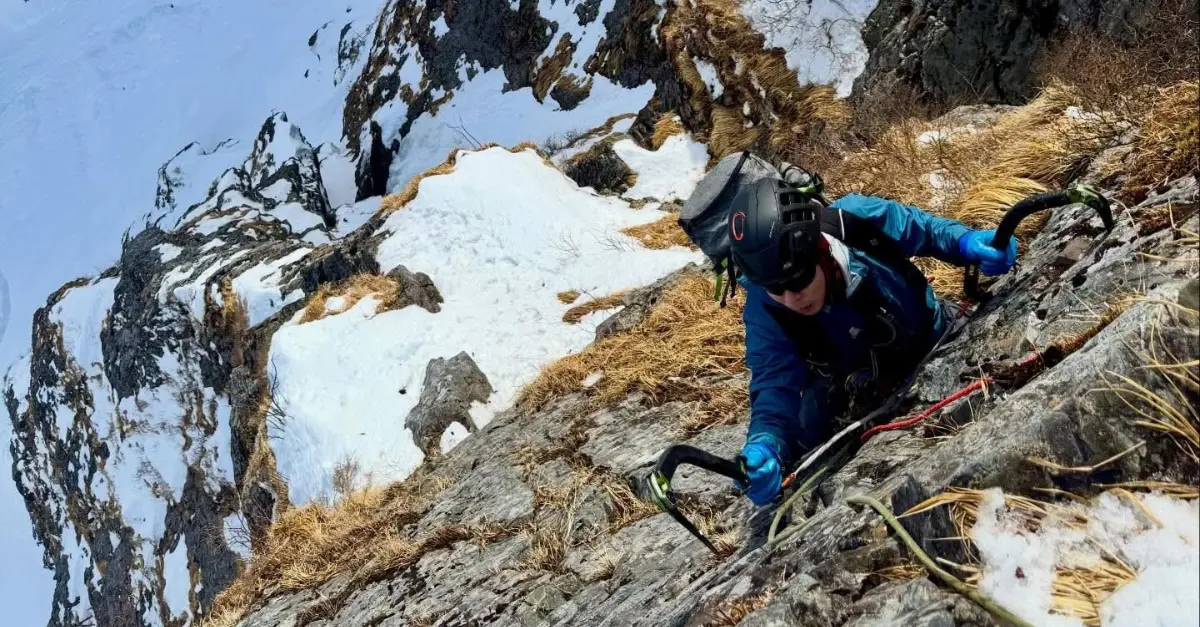

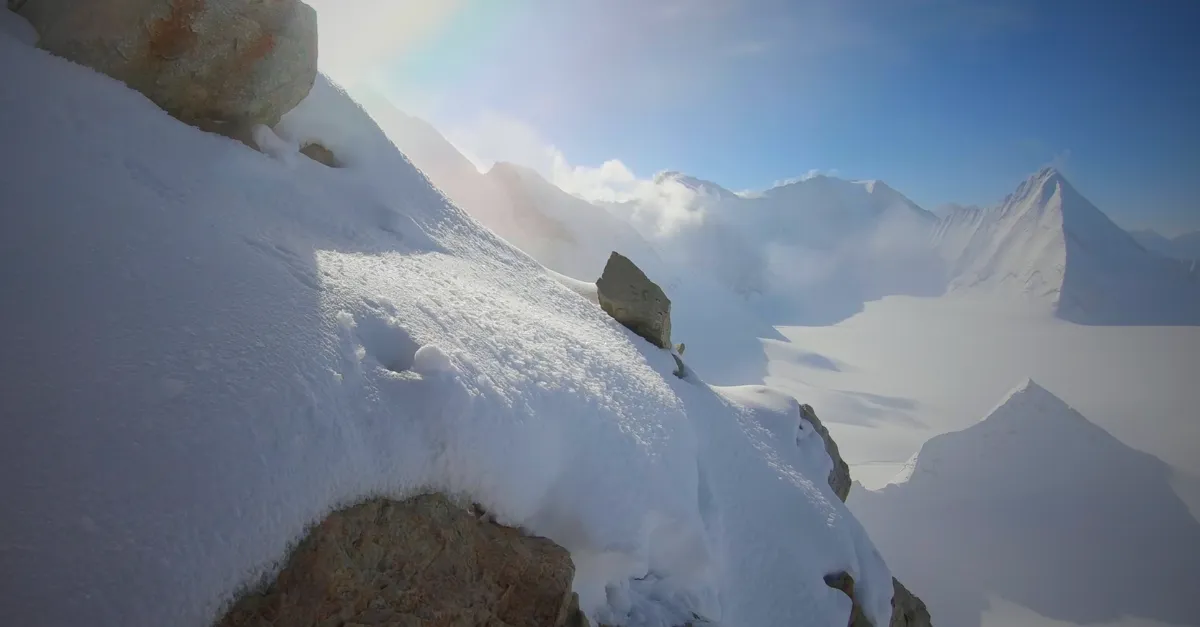
Just thirteen kilometers from Mount Vinson, Mount Tyree (4,852 m) towers over the Sentinel Range of the Ellsworth Mountains with an altitude that is far from anecdotal. Forty meters below the continent’s highest point, it should, in theory, attract attention. In practice, it shuns it. While Vinson sees around a hundred candidates pass through each season and more than seven hundred attempts have been recorded since the 2021-2022 season, Tyree has been stepped on by only twenty-five people in total, spread across just eight expeditions, the last dating from January 1, 2022. No ascents have been recorded since. This scarcity is no coincidence. It results from a mix of technical, logistical, and human constraints that make Tyree one of the most forgotten summits in polar mountaineering.
An almost forgotten mountain in the heart of Antarctica
Discovered in January 1958 during reconnaissance flights by the US Navy VX-6 squadron and mapped shortly after, Mount Tyree owes its name to Admiral David M. Tyree, who then commanded the Naval Support Force in Antarctica. It rises in the Sentinel Range, framed by the Patton Glacier to the north and the Cervellati Glacier to the southeast. Its prominence of 1,152 m and relative isolation from Vinson did not prevent early explorers from immediately grasping its interest. During the 1966-1967 American expedition, whose primary objective was Vinson, Barry Corbet and John Evans devoted part of their time to Tyree, aware that it was a very different mountain from its neighbor.
The paradox is striking. Over the decades, Vinson has become the most frequented Antarctic summit, featuring seasonal infrastructure, established camps, and regular flights from Union Glacier. Tyree, although visible from Vinson’s slopes, has remained in the shadows. According to the assessment established in January 2026, only twenty-five people have reached its summit. This figure, compared to the hundreds of alpinists who have attempted Vinson, sums up better than any speech the marginal place Tyree occupies in contemporary mountaineering.
Two neighboring summits, two worlds of mountaineering
Access to both mountains passes through the same logistical airlock. A flight of about six hours from Punta Arenas leads to Union Glacier Camp, the base of Antarctic Logistics & Expeditions (ALE). From there, a ski plane covers the roughly 200 km separating the camp from the massif. For Vinson, this flight drops teams near a relatively structured base camp, with a well-known classic route, equipped with fixed ropes on the steepest sections. Progression is more akin to demanding high glacier mountaineering than pure technical climbing. Operators offer regular departures, and the volume of candidates allows for the pooling of part of the air costs.
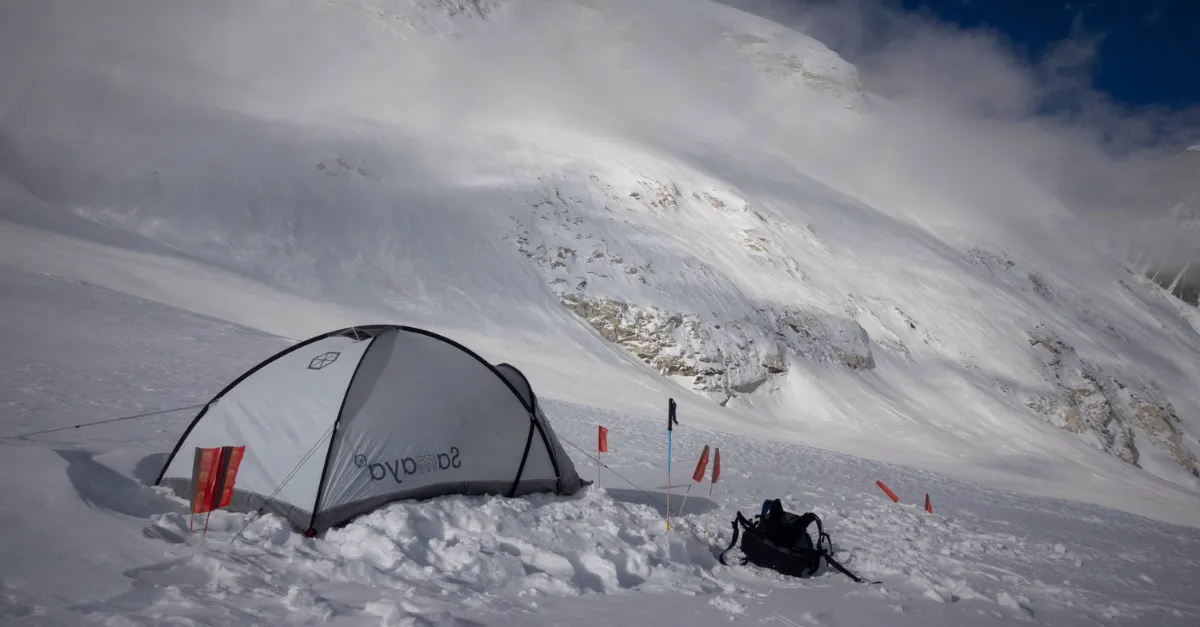
Tyree enjoys none of these facilities. There is no comparable seasonal base camp. Each expedition must organize its own equipment drop, manage its own specific flights, and shoulder alone the risks of unpooled logistics. Above all, the terrain changes radically. Where Vinson offers relatively predictable snow and ice slopes, Tyree imposes long mixed sections, steep couloirs, and rock passages. Recent guided expeditions have opted for a ratio of one client to four guides, a ratio that in itself testifies to the complexity of the endeavor.
Why is Mount Tyree so difficult?
Progressing on Tyree has nothing to do with using installed and maintained fixed ropes. This is technical mountaineering in polar conditions. Historical routes feature long sections of steep snow and ice, mixed passages where rock alternates with rime ice, and exposed couloirs. Descent often requires significant rappels, sometimes in very hard ice conditions. Temperatures can drop well below –30 °C, and values below –40 °C have been recorded. Isolation adds an extra dimension: rescues, if possible, remain extremely complex and costly.
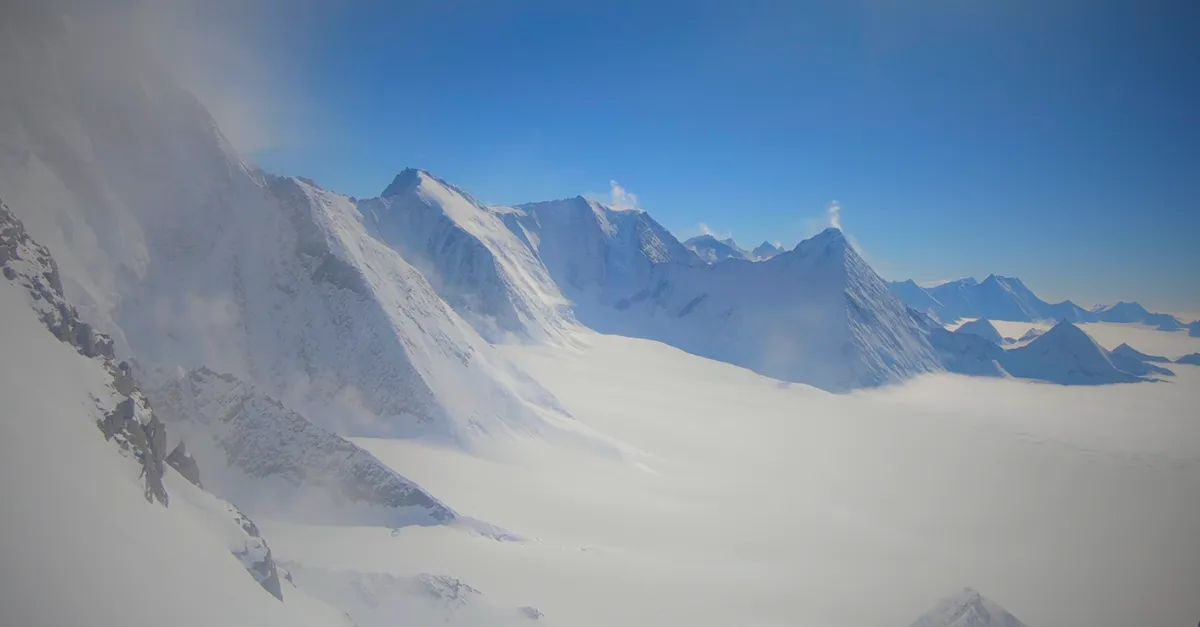
Unlike Vinson’s normal route, where teams often move roped up on equipped slopes, Tyree requires autonomous mastery of mixed progression, belaying, and rappelling in an environment where the slightest incident quickly turns into a critical situation. This technical requirement, combined with the lack of infrastructure, explains why the summit remains reserved for highly experienced mountaineers and heavily supported teams.
The three major ascent routes of Mount Tyree
Only three routes have been established so far.
The Northwest Ridge (1967)
On January 6, 1967, Barry Corbet and John Evans completed the first ascent as part of the American Antarctic Mountaineering Expedition. Their approach went via neighboring Mount Gardner: they climbed this summit, then descended to the col separating the two mountains using fixed ropes. The ridge itself is long, exposed, and complex. In 2008, Damien Gildea, Walter Laserer, and Christian Stangl attempted to repeat it. Facing temperatures below –40 °C and the length of the route, they abandoned the attempt, judging that continuous progression and return were not reasonable under those conditions.
The West Face (1989)
In November 1989, Terry “Mugs” Stump achieved the second ascent, solo, on the west face. The route, of about 2,500 m of steep rock and ice, was climbed on sight, unroped, in a single push. Stump then descended via the 1967 northwest ridge. In the American Alpine Journal, Damien Gildea described this performance as one of the hardest and most important ever achieved in Antarctica up to that date. Stump himself reportedly estimated that it might be “the hardest route ever climbed by man.” This ascent remains unique in the history of the summit.
The Grand Couloir (1997)
In November 1997, French military personnel Antoine de Choudens and Antoine Cayrol opened the Grand Couloir on the northeast face. The route first follows the lower part of the northeast ridge before traversing into the upper couloir. It represents about 2,400 m of progression on snow, ice, and rock passages. On December 16 of the same year, Conrad Anker and Alex Lowe repeated it. Anker, who had also climbed Vinson that same season, described Vinson’s normal route as “essentially an intermediate ski slope,” thus highlighting the contrast. Since 1997, all successful ascents have taken this couloir, which nevertheless remains far from being a normal route in the classic sense of the term.
The Grand Couloir: a route that does not forgive
Conditions radically transform the difficulty of the same route. In 2012, Hans Kammerlander, Robert Miller, and Christian Stangl completed the fifth ascent on January 3. Snow conditions were favorable and stable. From a high camp, they completed the round trip in thirteen hours and made eight 100 m rappels on the descent.
Five years later, on January 16, 2017, the expedition guided by ALE (Rick Thurmer and guides Maria “Pachi” Paz Ibarra, Victor Saunders, Seth Timpano, and Todd Tumolo) encountered particularly hard ice. The traverse toward the couloir and the couloir itself required sustained front-pointing. From a camp on the ridge, the round trip lasted twenty-five hours, including twelve hours just for the descent, carried out via rappels and technical descending. Temperatures remained below –34 °C during much of this descent, even in the absence of wind. These two accounts show that the same couloir can oscillate between a demanding technical ascent and an endeavor of much greater difficulty depending on the state of the snow and ice.
How many people have actually climbed Mount Tyree?
The precise count of ascents confirms the rarity of the summit. Only eight expeditions reached the highest point between 1967 and 2022, for a total of twenty-five people. No other ascent has been recorded since January 1, 2022.
| Date | Expedition / Alpinists | Number at summit | Rank |
|---|---|---|---|
| January 6, 1967 | Barry Corbet, John Evans | 2 | 1st |
| November 1989 | Mugs Stump | 1 | 2nd |
| November 1997 | Antoine de Choudens, Antoine Cayrol | 2 | 3rd |
| December 16, 1997 | Conrad Anker, Alex Lowe | 2 | 4th |
| January 3, 2012 | Hans Kammerlander, Robert Miller, Christian Stangl | 3 | 5th |
| January 16, 2017 | Rick Thurmer, Pachi Ibarra, Victor Saunders, Seth Timpano, Todd Tumolo | 5 | 6th |
| January 14, 2019 | Takayasu Semba, Sam Hennessey, Nate Opp, Victor Saunders, Seth Timpano | 5 | 7th |
| January 1, 2022 | Jennifer Drummond, Sam Hennessey, Todd Passey, Sebastian Grau-Kunhardt, Rob Smith | 5 | 8th |
Pachi Ibarra became the first woman to reach the summit in 2017. Jennifer Drummond, in 2022, was the second woman and the first American, as part of her Second Seven Summits project. These figures, drawn from ExplorersWeb’s most recent assessments and ALE reports, must be distinguished from the number of attempts or engaged individuals: only teams that reached the summit are counted here.
The cost of an expedition to Mount Tyree: a major obstacle
A guided ascent of Mount Vinson generally ranges between 55,000 and 58,000 dollars depending on operators and inclusions, an already high rate that essentially reflects flights and polar logistics. For Tyree, the cost is significantly higher, even if no precise public rates are published. Several factors explain this difference. The lack of a seasonal base camp prevents the pooling of flights from Union Glacier. The small number of candidates makes sharing specific air costs difficult. The high guide-to-client ratio—four guides for a single client during the last three expeditions—multiplies guiding costs. Added to this are the potentially longer duration of the expedition, specific technical gear, and necessary safety means in an isolated environment. Combined, these elements make Tyree a financially out-of-reach endeavor for most mountaineers, even experienced ones.
Tyree versus Vinson: two philosophies of Antarctic mountaineering
| Criterion | Mount Vinson | Mount Tyree |
|---|---|---|
| Altitude | 4,892 m | 4,852 m |
| Technical difficulty | Moderate (snow, ice, fixed ropes) | High (mixed, couloirs, rappels) |
| Terrain type | Glacier slopes | Couloirs, ridges, mixed faces |
| Infrastructure | Seasonal base camp, regular flights | No comparable infrastructure |
| Fixed ropes | Yes, on the normal route | No |
| Descent | Relatively structured | Frequent technical rappels |
| Cost and logistics | Around 55-58 kUSD, pooled | Significantly higher, unpooled |
| Frequency | ~150 attempts/year | 25 people in total |
| Recommended profile | Well-prepared mountaineer | Highly experienced mountaineer, heavily supported team |
Vinson has become accessible to properly prepared and supported mountaineers. Tyree remains a mountain for specialists. This difference is not due to altitude, but to the nature of the terrain and the absence of any comparable support system.
The south face of Mount Tyree: a challenge still intact
The south face, over 2,000 m high, remains unclimbed. It constitutes one of the greatest big walls in Antarctica. Its interest for very high-level mountaineers is obvious: establishing a new route there would represent an exceptionally large-scale endeavor, both technically and logistically. No recent confirmed attempts have been documented, and any projection regarding a potential ascent would remain purely hypothetical until access and safety conditions evolve.
Why does Mount Tyree remain a summit apart?
Mount Tyree perfectly illustrates that in high-altitude mountaineering, altitude alone is not enough to define difficulty. Located forty meters below Vinson, it requires much greater technical skills, autonomy, and logistical means. It has not been neglected because it is less prestigious, but because its access imposes constraints that contemporary commercial mountaineering cannot easily absorb. In a context where certain mountains are becoming structured destinations, Tyree voluntarily remains aside, not out of forgetfulness, but because it continues to demand what few teams can still muster: experience, means, and acceptance of high risk in one of the most isolated environments on the planet. This is precisely what makes it, even today, one of the most singular summits in Antarctic mountaineering.