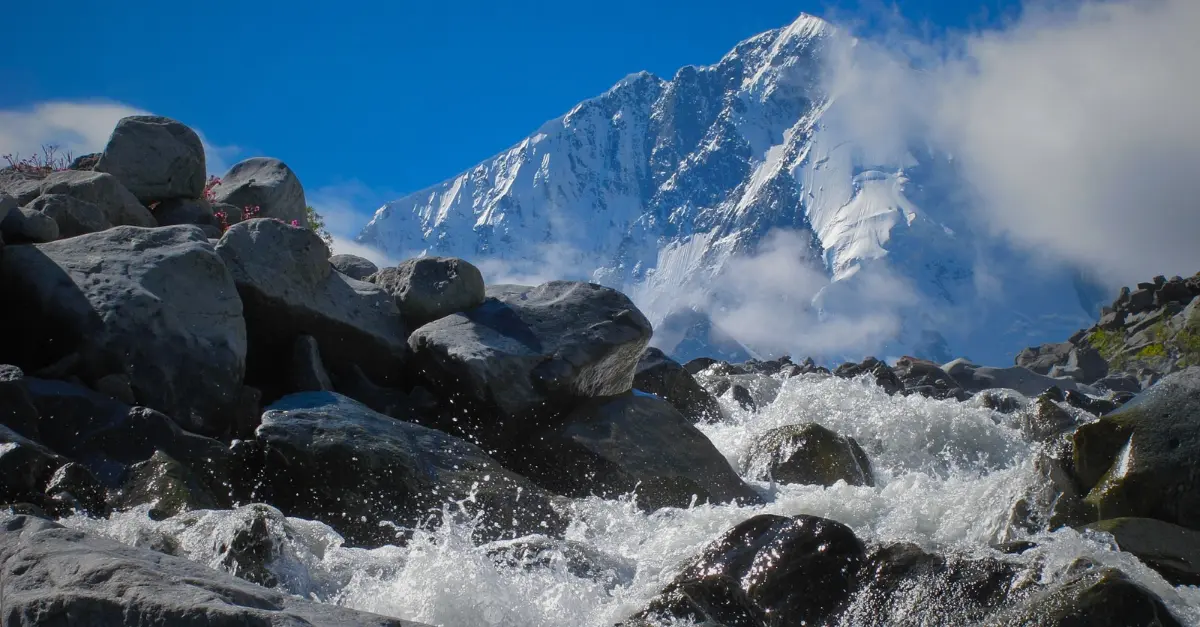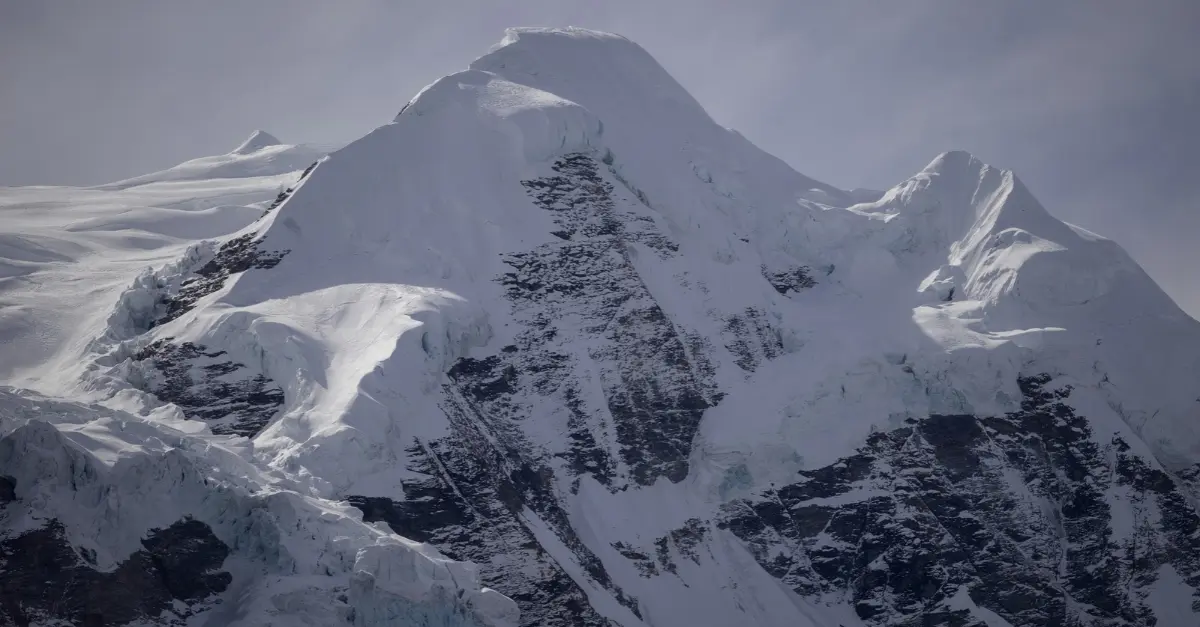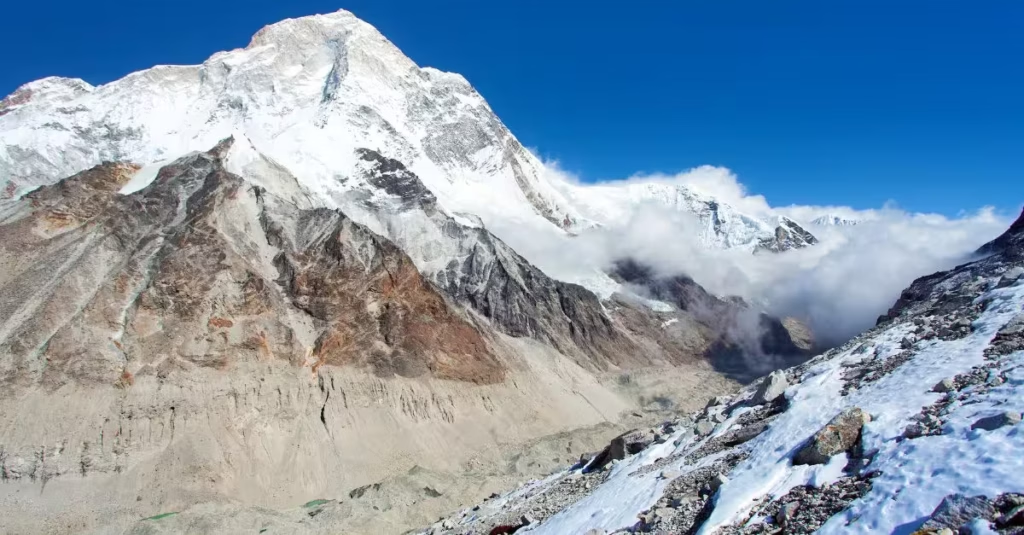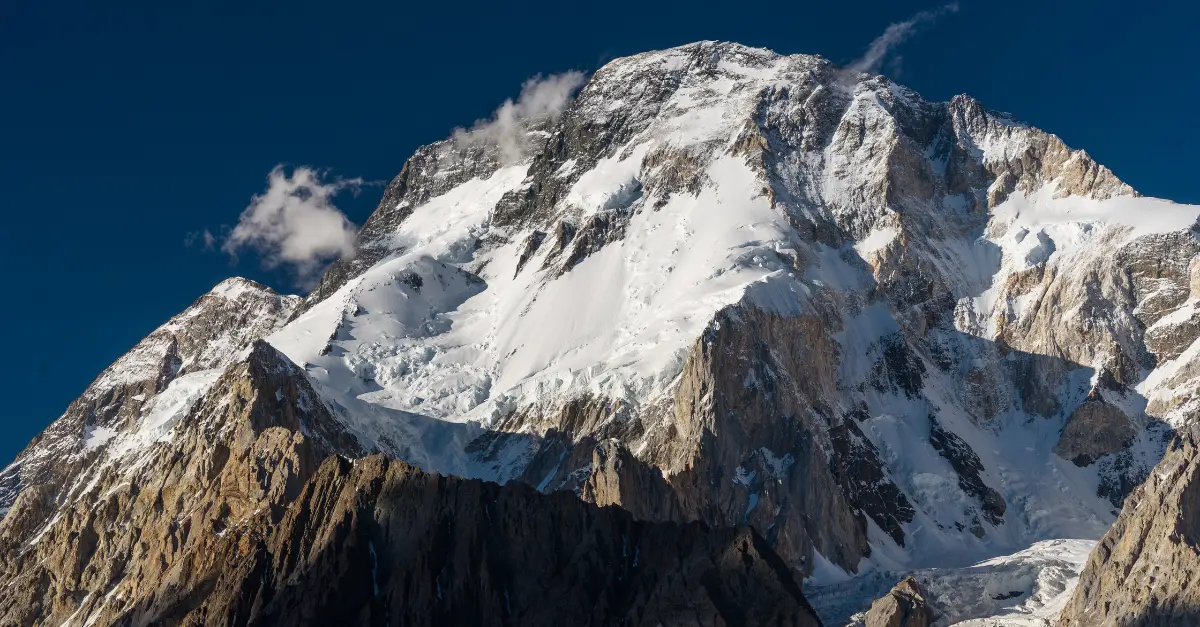

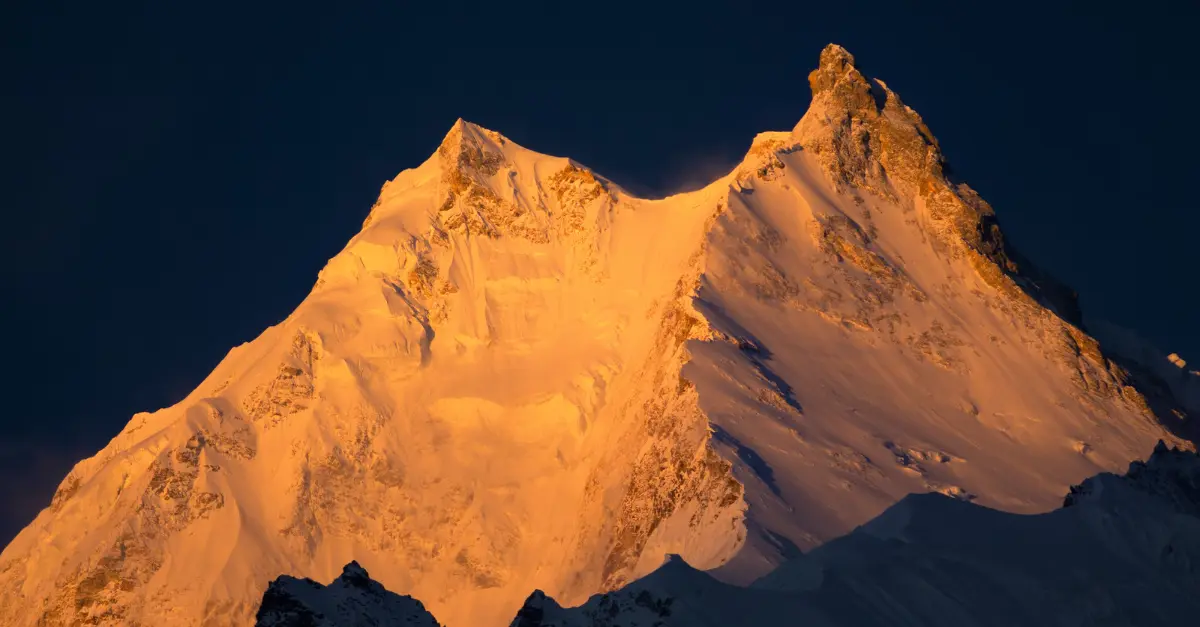
In the heart of the Mansiri Himal, in Nepal’s Gorkha district, Manaslu rises to 8,163 metres. The eighth-highest mountain in the world and the highest peak of its massif, it is nicknamed the “mountain of the spirit”, a translation of the Sanskrit manasa, which evokes the intellect, the soul or the mind. Less publicised than Everest or K2, it still attracts climbers from all over the world every autumn. The normal route follows the northeast face, above the Manaslu glacier, from a base camp located at around 4,800 metres. It combines technical glacier sections, snow and ice slopes, seracs and an exposed summit ridge.
The first ascent dates back to 9 May 1956. Toshio Imanishi and the Sherpa Gyalzen Norbu, members of a Japanese expedition led by Yuko Maki, reached the summit after several unsuccessful attempts in the preceding years. Ever since, the mountain has kept a reputation for being demanding: avalanches, crevasses, serac falls, intense cold and altitude all call for rigorous preparation. Climbing Manaslu is not a high-altitude hike. It requires experience in high mountains, gradual acclimatisation and constant risk management.
Want to climb Manaslu? Click here!
Here is, step by step, how the normal route usually unfolds.
[1] Manaslu base camp (around 4,800–4,900 m)
Base camp is set up on the lateral moraine of the Manaslu glacier, after several days of walking in the Budhi Gandaki valley. Expeditions generally arrive from Samagaon (around 3,530 m) after an approach trek of eight to twelve days. The site, relatively flat and sheltered, offers space for individual tents, the mess tent, the kitchen and storage areas.

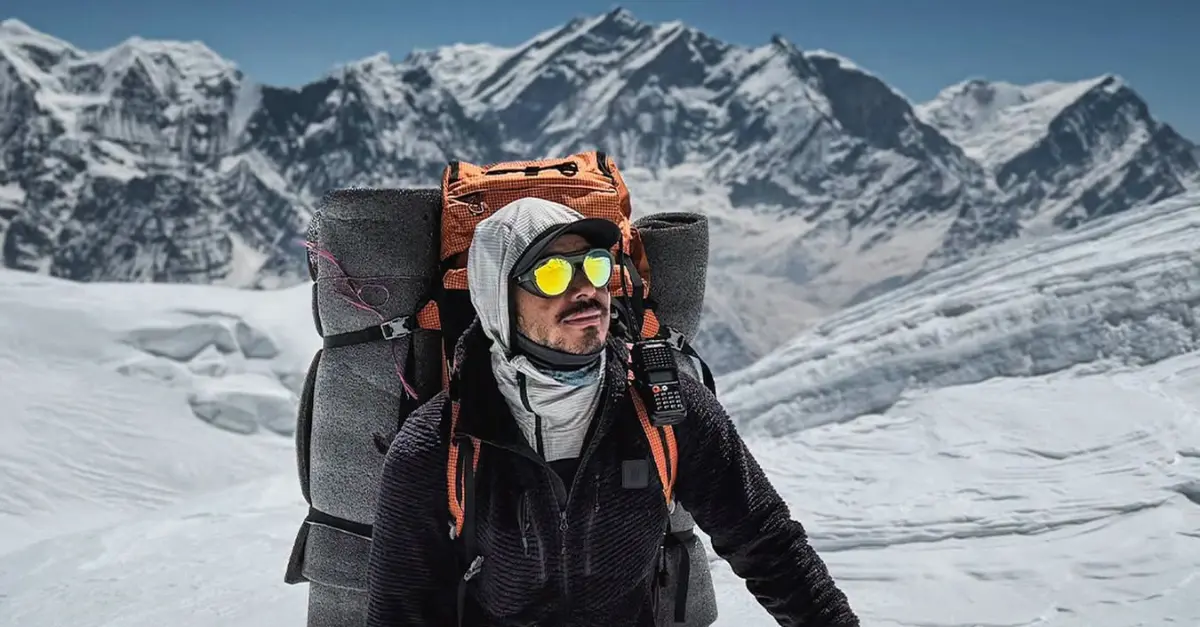
The first days are devoted to logistics. Guides, Sherpas and team members check the equipment, prepare the fixed ropes and set up radio communications. Climbers get used to the altitude, walk on the surrounding glacier and sometimes go on ice training outings. Base camp becomes the centre of gravity of the expedition: people eat there, recover there, discuss weather conditions and plan rotations. It is also the last place where the air is still relatively dense before the weeks of high altitude.
[2] Climbing to camp 1 (around 5,700–5,800 m)
The climb to camp 1 leaves base camp over a moraine, then enters the Manaslu glacier. The first hours alternate between firm snow and crevasse crossings. The Sherpas have generally already equipped the most exposed sections with fixed ropes and, depending on the state of the glacier, a few ladders.
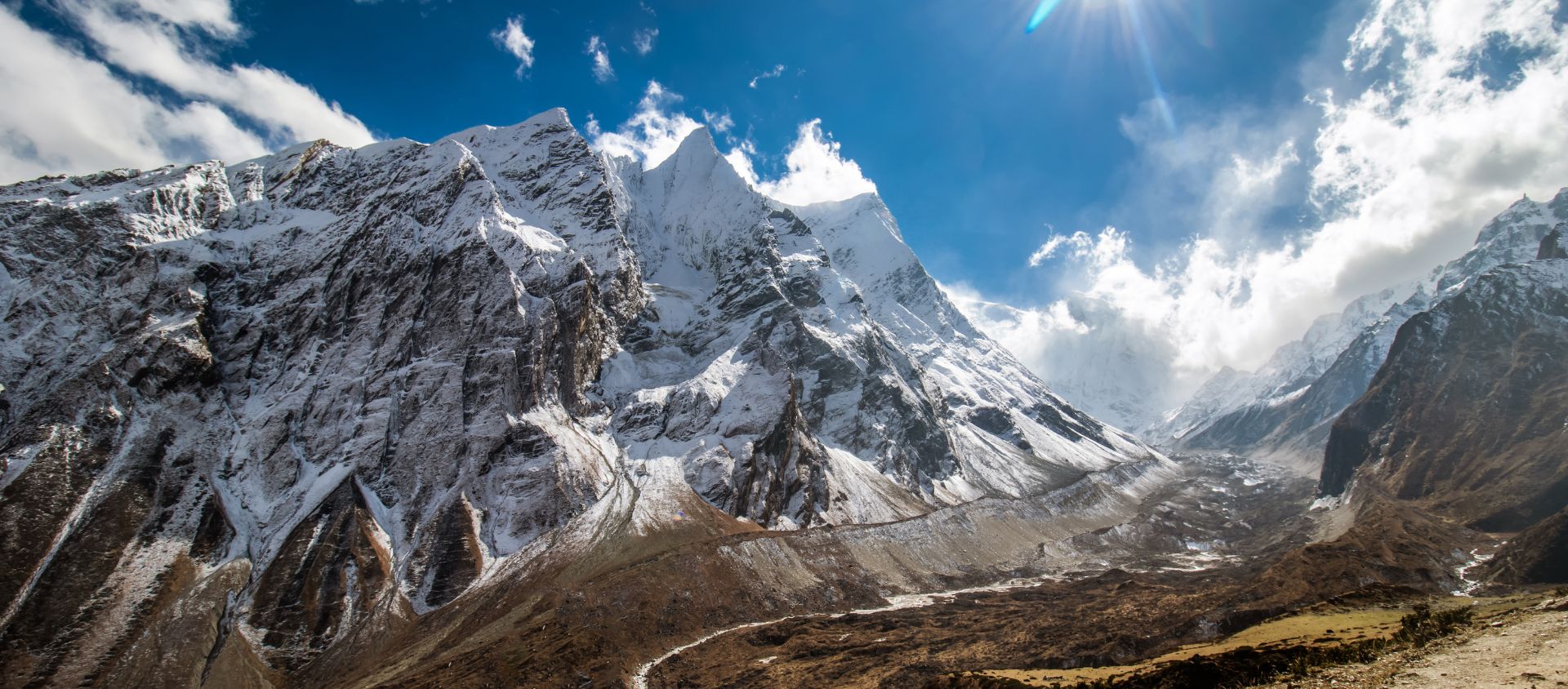
The terrain stays fairly moderate at first, but gradually steepens. Climbers move roped together or along the fixed lines, watching for snow bridges and cracks. This section marks the first real immersion in the glacial world. It demands concentration and a steady rhythm. Depending on snow conditions and physical shape, the trip takes between five and seven hours. Arriving at camp 1 offers a first wide view of the massif and confirms that the expedition has left the relative comfort of base camp behind.
[3] Camp 1 and the first rotations (around 5,700–5,800 m)
Camp 1 is generally established on a shoulder or a relatively protected flat area at the foot of the face. There is enough room for the tents, but the atmosphere already changes. Nights are colder, sleep is lighter and appetite fades. Teams stash equipment there for the upper camps.
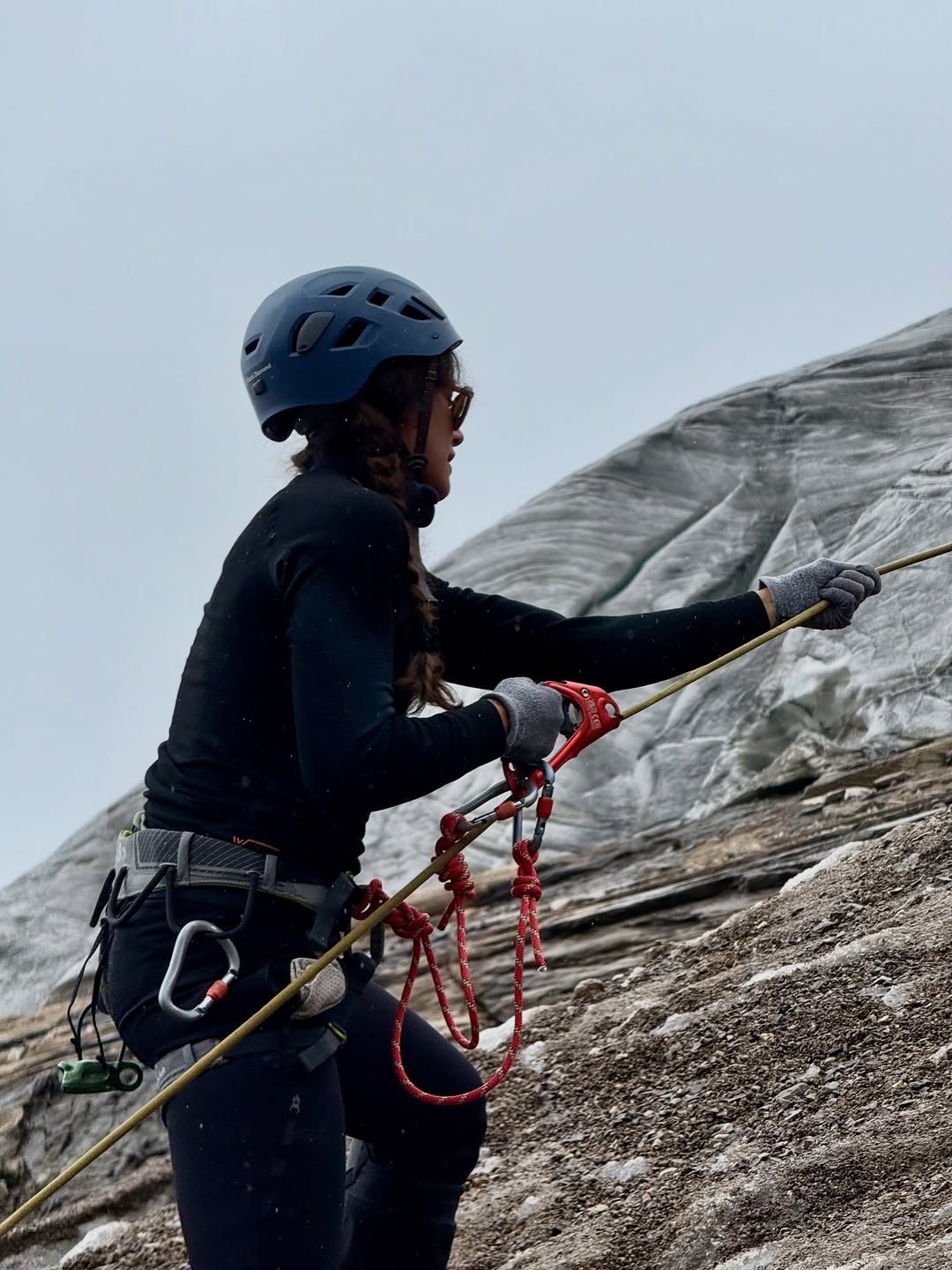
This stage is mainly about acclimatisation. The “climb high, sleep low” rotations begin: you go up to camp 1 or a little higher, come back down to base camp, then start again. The Sherpas carry loads (tents, food, oxygen, ropes) while the climbers adapt gradually. The body learns to produce more red blood cells. Without this phase, the rest of the ascent quickly becomes dangerous. Camp 1 is therefore less a place to stay for long than an essential transition stage.
[4] Climbing to camp 2 (around 6,300–6,400 m)
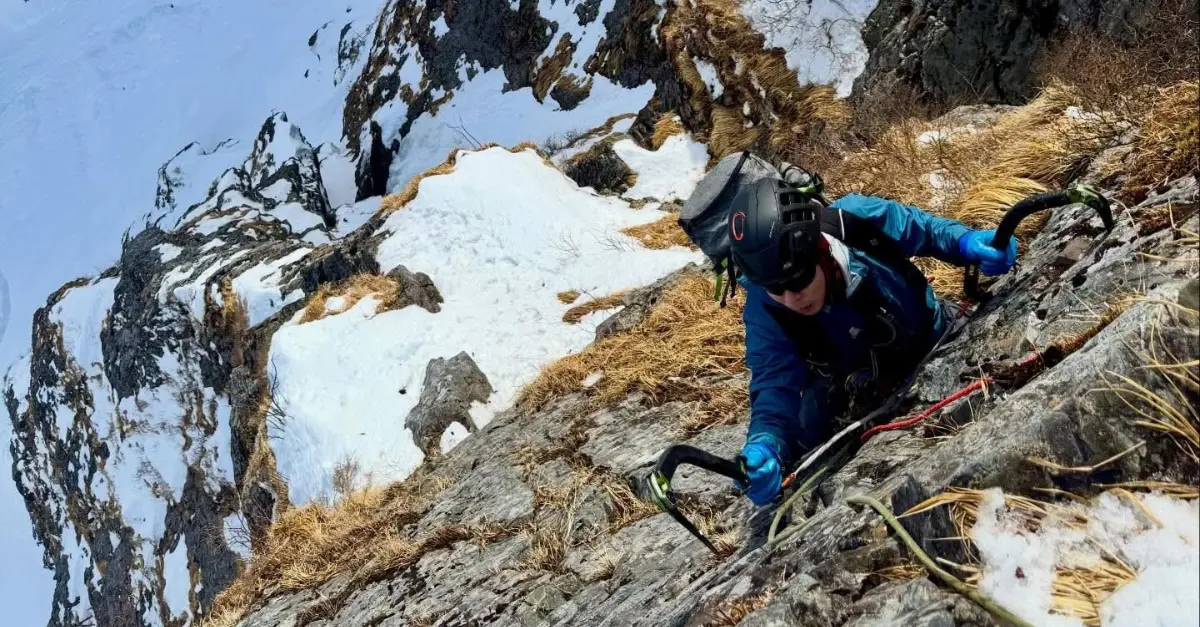
Between camp 1 and camp 2 lies the most technical section of the normal route. The glacier breaks up into a maze of seracs, deep crevasses and ice walls. Expeditions install fixed ropes there, and sometimes ladders to cross the widest gaps. This is the section where objective risk is highest: serac falls, fragile snow bridges and exposed areas.
Progress demands constant attention. You often move up the ropes with a jumar, stepping over crevasses and skirting unstable ice towers. The altitude starts to be felt: breathing speeds up and pauses become more frequent. Depending on the year and the state of the glacier, this section can take between three and six hours. Once above the chaotic zone, the terrain opens up towards a flat area where camp 2 is located.
[5] Camp 2 (around 6,400–6,500 m)
Camp 2 is generally placed at the top of the serac section, on more regular terrain, relatively sheltered from ice falls. The tents are exposed to wind and snow accumulation. Life there becomes more austere: you eat little, drink a lot and rest whenever possible.
The available oxygen is only about 45% of that at sea level. Sleep is fragmented, headaches are common and recovery is slow. Teams often spend one or two acclimatisation nights there before continuing. Some climbers then go back down to base camp to recover more effectively before the final push. Camp 2 marks the entry into a high altitude where every movement requires a conscious effort.
[6] Climbing to camp 3 (around 6,800–7,000 m)
From camp 2, the route climbs the upper glacier before gaining in steepness. You cross areas of snow and ice, sometimes steep, equipped with fixed ropes. Sections of seracs and exposed slopes persist, even if the terrain is generally less chaotic than between camps 1 and 2.
Breathing becomes markedly harder. Climbers move at a slow pace, managing their energy. The cold intensifies and the wind can pick up suddenly. This section, relatively short in distance, still takes several hours. Arriving at camp 3, often located near a col or a flat area with relative shelter from avalanches, marks a new step in physiological adaptation.
[7] Camp 3 and the climb to camp 4 (around 7,400–7,500 m)
Camp 3 is located at around 6,800 metres. Living conditions there are harsh: very low temperatures, frequent wind and thin oxygen. Most climbers now use supplemental oxygen, although some continue without. Equipment is prepared for camp 4 and the weather is closely monitored.
The climb to camp 4 crosses a long exposed slope, sometimes steep (up to 45–55 degrees depending on the spot), where the risk of avalanches and wind slabs remains present. Fixed ropes secure the progression, but they do not eliminate objective dangers. This stage demands several hours of sustained effort. Arriving at camp 4, generally at around 7,400–7,500 metres, places climbers in the zone where the body operates at its limit. It is the last camp before the final push.
[8] Camp 4 and the summit departure (around 7,400–7,500 m)
Camp 4, or the high camp, is a minimalist place. The tents are small, the cold extreme (often below –20 °C) and the wind sometimes violent. Climbers spend a short, restless night there. They prepare their packs, check the oxygen regulators, dress in multiple layers and wait for the departure.
Departure generally takes place between midnight and 2 a.m., depending on conditions and the team’s strategy. The fatigue accumulated over weeks makes itself felt. Every gesture is slowed down. Headlamps light up the snow and ice slopes rising towards the summit ridge. This is the moment when the decision to continue or turn back is made, based on the weather, physical condition and the progress of the teams ahead.
[9] The summit ridge and the final sections (above 7,800 m)
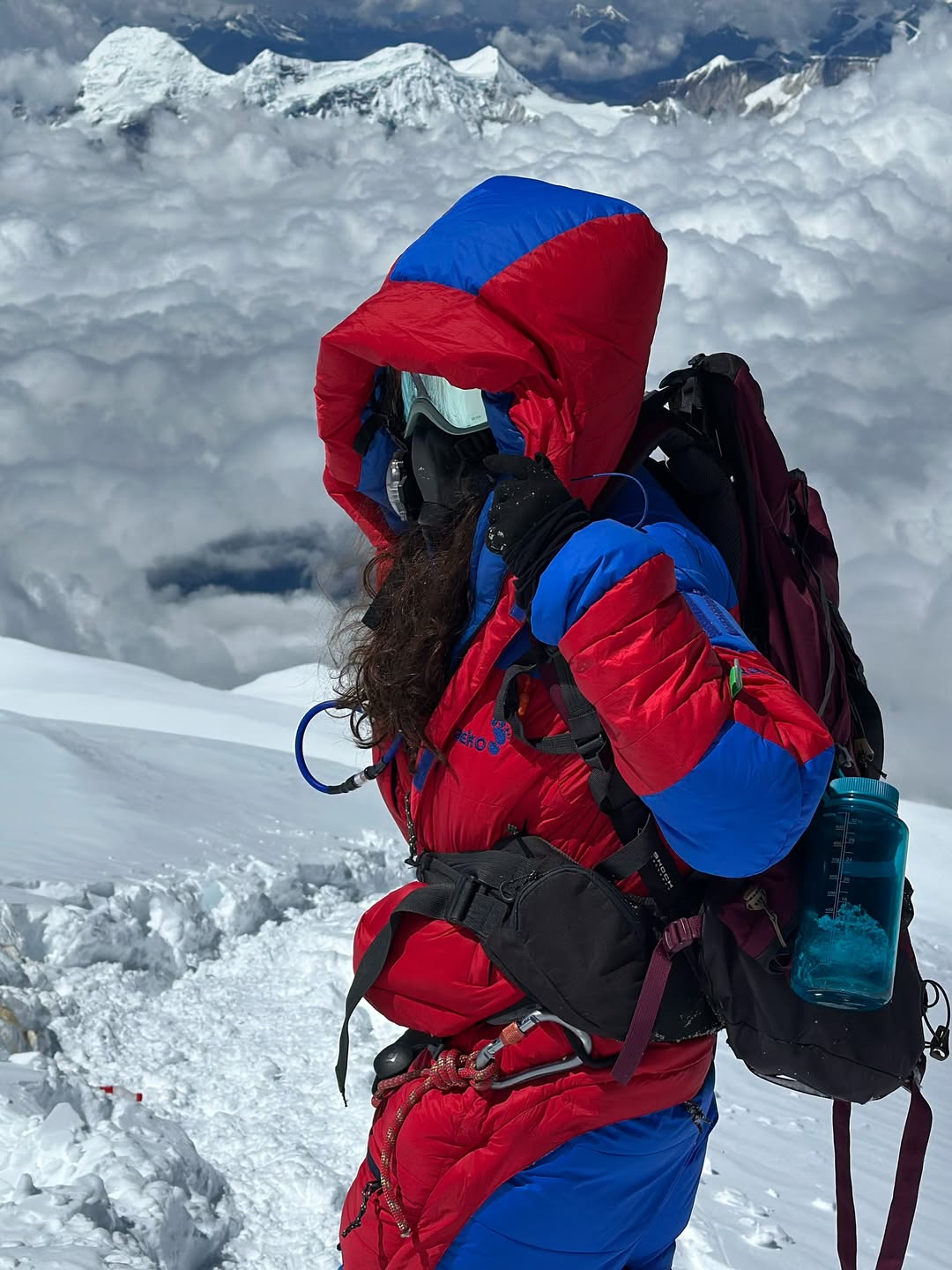
Above camp 4, the route follows moderate slopes, then joins the summit ridge. The terrain remains technical: hard snow or ice, exposed sections, cornices. The altitude exceeds 7,800 metres; you are fully in the death zone. Progress is slow. Breaks are short because the cold quickly sets in.
The final ridge is narrow and often corniced. Historically, many expeditions stopped at a foresummit, as the fixed ropes sometimes ended before the true highest point. Today, most serious teams fix ropes all the way to the true summit, which lies a little further on, after an exposed section. Wind, visibility and snow conditions determine the real difficulty of this last stretch. Every metre demands concentration and energy economy.
[10] The summit of Manaslu (8,163 m)
Reaching the summit offers a panoramic view over the Mansiri Himal, Annapurna in the distance and the neighbouring ridges. The emotion is intense, but brief. The cold, the wind and the fatigue mean you cannot linger. Photos are taken quickly, flags are planted, then the descent begins immediately.
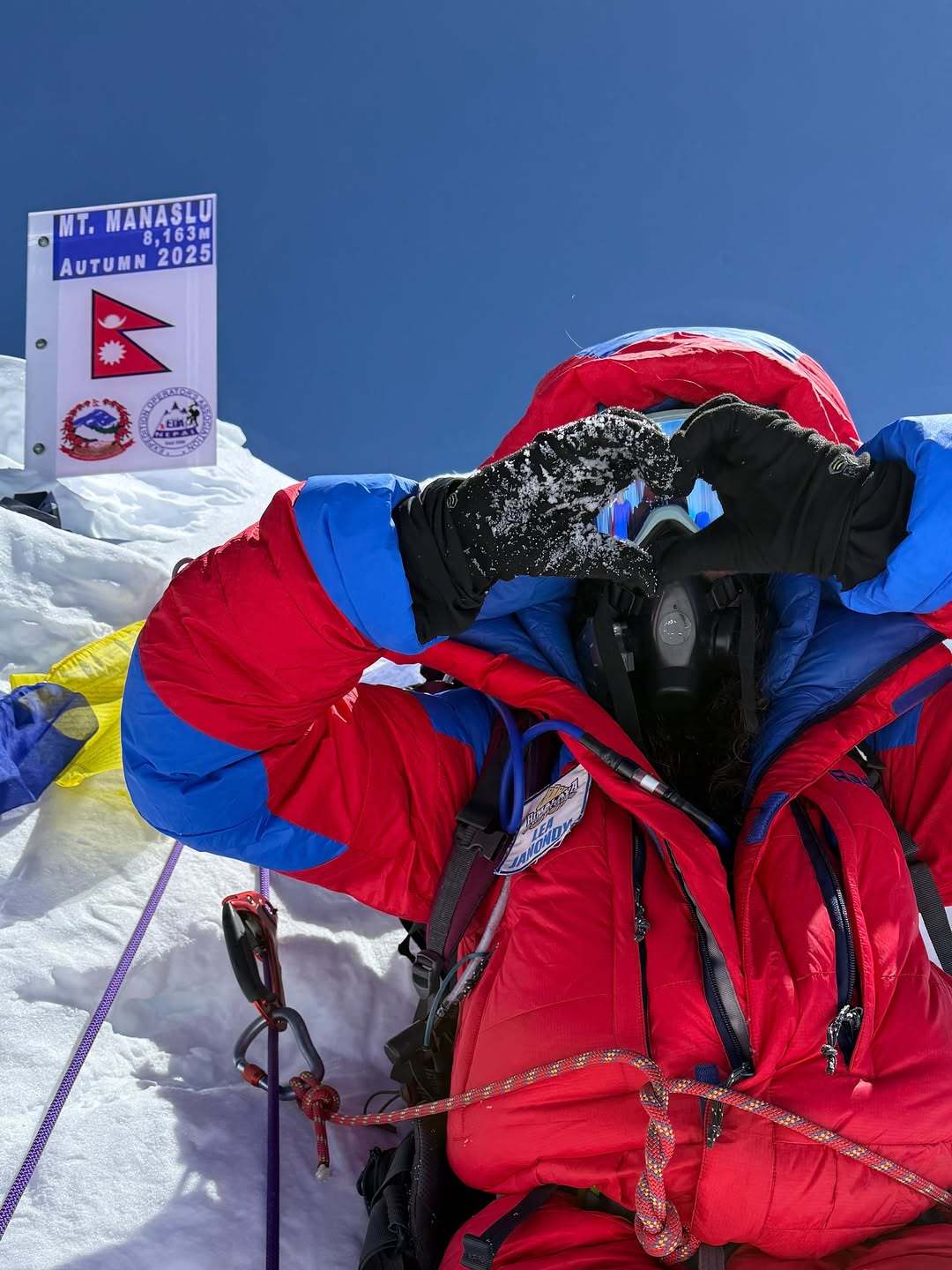
The descent is often the most delicate part. Fatigue is at its peak, concentration drops and the risks of a fall or a mistake increase. Teams generally go back down to camp 2 or to base camp depending on conditions. Reaching the summit is only half of the journey; getting back safely is the other half.
Manaslu, a summit that does not forgive improvisation
Climbing Manaslu remains a serious undertaking. It requires several months of physical preparation, prior high-altitude experience (ideally a 6,000 or 7,000-metre peak) and rigorous acclimatisation. Weather windows are limited, especially in autumn, the main season. The risks of avalanches, serac falls and crevasses remain present all along the route.
Fixed ropes and the work of the Sherpa teams reduce some dangers but do not remove them. Supplemental oxygen helps physiologically, without guaranteeing success. The descent after the summit remains particularly demanding. Under these conditions, turning back is sometimes the wisest decision. Manaslu rewards patience, humility and rigour. It forgives neither improvisation nor underestimation.