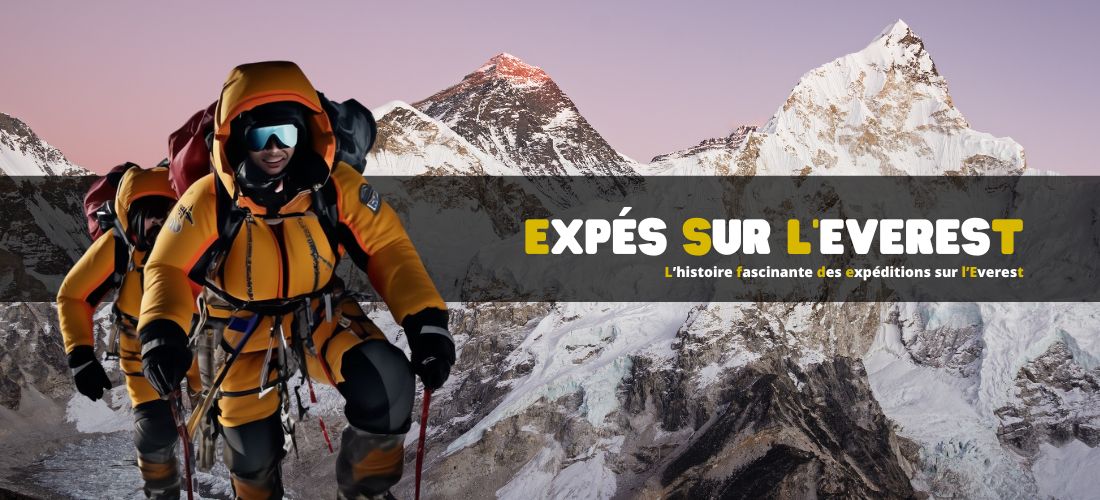
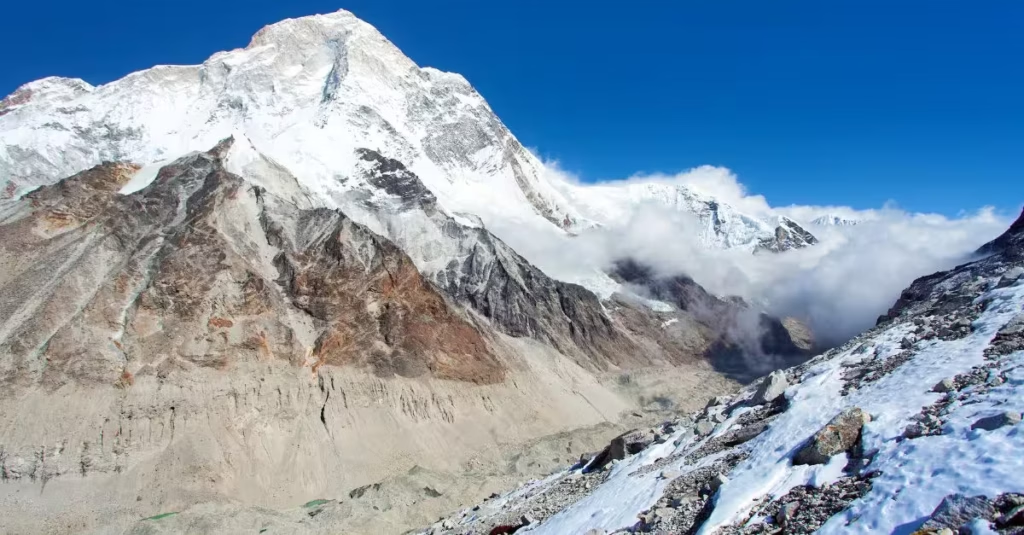
Everest, at 8,848 metres above sea level, is the highest peak in the world. It has always held an immense fascination for mountaineers the world over. The roof of the world, as it is often called, symbolises not only the grandeur of nature but also human tenacity, willpower and ambition. Countless attempts to conquer it have been made since the early twentieth century, each leaving its own unique mark on the history of mountaineering. Whether through failed expeditions, triumphant ascents or heartbreaking tragedies, the story of Everest is full of dramatic twists. This article explores the origins of Everest expeditions, the defining achievements, and the challenges that still face anyone who dares to dream of reaching its summit.
Even before the first human expeditions set out for the summit of Everest, the mountain was shrouded in mystery and legend. In Tibet, it is known as Chomolungma, meaning “goddess mother of the earth” — a name that reflects the deep reverence local populations held for this towering peak. For European explorers, however, it was not legend that drew them in, but the burning desire to discover and conquer the highest point on earth.
The earliest attempts to climb Everest date back to the 1920s, a time when mountaineering was still in its infancy in terms of technique and equipment. In 1921, a British team led by Charles Howard-Bury organised the first officially recognised expedition. At that time, access from Nepal was impossible, so the team chose a route through Tibet. The expedition did not reach the summit, but it produced the first topographic maps of the region and identified the North Ridge as a potential route to the top.
Three years later, in 1924, a new attempt was launched — this time by George Mallory and Andrew “Sandy” Irvine. It is perhaps the most mysterious and tragic expedition in Everest’s history. Mallory, famous for his reply “Because it’s there” when asked why he wanted to climb Everest, disappeared with Irvine somewhere near the summit. To this day, the question remains unanswered: did they reach the top before perishing, or were they taken by the mountain before completing that monumental feat? Mallory’s body was eventually recovered in 1999, but the mystery surrounding their fate endures.
The Golden Age of Mountaineering
The post-war years ushered in a new era for Everest expeditions. Climbing techniques improved, and so did equipment. In 1953, the British expedition led by John Hunt took its turn. Among its members, two men would leave their mark on history forever: Edmund Hillary, a New Zealand mountaineer, and Tenzing Norgay, a Nepali Sherpa. On 29 May 1953, after enduring immense hardship and days of acclimatisation at high altitude, Hillary and Norgay finally stood on the summit of Everest. That achievement, etched permanently into the collective memory, was a victory for all of humanity — not just for the British team.
What made the success all the more significant was the spirit of collaboration it embodied — between Western climbers and the Sherpas, those mountain guides from Nepal who would go on to become indispensable partners on future expeditions. Though Hillary received enormous international recognition, he never stopped paying tribute to Tenzing Norgay, insisting that without his partner, the summit would have remained out of reach.
The first successful ascent opened the door to countless subsequent attempts, with new climbers eager to follow in Hillary and Norgay’s footsteps. Yet even with technological advances, Everest remained a formidable challenge, and every expedition carried its share of dangers.
The Tragedies of Everest
If Everest is synonymous with achievement and glory, it is also the setting for countless tragedies. The mountain’s growing fame attracted ever more climbers — including less experienced adventurers — which only amplified the risks. In 1970, Everest was struck by one of its first major modern disasters, when a renowned Japanese expedition lost several members to deadly avalanches.
Then came 1996 — the year the mountain revealed its true ruthlessness. What had promised to be a successful season turned to nightmare when eight climbers perished in a single day, swept away by a violent storm. Among the victims were members of the teams led by celebrated guides Rob Hall and Scott Fischer, two towering figures in the world of commercial high-altitude climbing at the time. This tragedy, brought to a global audience by Jon Krakauer’s book Into Thin Air, exposed the dangers of commercialising Everest and the enormous difficulties of managing large groups of climbers in such extreme conditions.
The 1996 disaster also raised serious questions about the sheer number of people attempting the mountain. Later, in the 2010s, photographs of queues of climbers near the summit — taken in the thick of Everest’s “high season” — spread around the world. Those images illustrated not only the dangers of overcrowding, but also the mounting pressure on the environment of this legendary peak.
The Sherpas and the Vital Role They Play
One of the most essential — and most underestimated — aspects of Everest expeditions is the role played by the Sherpas. These local guides, whose ancestors lived in the valleys surrounding Everest long before the first European mountaineers arrived, have become indispensable to any high-altitude expedition. Their natural ability to acclimatise rapidly to altitude, combined with their intimate knowledge of the terrain, has enabled countless climbers to reach summits they might never have achieved alone.
Yet the Sherpas’ central role also raises serious ethical questions. Their work is extraordinarily dangerous. In 2014, an avalanche killed 16 Sherpas in the Khumbu Icefall — a disaster that threw into sharp relief the disproportionate risks these guides face. While helping foreign climbers realise their dreams, Sherpas often pay a terrible price. The tragedy reignited debate about their pay and the safety conditions on commercial expeditions.
Despite the dangers, Sherpas continue to play a crucial role in modern expeditions. Some, like Apa Sherpa — who has summited Everest 21 times — have become legends in their own right within the mountaineering world. Their strength, resilience and expertise have made it possible for countless people to achieve their dream of standing on the highest point on earth.
The Commercialisation of Everest
Over time, climbing Everest has become a fully fledged industry. Hundreds of agencies now offer commercial expeditions, allowing amateur climbers to attempt the ascent in exchange for considerable sums — often exceeding €60,000. This “democratisation” of Everest has given more people the chance to try their luck, but it has also created a host of new challenges.
On the one hand, commercialisation has raised the bar professionally, with better-trained guides, more advanced equipment and more carefully planned routes. On the other, it has led to severe overcrowding on the mountain’s approach routes. At the height of the season, it is not unusual to see queues of climbers waiting to tackle the final metres to the summit. Such situations increase risk significantly — particularly given the unpredictable weather and dwindling oxygen supplies at these elevations.
The surge in commercial expeditions has also brought worrying environmental consequences. Everest, once regarded as a sanctuary, is now littered with waste left by climbers: abandoned tents, empty oxygen canisters, and even the bodies of those who have died there — impossible to retrieve in such extreme conditions. Preserving the environment around Everest has become a pressing issue, and clean-up efforts are regularly organised, though the problem is far from resolved.
The Future of Everest Expeditions
With thousands of people attempting the climb each year, Everest faces a new set of challenges. The governments of Nepal and Tibet, conscious of the economic stakes but equally aware of the environmental and safety risks, have begun imposing stricter regulations on expeditions. Climber quotas, higher permit costs and clean-up programmes are all being introduced — yet the pull of Everest remains as strong as ever.
Technological progress continues to play a major role in shaping the future of expeditions. Modern equipment reduces risk, but some voices are now questioning whether the Everest experience is being steadily stripped of its essence. Traditional mountaineers fear that climbing the roof of the world may no longer be seen as a genuine feat, but as something almost within reach of anyone with deep enough pockets.
Despite all these challenges, Everest will remain a symbol of adventure, courage and the drive to surpass oneself. Its history is humanity’s history in the face of nature — a story of triumphs and tragedies that, through every ordeal, never ceases to captivate. Every expedition, whether successful or not, is a reminder of nature’s power and the indomitable spirit of those who take it on.
In the end, Everest will always be a place of dreams for those who aspire to touch the sky — but also a place of reflection on the limits we should, or perhaps should not, cross in our pursuit of conquest.
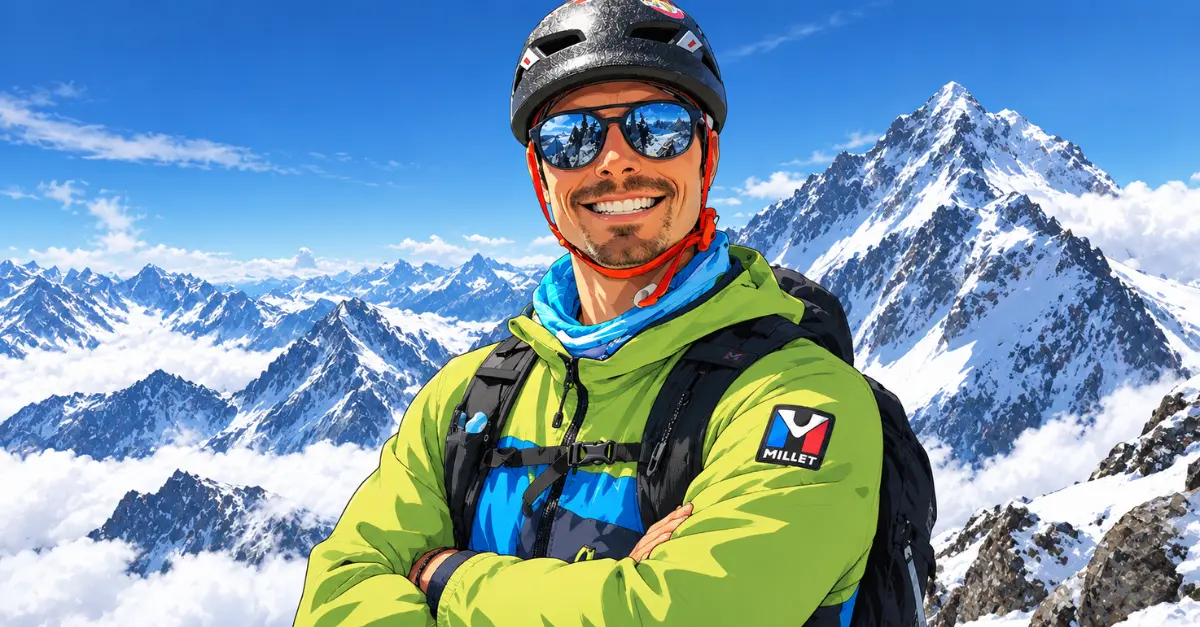
Hello, my name is Karim Akachar. A passionate mountaineer and Himalayan climber, and founder of the media platform Outwild, I practice mountaineering either solo or with a partner, primarily in alpine style. Through my expeditions, I share field reports, technical advice, and my mountain experience, with the aim of promoting the values of self-reliance, commitment, and respect for the alpine environment.