
KEY TAKEAWAYS
- The concept: Lenin Peak (7,134 m), located on the border between Kyrgyzstan and Tajikistan, is widely regarded as the most accessible 7,000-metre summit in the world — a realistic first major expedition for a well-prepared mountaineer, requiring no advanced technical climbing skills.
- The technique: The normal route (west ridge/north face) requires crampons, an ice axe, sections on slopes of 35–45°, and a rigorous acclimatisation strategy across three high camps (4,400 m, 5,300 m and 6,100 m) before the summit push. The overall success rate rarely exceeds 30%, rising to around 60% with operators who build a longer programme into their schedule.
- The added value: An expedition to Lenin Peak is also a deep immersion into the Pamirs — nomadic yurts, untouched glaciers, the Alay Valley — with solid local logistics out of Osh. It is the first summit on the Snow Leopard programme, the holy grail of Central Asian mountaineering.
Lenin Peak: everything you need to know before this major expedition in Kyrgyzstan
Lenin Peak, standing at 7,134 metres, has established itself as the dream gateway to extreme altitude. Located in the Zaalay Range within the Kyrgyz Pamirs, on the border with Tajikistan, this sleeping giant draws hundreds of mountaineers from around the world every summer. Its reputation? Being technically the most accessible 7,000-metre peak on the planet. Its reality? A mountain that shatters preconceptions and demands far more than the word “easy” suggests.
I have come across this summit in every conversation I have had with mountaineers who have passed through Kyrgyzstan. Each time, I see the same expression: a mixture of pride at a challenge overcome and genuine respect for a mountain that does not forgive mistakes. Before you think about setting foot on it with crampons, here is everything you truly need to understand.
A summit at the heart of the Kyrgyz Pamirs
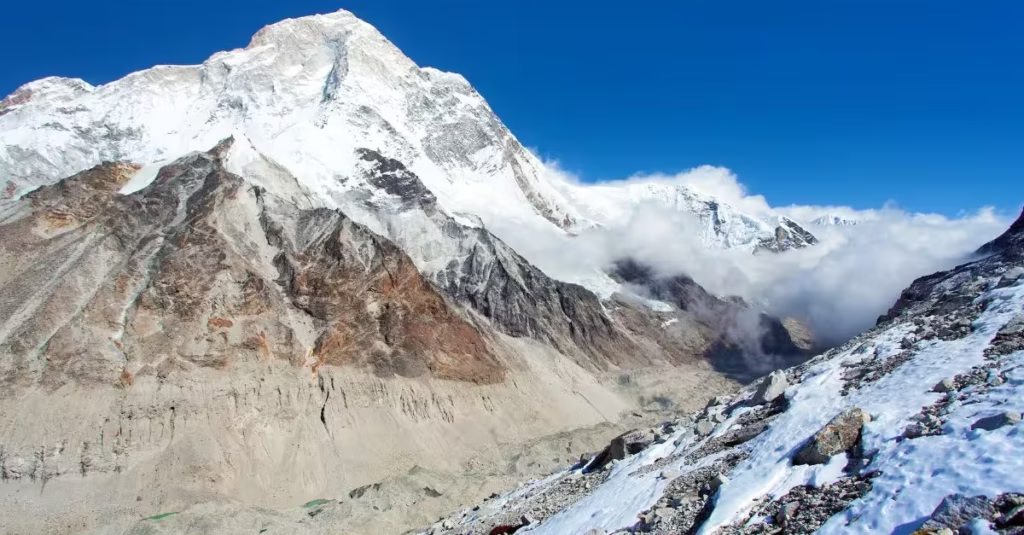
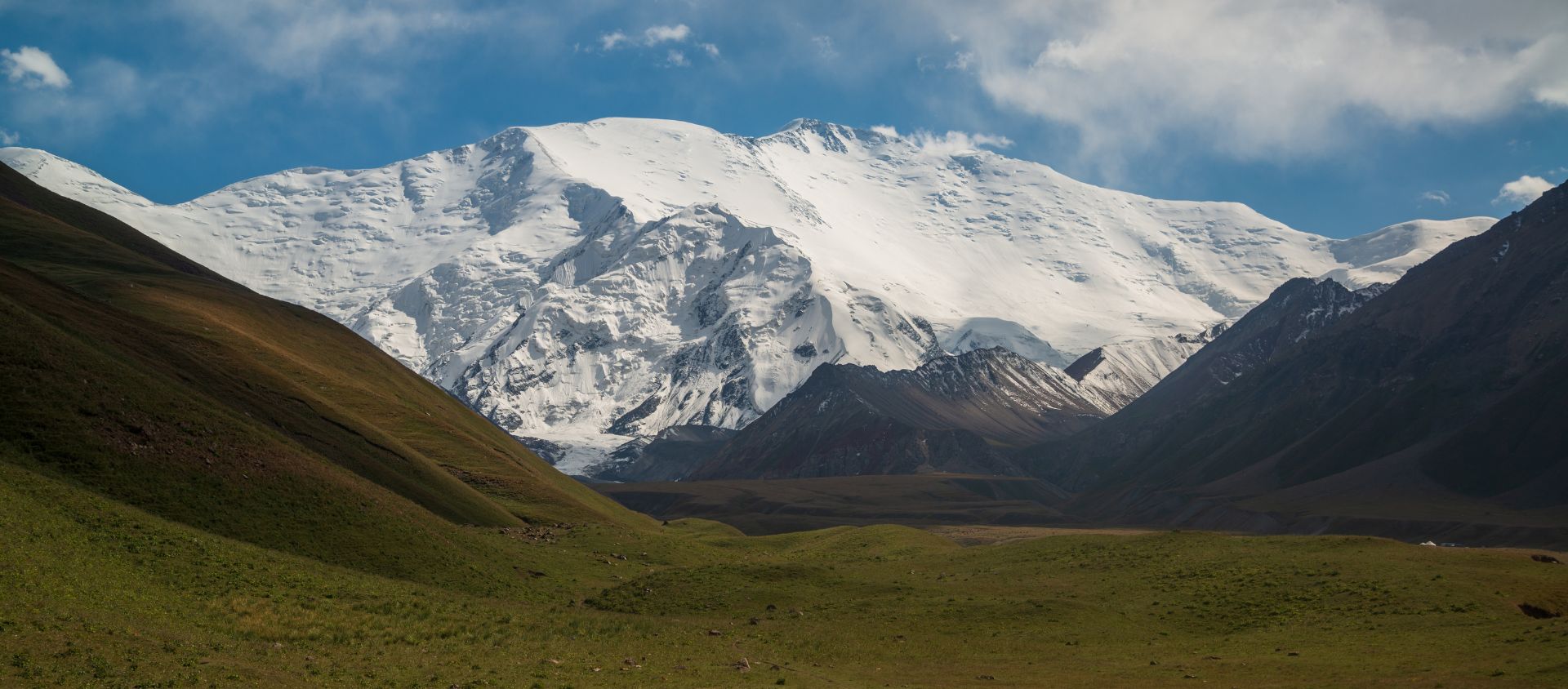
Lenin Peak rises to 7,134 metres in the south of Kyrgyzstan, within the Pamir mountain range, on the border with Tajikistan. It is one of the three giants of the country, higher than Khan Tengri Peak (7,010 m) but lower than Pobeda Peak, also known as Jengish Chokosu (7,439 m).
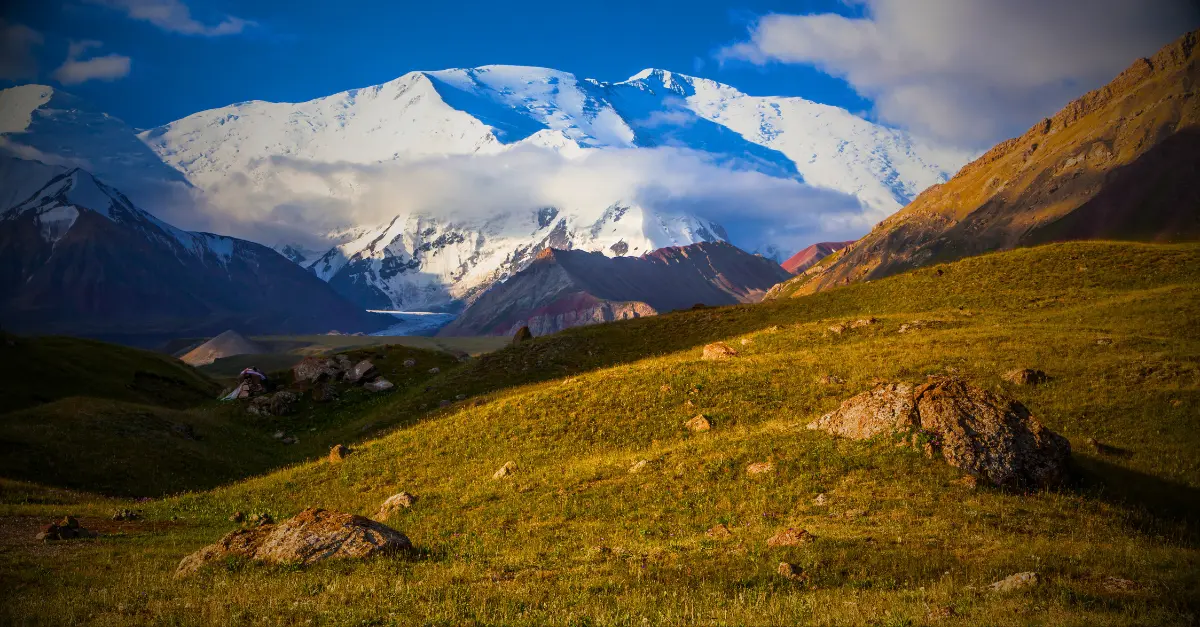
Geographically, it stands out for logistical accessibility that is rare for a summit of this scale. The base camp, set at 3,600 metres, has the unusual distinction of being reachable by 4×4 vehicle. This is a detail that changes everything: you do not arrive at base camp already exhausted after several days of trekking — you can channel all your energy into acclimatisation and the climb itself.
The summit was first sighted in 1871 by Russian explorer Alexei Fedchenko, who described it as a peak “that always appeared higher than the others, no matter the distance.” It would take until 1934 for the first recorded ascent, achieved by a Soviet team. On 8 September of that year, they reached the summit via the north route and placed a bust of Lenin at the top. That bust has since disappeared, but the mountain remains.
Historically, it has also seen its share of tragedy. In 1974, all eight members of a Soviet women’s team were caught in a storm and perished. A stark reminder that this so-called “easy mountain” is, above all, a high-altitude peak — with everything that entails.
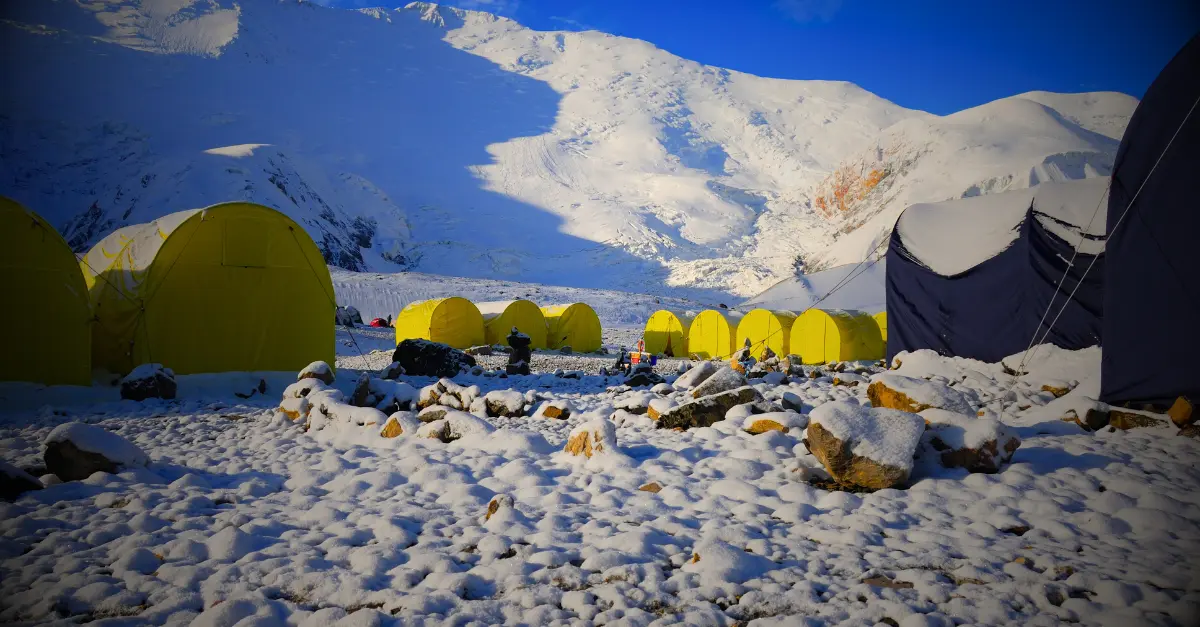
The normal route: what really awaits you
The ascent via the west ridge (normal route) presents no major technical difficulties, but it demands thorough acclimatisation and excellent physical and mental condition. That sentence perfectly captures the philosophy of Lenin Peak.
There are 16 routes in total to reach the summit. The most common is the classic north face itinerary, considered the safest and technically the most straightforward. Most expeditions begin with a drive from Osh to the Achik-Tash base camp, situated at 3,500 metres at the foot of Lenin Peak in the Pamir mountains.
The high camps: the backbone of the expedition
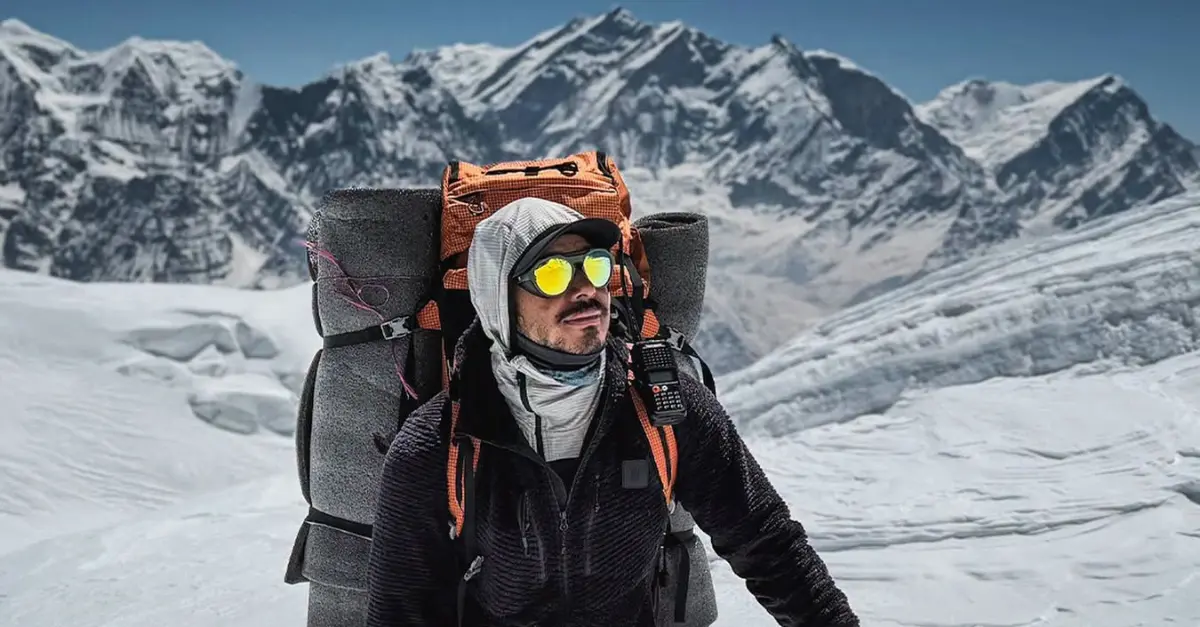
The ascent is built around a structure of three progressive camps. From base camp at 3,600 m, you climb to Camp 1 at around 4,400 m, then to Camp 2 at 5,300 m, and finally to Camp 3 at 6,100 m before the summit push. Guides are permanently stationed at 5,300 m and 6,100 m, which provides a meaningful safety net throughout the progression.
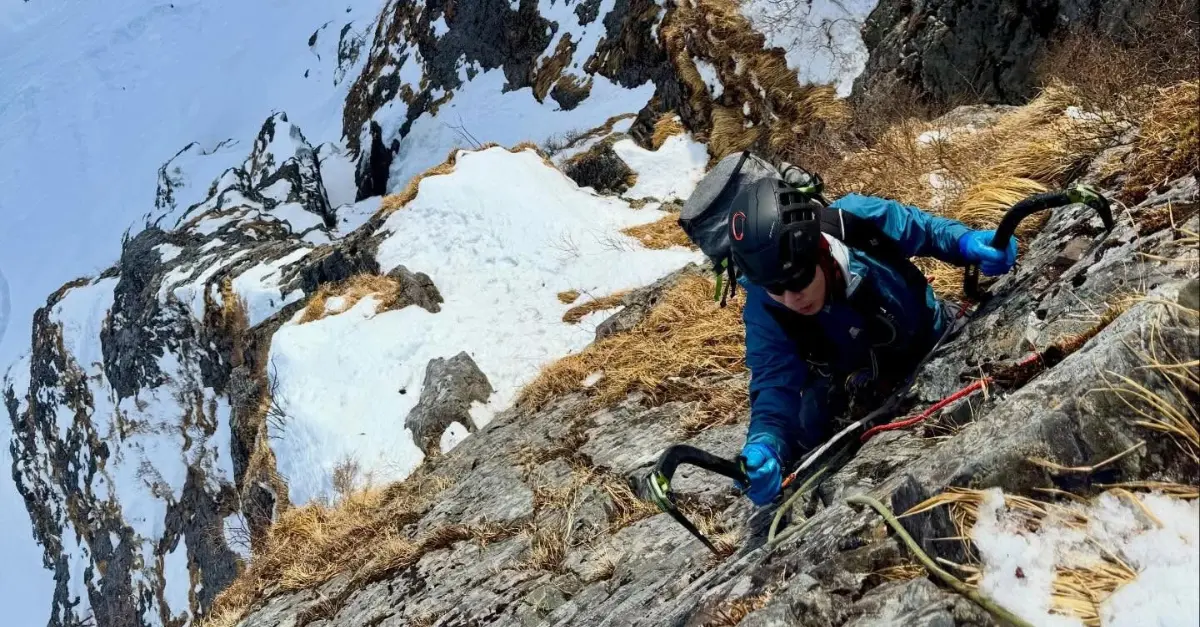
While Lenin Peak may be comparable in terms of technical difficulty to Mont Blanc (4,810 m) or Elbrus (5,642 m), its extreme altitude — more than 2,000 metres higher — means it is far from a given. The classic route includes some fairly steep sections, and experience with an ice axe and crampons is essential.
Above Camp 1, there can be around a hundred metres of ice on slopes of 35 to 45 degrees. This is not high-level technical alpinism, but it is no walk in the park either. Someone who has never worn crampons or handled an ice axe has no business being on this mountain.
Acclimatisation: the true key to the summit
To promote acclimatisation, several rotations are carried out between the various high camps, with the option of climbing neighbouring summits above Camp 1. This is the immutable principle of high altitude: climb high, sleep low, repeat.
Acclimatisation is a non-negotiable step to avoid altitude sickness. Ascending to the higher camps and descending again before repeating the process is essential to reaching the objective.
Success rates: the reality behind the “easy 7,000” myth
You hear it often: “Lenin Peak is the easiest 7,000-metre peak.” But easy compared to what? To Annapurna in winter? Certainly. To a high-altitude hike? Absolutely not.
The success rate generally does not exceed 30%. Specialist operators who extend their programme achieve better results: a success rate of around 60% is reached by those who plan four to six additional days beyond what most operators offer, giving the expedition more breathing room and more acclimatisation time.
That figure should be read with honesty. Weather in the Pamirs is fickle. Winds at altitude can be brutal and summit windows short. Conditions can be extreme, with freezing temperatures and violent gusts. The high altitude poses particular challenges in terms of acclimatisation and altitude sickness prevention.
This is not meant to discourage anyone, but to ensure you arrive with your eyes wide open. The summit has to be earned. And that is precisely what makes it so valuable.
Preparing your expedition: required level and training
What profile does Lenin Peak demand?
Participants must be in good physical condition, equipped with the appropriate gear and skills, properly acclimatised, and experienced at climbing above 5,000 m.
Knowing how to use crampons and handle mountaineering equipment are essential skills. That said, this can be your first real expedition — which is precisely why Lenin Peak is so popular: it is relatively accessible for a first 7,000-metre attempt.
In practice, here is the ideal profile for approaching this expedition in good condition:
- Having already slept above 4,500 m (Kilimanjaro, EBC trek in Nepal, intermediate Aconcagua, classic Alpine mountaineering)
- Mastery of basic techniques: crampons, ice axe, glacier travel and roped progression
- Ability to walk 6 to 8 hours a day with a loaded pack, over several consecutive days
- Solid cardiovascular fitness — running, cycling, swimming as part of preparation
- The mental resilience to handle weather delays, repeated rotations and accumulated fatigue
Beyond physical fitness, climbing Lenin Peak demands a iron will. Because beyond being a sporting challenge, it is a human adventure that requires patience and courage in equal measure.
Targeted physical preparation
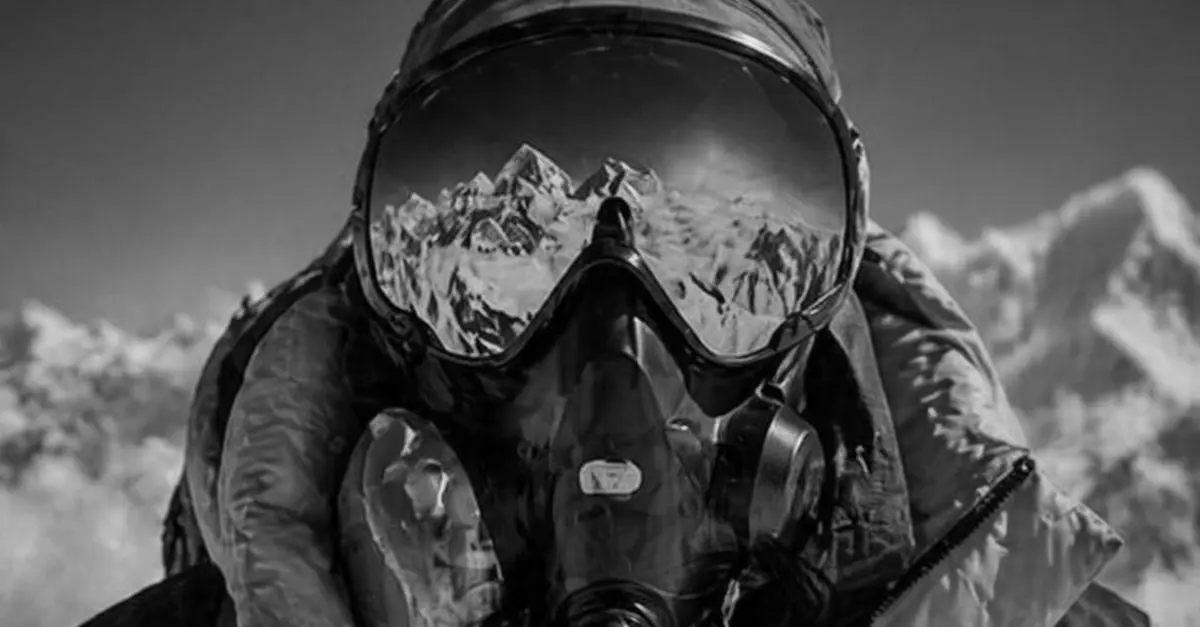
I fully endorse arriving with a minimum of six weeks of targeted preparation behind you. Simulated altitude training — whether using a hypoxic mask or mountain camps — can make a real difference, particularly for conditioning the body to function on reduced oxygen. A full medical check-up before departure is non-negotiable.
Ideal season and logistics from Osh
The weather window you cannot afford to miss
The best period for the ascent is generally June to September, when weather conditions are relatively stable. During these months, the days are longer and temperatures more manageable, offering more favourable conditions for climbing.
July remains the benchmark month for the vast majority of expeditions. August is also viable, though conditions can deteriorate towards the end of the season.
From Osh: the essential departure point
Our expedition departs from Osh, on the ancient Silk Road. We head south into the heart of Kyrgyz nomadic territory.
It takes around five hours to reach base camp (3,600 m) from Osh by comfortable motorised vehicle. The journey crosses breathtaking scenery: endless steppe, yak herds, scattered yurts in the Alay Valley. Even before putting on a crampon, the journey is already worth something.
Visa and permits: what to plan ahead
French nationals are exempt from visa requirements and registration procedures for tourist stays of under 60 days. However, border passes are required to visit the Lenin Peak region. Documents must be submitted 20 days in advance. This is a point that is frequently underestimated and can derail an expedition if left too late.
Essential equipment for a well-prepared expedition
Lenin Peak does not forgive a poorly equipped pack. Here is what I consider non-negotiable for an expedition to 7,134 m in the Pamirs:
- Double-layer altitude boots (such as Millet Everest or Scarpa Mont Blanc Pro) with integrated gaiters
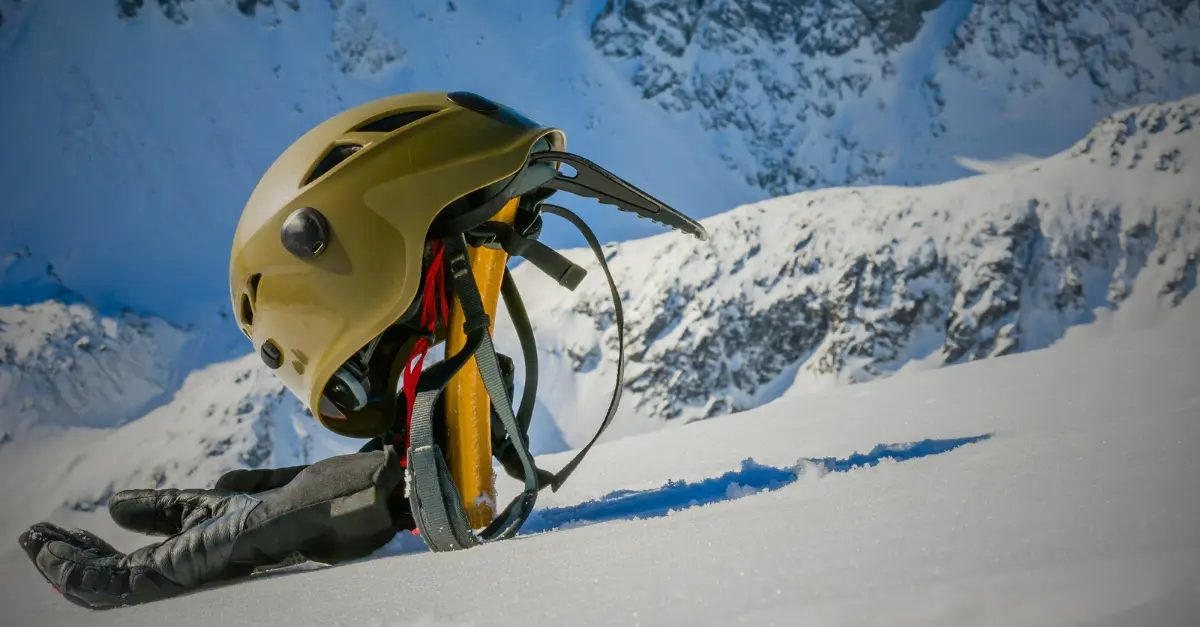
- 12-point crampons (automatic or compatible mixed binding)
- Ice axe of appropriate length + leashes
- Harness + belay device + ascender (fixed rope sections present on the route)
- Sleeping bag rated to -30°C minimum for the upper altitude camps
- Merino base layer + insulating mid-layer + high-altitude down jacket + hardshell windproof and waterproof outer layer
- Face mask, Category 4 glacier goggles, expedition gloves suited to -20°C wind chill
- Telescopic trekking poles for moraine sections and long ascents
- Altitude medical kit: Diamox, Ibuprofen, Dexamethasone (prescription required)
If you do not have all the necessary equipment, rental is available locally, particularly in Bishkek and Osh. That said, bringing your own gear is strongly recommended wherever possible, so that you are comfortable with it and can be confident in its quality.
Lenin Peak and the “Snow Leopard”
This is the very first summit required to earn the title of “Snow Leopard.” This mythical Central Asian mountaineering programme — a Soviet legacy — demands the ascent of the four highest peaks of the former USSR: Lenin Peak (7,134 m), Korzhenevskaya Peak (7,105 m), Pobeda Peak (7,439 m) and Communism Peak (7,495 m, now known as Ismoil Somoni Peak in Tajikistan).
Completing this programme means joining a handful of mountaineers worldwide who have accomplished one of the most committing high-altitude circuits on the planet. For many, Lenin Peak is therefore far more than a standalone expedition: it is the opening chapter of a long Central Asian adventure.
My take on this expedition
I have not yet climbed Lenin Peak myself — but I have spent time in Kyrgyzstan, spoken with guides who know these mountains better than their own kitchen, and followed several expeditions closely during the 2025 season. What strikes me in every account is the consistency of the message: this mountain offers something rare — extreme altitude in a pristine setting, with solid local logistics. But it demands total respect. The mountaineers who arrive telling themselves “it’s just the easy 7,000” are precisely the ones who come back down without reaching the summit — or worse.
If you have already slept at 5,000 m, if you know your feet in crampons and your ice axe on a steep ice slope, this summit is within your reach. With serious preparation, an operator who does not cut corners on acclimatisation, and a little luck with the weather.
FAQ
Is a guide mandatory for climbing Lenin Peak?
Legally no, but having a professional alongside you remains the prudent choice when facing the pitfalls of extreme altitude.
- The legal framework: Authorities impose no regulatory obligation to be accompanied on the mountain. An experienced mountaineer can technically attempt the climb independently.
- The reality on the ground: Even though the route is considered technically accessible, reading a moving glacier, crossing crevasses, anticipating unstable weather and managing the progression schedule all require sharp expertise. This is why the majority of expedition operators deploy a certified IFMGA guide, supplemented where needed by local support staff.
How much time should you plan for a complete expedition?
The ideal duration is around three to four weeks, to allow for rest days and safety margins.
- The base schedule: You should plan for a trip of at least three weeks in total departing from Europe. Packages limited to 18 or 20 days frequently prove too tight the moment weather conditions deteriorate.
- The success formula: To maximise the chances of reaching the summit, mountaineering agencies favour longer formats spanning 25 to 30 days, which provides genuine flexibility to cope with the unpredictability of mountain weather.
What technical and physical background is recommended before signing up?
Prior exposure to altitude and the fundamentals of mountaineering is essential.
- High-altitude experience: It is strongly advisable to have already reached at least one summit in the 5,000 to 6,000 metre range, including the experience of spending a night at a high camp.
- Technical skills: Participants must be proficient in the basics of glacier travel (roped progression, ice axe use and crampon technique). Benchmark ascents such as Mont Blanc or Elbrus (5,642 m) serve as excellent indicators of readiness.
What are the main dangers associated with Lenin Peak?
Despite its reputation as an “accessible 7,000”, this mountain carries all the risks inherent to extreme altitude.
- Objective hazards on the terrain: Mountaineers are directly exposed to the risk of serac falls (collapsing ice towers), crevasses that may be hidden beneath the glacier surface, and violent storms that can sweep across the ridges with little warning.
- The physiological factor: Acute mountain sickness (AMS) caused by oxygen deprivation is an invisible but critical danger. Rigorous acclimatisation, top-quality thermal protection equipment and the presence of experienced guides help mitigate these risks — though they can never be entirely eliminated.