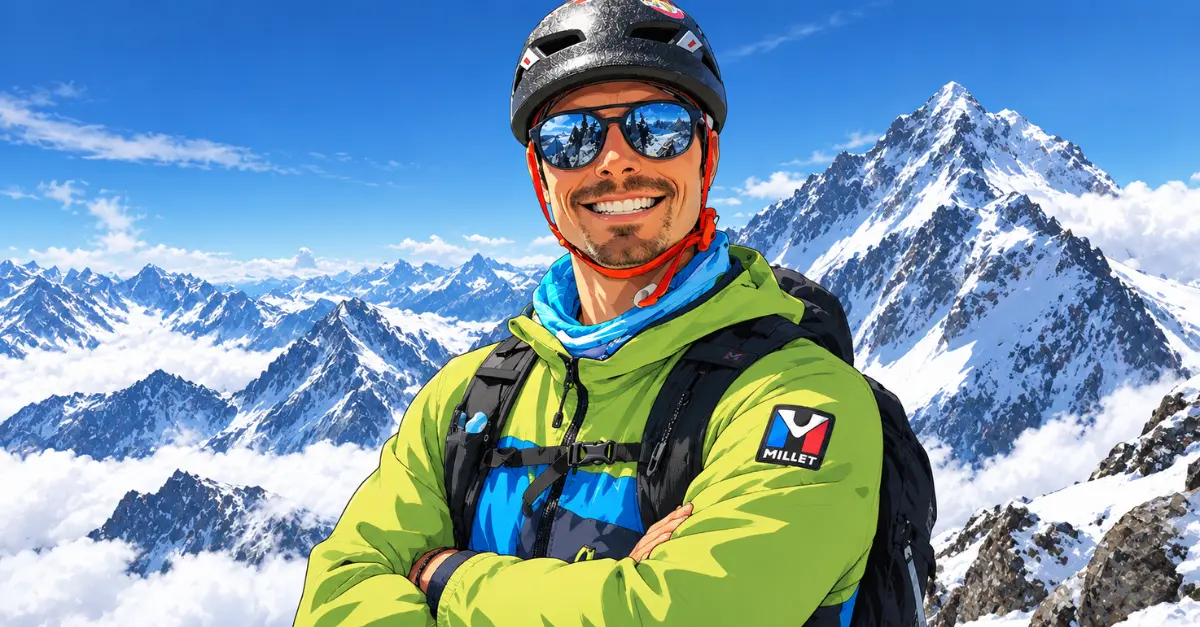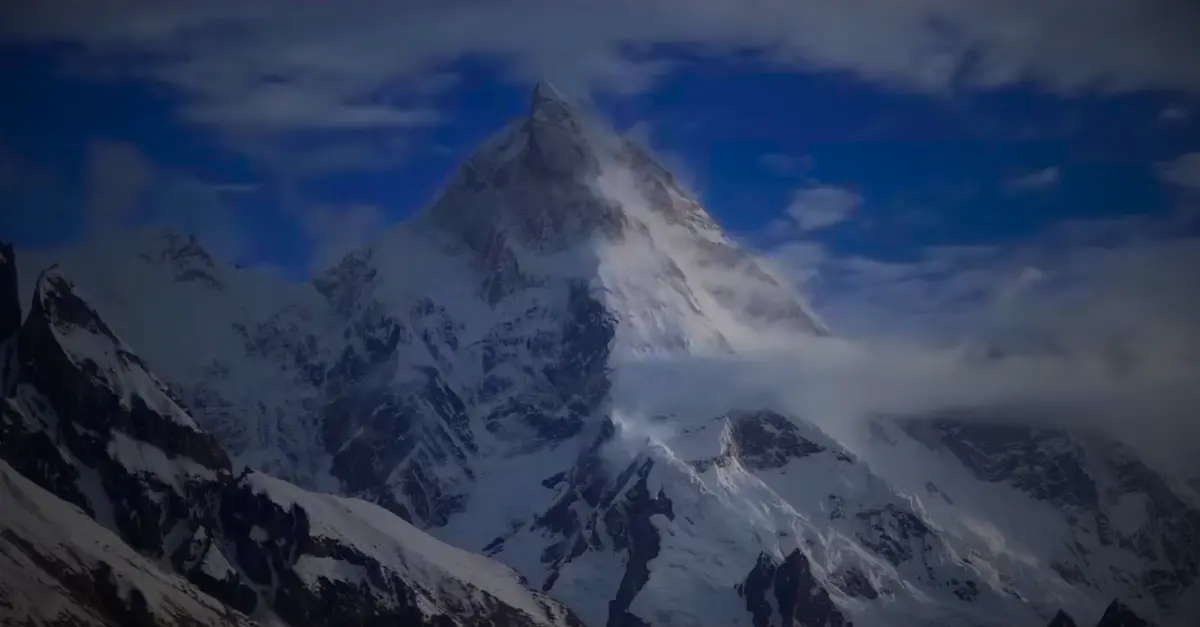

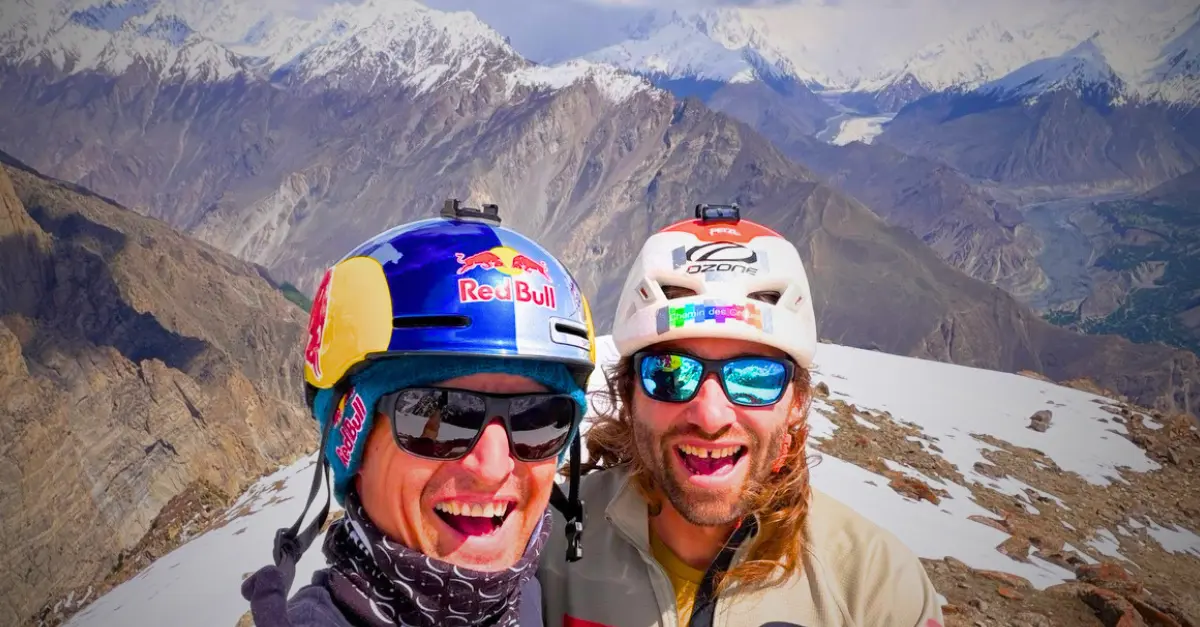
The Karakoram paragliding record has just fallen, and it carries the signature of French pilot Antoine Girard. Barely two weeks after returning to the Hunza Valley in Pakistan, he completed the first-ever 400 km FAI triangle in the history of free flight, in conditions where storms threatened at every turn.
Having hiked the trails to Everest Base Camp myself and spent nights above 5,000 metres, I know just how generous and unforgiving this stretch of the Himalaya and Karakoram can be. So watching a pilot soar by paraglider over peaks I once gazed up at from the ground, and wrap it all up in just 11 hours and 32 minutes, completely redefines what we thought was possible at high altitude.
In this article, I’ll walk you through how this flight unfolded minute by minute, why an FAI triangle is so brutal to pull off, and what this feat changes for cross-country pilots flying in extreme terrain.
A fast-track return to the Hunza Valley
Antoine Girard and his longtime flying partner, Russian pilot Veso Ovcharov, are no strangers to the region. Every summer, the duo returns to their usual playground: the Hunza Valley, flanked by the giants of the Karakoram and their thermals, as powerful as they are unpredictable.
From the moment they touched down, the pair launched straight into a string of acclimatisation flights, using the paraglider itself to gain altitude fast. “As soon as we arrived, we went up to spend the night at 4,300 m, but thanks to the paraglider, the ascent was quick and efficient,” Girard told his sponsor Ozone Paragliders.
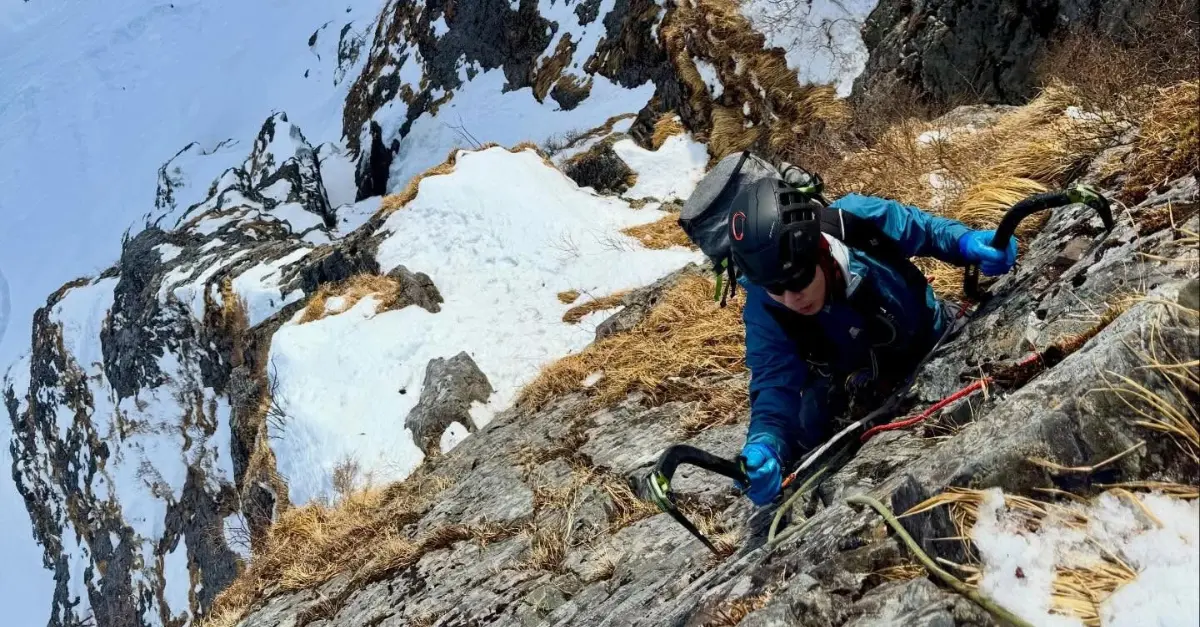
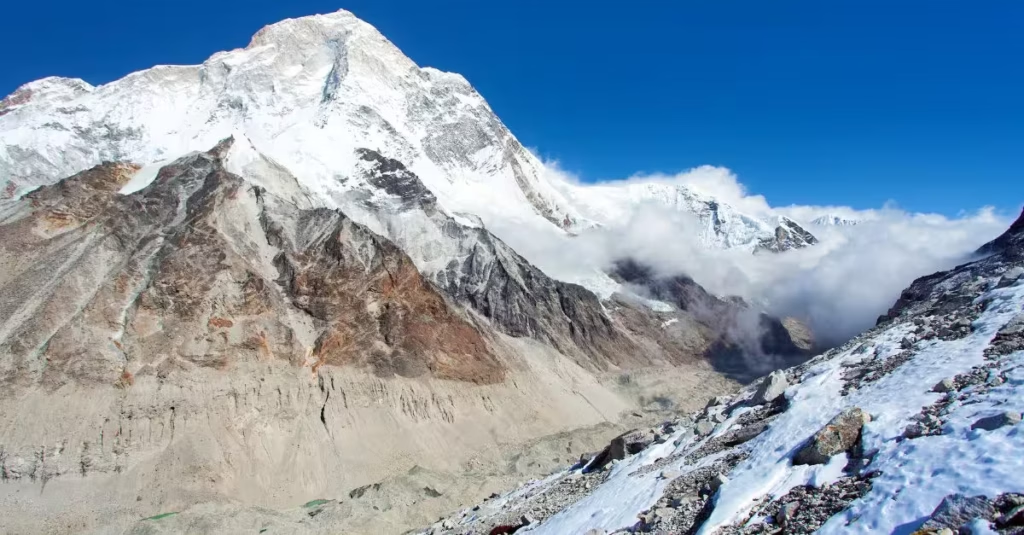
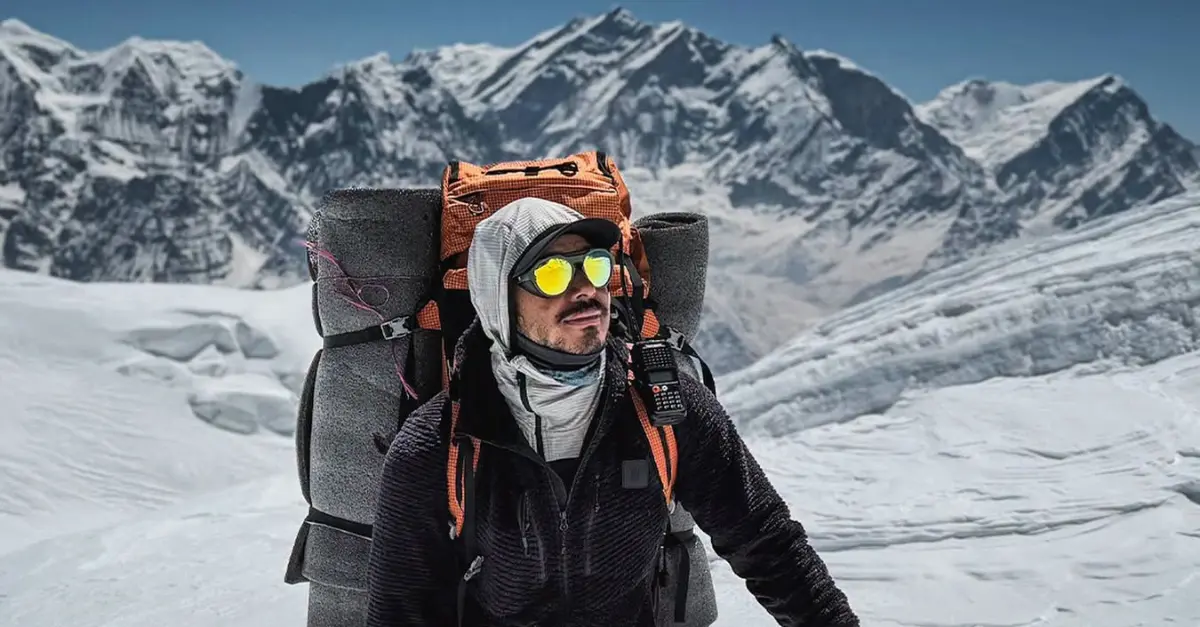
That first week was anything but a gentle warm-up. The pilots racked up cross-country flights under cloud streets, combined with hiking and ski touring out of their base camp, pitched above 5,500 metres at the foot of the 7,388-metre Ultar Sar. A gruelling physiological build-up, and an essential one if they were going to handle eleven hours of flying without cracking.
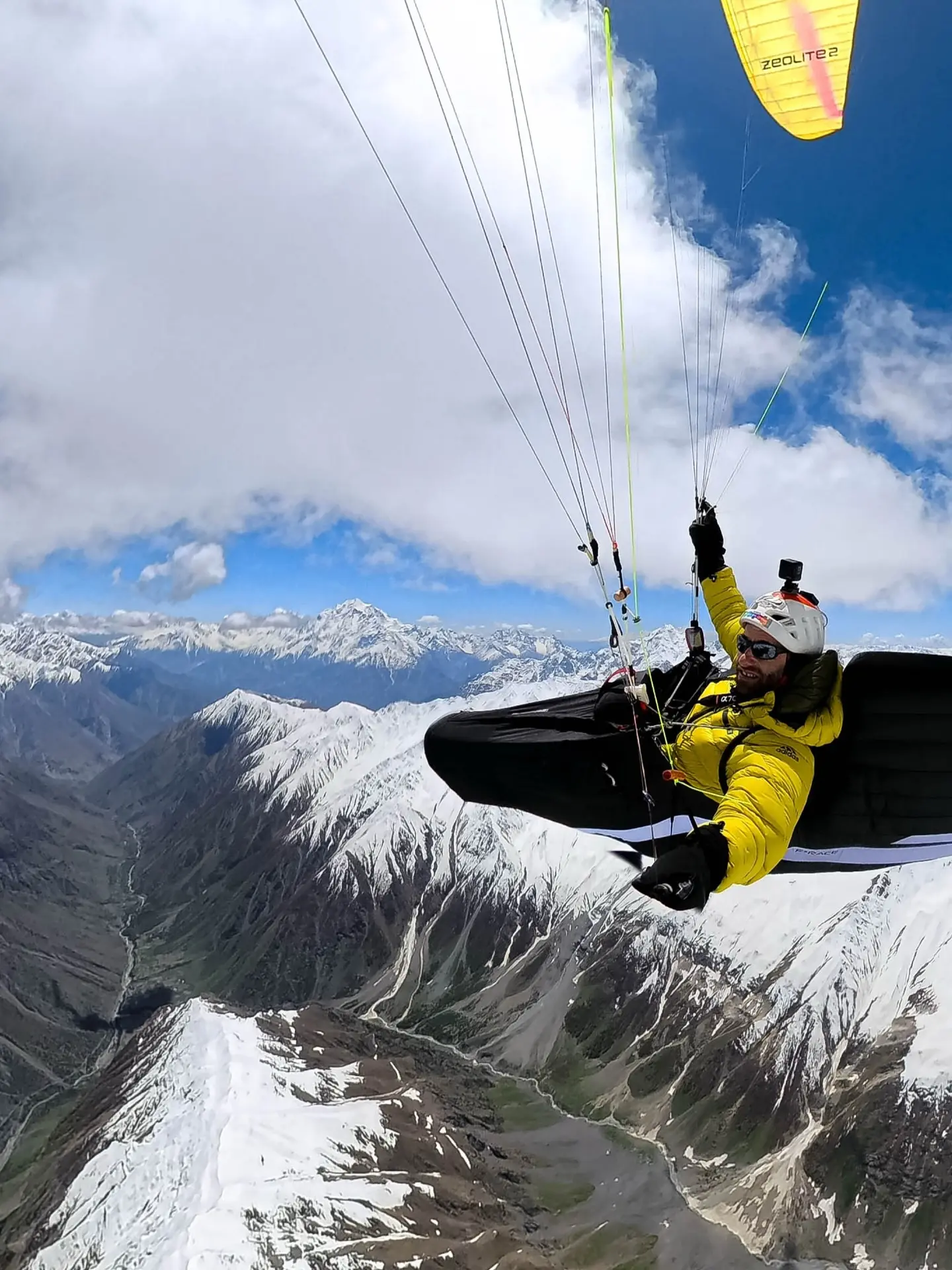
photo instagram @ozoneparagliders
The day everything changed
It all came down to a Tuesday. Girard set off on what would become a historic flight: a 400 km FAI triangle, never achieved before by anyone in the world of free flight.
“Veso and I teamed up to push our speed on the course,” he said after landing. “The strategy worked perfectly, until heavy rain interrupted our progress.”
An hour lost in the storm
This is where things could easily have gone the other way. Rather than force his way through, Girard chose patience: waiting for the rain to clear, then routing around the disturbed zone. “I chose to wait it out, then skirt around the rain cell,” he explained. “That decision cost me nearly an hour, forcing me to work with very weak, disorganised thermals once the storm had passed, but the patience paid off in the end.”
A call like that, made above 6,000 metres after hours already in the air, says a lot about the nerve this sport demands. One impatient move, one wrong line, and the whole record falls apart.
The numbers behind the feat
Beyond the story itself, the data compiled by XC Magazine puts the scale of the performance into perspective. Here are the official stats for this flight, launched from Karimabad on an Ozone Zeolite 2:
- Distance: 400.5 km FAI triangle
- Maximum speed: 90 km/h
- Average speed: 35.8 km/h
- Maximum altitude: 6,746 metres
- Total climb: 2,455 metres
- Total flight time: 11 hours and 32 minutes
- Maximum climb rate: 5 m/s
The route passed over legendary peaks including Shispare, the Batura range, Ghamubar Zom and the Thui group, before dropping back down toward Leila Peak and Masherbrum on the return leg. A track that brushed the Afghan border before swinging sharply toward Gilgit.
Why an FAI triangle is so hard to close
Not all triangles are created equal in paragliding. An FAI triangle has to satisfy strict rules set by the Fédération Aéronautique Internationale, designed precisely to stop pilots exploiting favourable conditions along a single axis by flying a “needle” triangle — essentially a disguised out-and-back.
According to specialist blog Ad Nubes, for a course to be ratified as an FAI triangle, the shortest leg has to make up at least 28% of the total distance. There’s another constraint too: the gap between the final turnpoint and the start has to stay under 20% of the triangle’s total distance, so the shape doesn’t end up too “flat.”
In practical terms, that forces the pilot to work three different flying directions, often fighting a headwind on at least one of the three legs. Simply riding the day’s tailwind isn’t an option: you have to plan ahead, read the sky hours in advance, and accept losing altitude in one place to claw it back somewhere else.
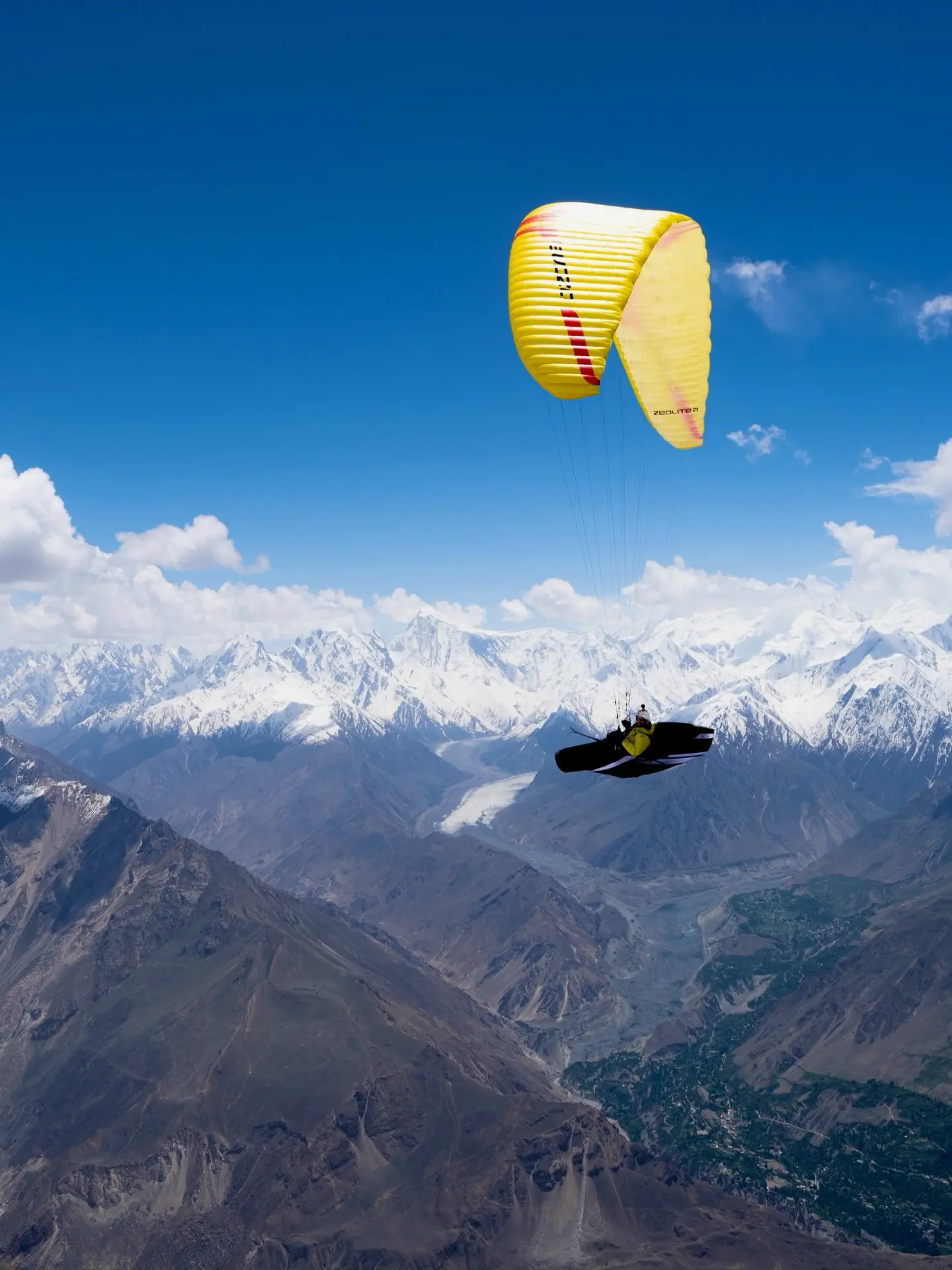
photo instagram @ozoneparagliders
Veso Ovcharov, the teammate forced to bail
The start of the adventure felt like a waking dream for both men. “The beginning of the flight was simply breathtaking, with blue skies, small clouds building above 6,800 metres and temperatures dropping to -15°C, but I was struggling to keep up with Girard,” Ovcharov recalled.
An imperfect acclimatisation, a battery issue with his heated gloves, and increasingly harsh conditions in the second half of the flight eventually got the better of him. The Russian pilot chose to land safely rather than take unnecessary risks above 6,000 metres.
“Antoine, though, carried on alone, still fired up and skilfully threading his way between huge clouds and rain,” he remembers. “In the end, he managed to dodge the bad weather and close out the perfectly planned course. Despite losing an hour to the weather, he still broke the record.” Ovcharov didn’t hesitate to call his friend “an incredibly talented pilot and a mentally tough man.”
Antoine Girard, a track record that already commanded respect
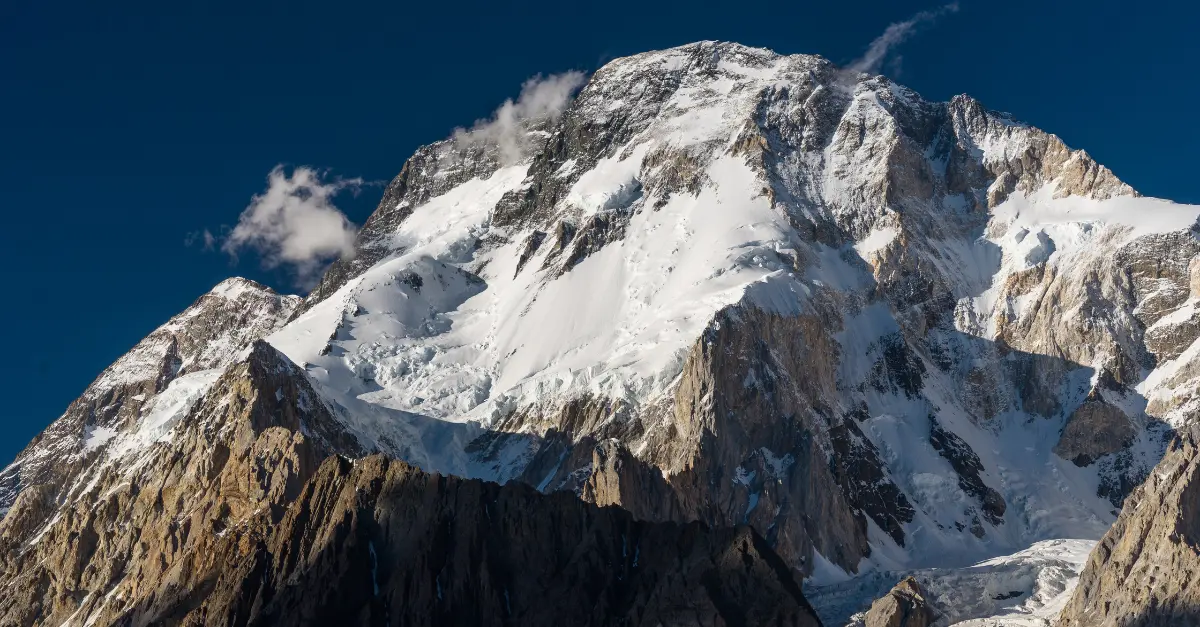
This new record didn’t come out of nowhere. Girard has been racking up firsts in distance paragliding for years. Back in 2021, he became the first pilot ever to fly over an 8,000-metre peak, climbing above Broad Peak and its 8,051 metres.
While Hunza remains his yearly fixture, he carved out a detour in 2025, crossing the American and Canadian Rockies: 3,000 km covered by flying and bivouacking, in a style closer to aerial mountaineering than straightforward cross-country.
The key takeaway is that this Karakoram record isn’t an isolated flash of brilliance, but the logical culmination of a sporting trajectory built flight after flight, season after season, on some of the most demanding terrain on the planet.
The risks of a sport that flirts with the extreme
It would be a mistake to romanticise this discipline without acknowledging its darker side. High-mountain paragliding, sometimes combined with climbing and skiing, opens up extraordinary exploration possibilities in remote regions, but it carries real risks, as with any air sport.
Two years ago, a member of Girard’s team, flying solo that day, lost his life in an accident near the Baltoro. A brutal reminder that even the most experienced pilots operate in an environment where the margin for error stays razor-thin, between extreme altitude, fickle weather and total isolation.
My take on a flight that redefines what’s possible
I’m fully on board with both the sporting and exploratory dimensions of this feat. Having trekked to Everest Base Camp myself, I have some idea of what a night at 4,300 or 5,500 metres feels like: short of breath, sleep that never quite settles, cold that creeps in everywhere. So picturing eleven hours of active flying on top of that, reading thermals in real time above 7,000-metre peaks, genuinely commands respect.
What strikes me most in Girard’s account isn’t really the distance, it’s how he handled the unexpected: that hour lost in the rain, the choice to wait rather than force it. That’s exactly what classic mountaineering teaches you, and it’s reassuring to see that same ethic of patience show up in extreme free flight too. My take is that this record clearly marks a turning point in how we think about high mountains: no longer just terrain to be climbed, but a space to be crossed in every dimension.
Frequently asked questions about this paragliding record
What is an FAI triangle in paragliding?
It’s a closed-circuit distance flying format governed by the very strict geometric criteria of the Fédération Aéronautique Internationale.
- The geometry rule: For a flight to be ratified as an FAI triangle, the pilot must validate three distinct turnpoints in the air. To prevent overly linear routes or pilots exploiting a single tailwind the whole way, the rule states that the shortest leg of the triangle must make up at least 28% of the circuit’s total distance.
- Closing the circuit: The flight’s final point (landing or track closure) has to fall within a minimum distance of the original take-off point. This setup demands excellent navigation strategy to deal with shifting wind directions throughout the day.
What’s the exact distance of the record Antoine Girard broke?
This historic feat rests on a certified distance of 400.5 kilometres covered in a single day of flying.
- The key performance numbers: The full flight demanded total physical and mental commitment over 11 hours and 32 minutes non-stop at the controls of the paraglider.
- The extreme altitude: Over the course of this titanic crossing in Pakistan, Antoine Girard worked exceptional thermal climbs to reach a maximum ceiling of 6,746 metres above the Hunza Valley, operating in severe cold and hypoxic conditions.
Where exactly is the Hunza Valley?
This legendary glacial valley sits within Pakistan’s most rugged northern territories.
- The geographical marker: It stretches through the heart of the mountainous Gilgit-Baltistan province.
- The alpine setting: The valley is literally ringed by the giants of the Karakoram range. The site offers aerological terrain of unprecedented scale and violence for free flight, dominated by towering peaks like Rakaposhi (7,788 m) and Ultar Sar (7,388 m).
Does high-altitude mountain paragliding carry major risks?
Yes, flying free in mountain ranges of this scale is one of the most committing disciplines in extreme sports.
- Aerological and weather hazards: Flying near giant peaks exposes pilots to powerful valley winds, violent confluence effects and thermal cycles of extreme intensity. What’s more, at these altitudes weather conditions can flip from dead calm to full storm within a matter of minutes.
- Survival management: The danger is also physiological (extreme cold, frostbite, oxygen deprivation clouding judgement) and logistical. In the event of a forced landing or incident deep in the Karakoram, total geographical isolation and the absence of organised rescue turn the smallest mistake into a critical survival situation instantly. Careful altitude acclimatisation and flawless weather reading are the only real safety nets.