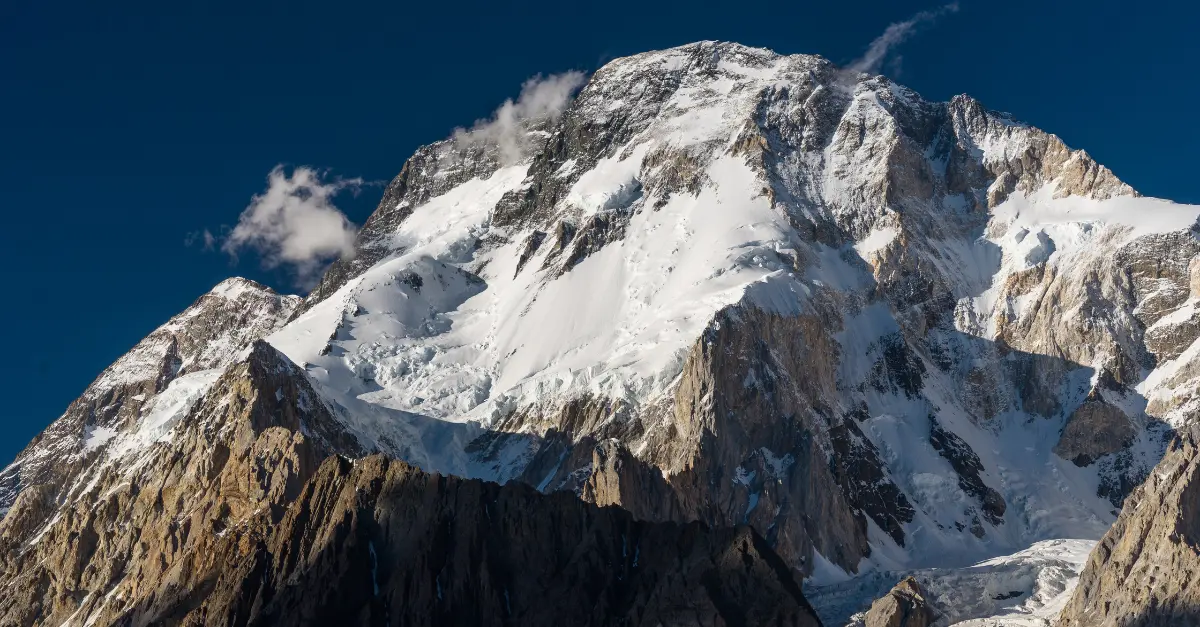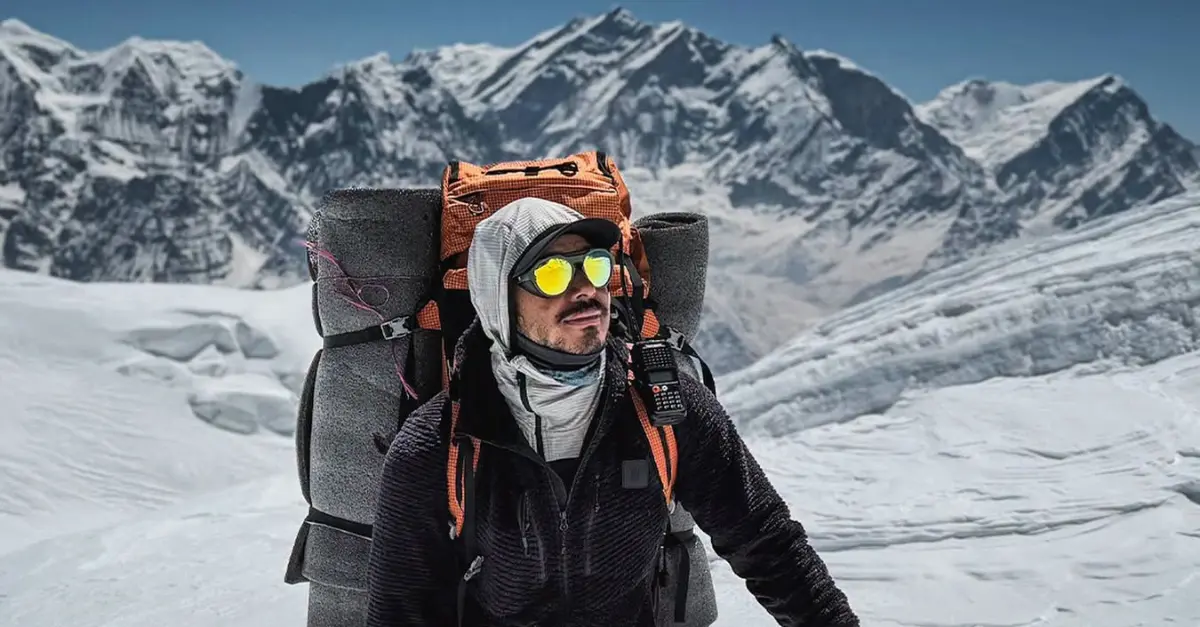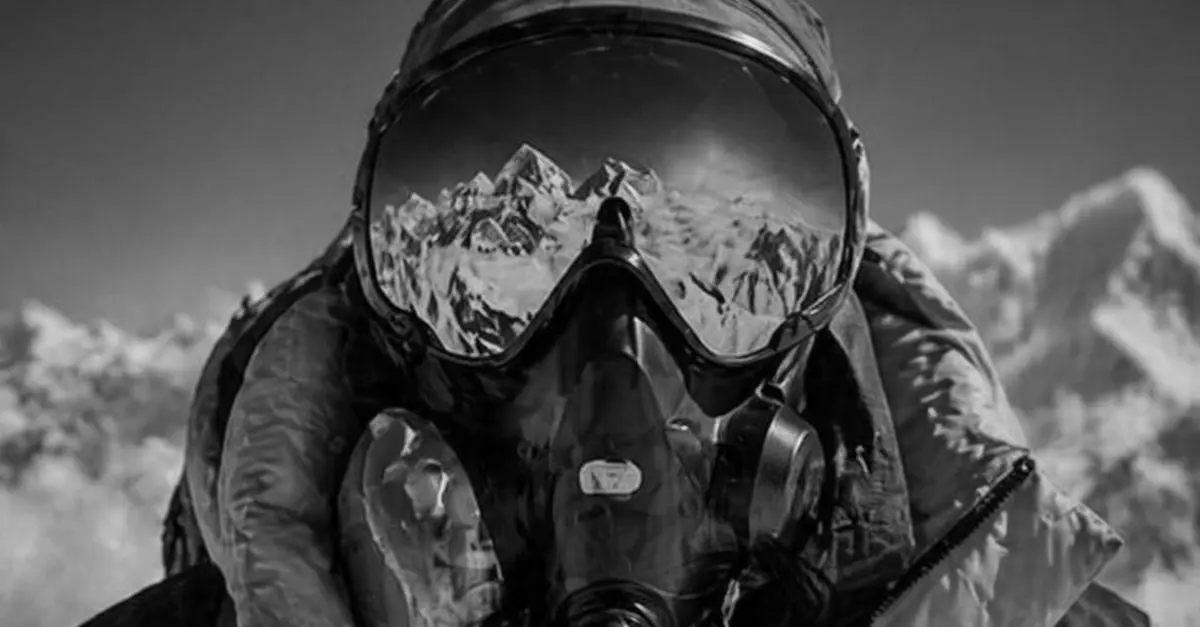

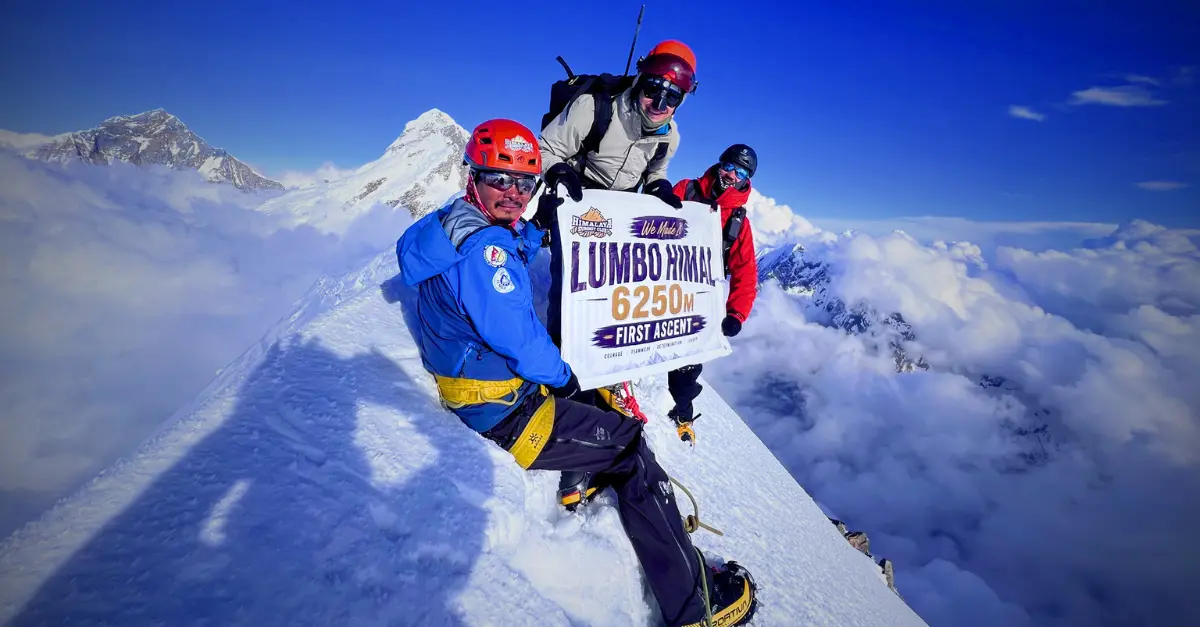
The Lumbo Himal has just made history. On June 22, 2026, Tulsi Gurung, IFMGA-certified mountain guide at Himalaya Summit Club and member of the Outwild team, successfully led the first recorded ascent of this virgin peak at 6,250 meters, deep in the Gorkha district of Nepal. No traces, no ropes left by predecessors — nothing. Just a summit no one had ever reached before.
“I knew this expedition would be different from anything I’d experienced before. What I hadn’t measured was how deeply it would mark me.” — Tulsi Gurung
In a world where it seems no blank spaces remain on the Himalayan map, standing before a completely unknown mountain produces a strange sensation — a mix of excitement and humility that words struggle to capture.
An unknown summit in a forgotten region
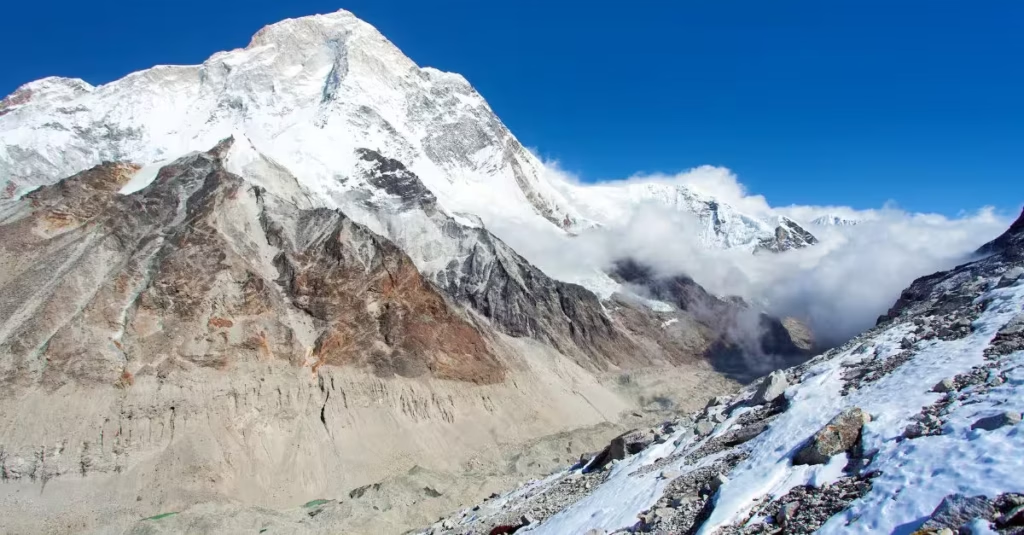
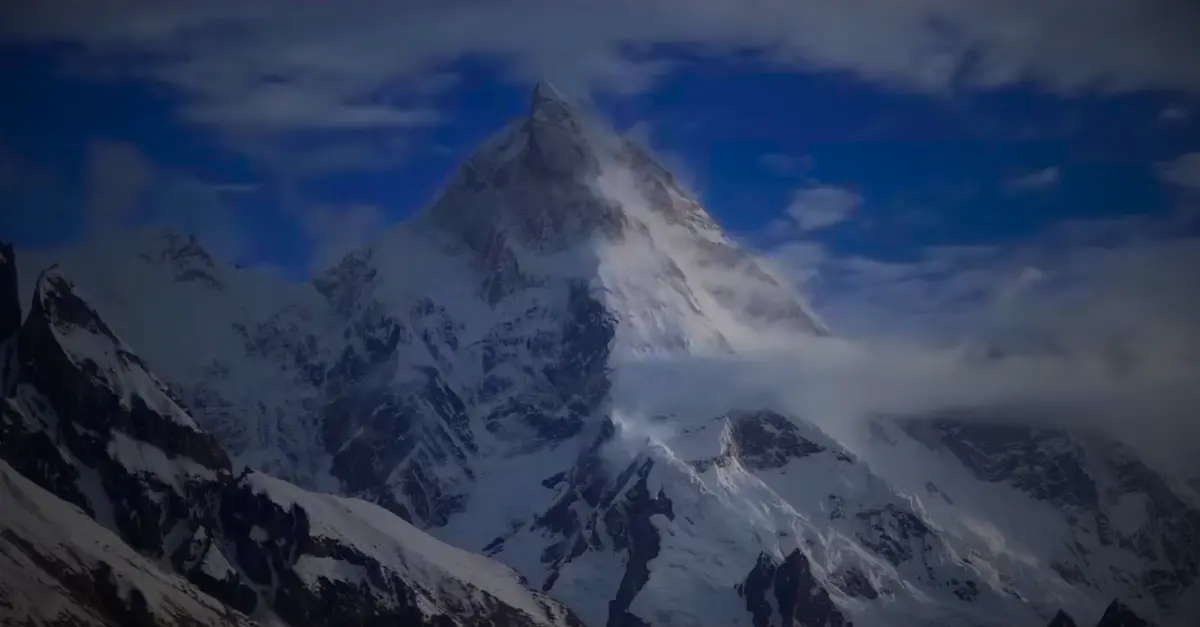
The Lumbo Himal rises on the southern flank of the Ganesh Himal range, along the northern boundary of the Manaslu Conservation Area. A region that even seasoned trekkers tend to overlook — no lodges, no marked trails, no reputation. Just pristine valleys and a rare wildness that, in 2026, is almost impossible to find anywhere in the Himalaya.
The rural municipality of Dharche, in Gorkha district, is the anti-Annapurna. Where the Annapurna Circuit sees thousands of trekkers pass through every year, these valleys see nothing but wind. Beyond Yaruphant (1,170 m), the expedition’s starting point, there is nothing. No tea houses, no infrastructure whatsoever. “From the very first hours of walking, I understood we were entering somewhere no one had gone before us,” Tulsi recalls. The Ganesh Himal base camp at 4,150 meters was reached through landscapes she simply describes as “untouched.”
It is precisely this cartographic void that makes this achievement so significant.
The approach: when logistics is already an expedition
Even before talking about climbing, reaching the Lumbo Himal is in itself a full exploration adventure. The route from Yaruphant crosses a completely isolated valley system, with no established trail and no reference points for unfamiliar teams. Tulsi orchestrated the progression in stages:
- Yaruphant (1,170 m) — starting point, last inhabited village
- Dung Dung Buk — first approach camp in the valley floor
- Kal Buk — second camp, mid-valley
- Ganesh Himal Base Camp (4,150 m) — base for all alpine operations
- High Camp (5,049 m) — final bivouac before the summit push
Between base camp and high camp, no safe intermediate camp could be established. “That section committed us completely. Once engaged, there was no halfway option,” she explains. This kind of terrain demands a mental resilience that not every climber possesses — and airtight logistical planning from the very start.
The southwest face: an alpine route with serious character
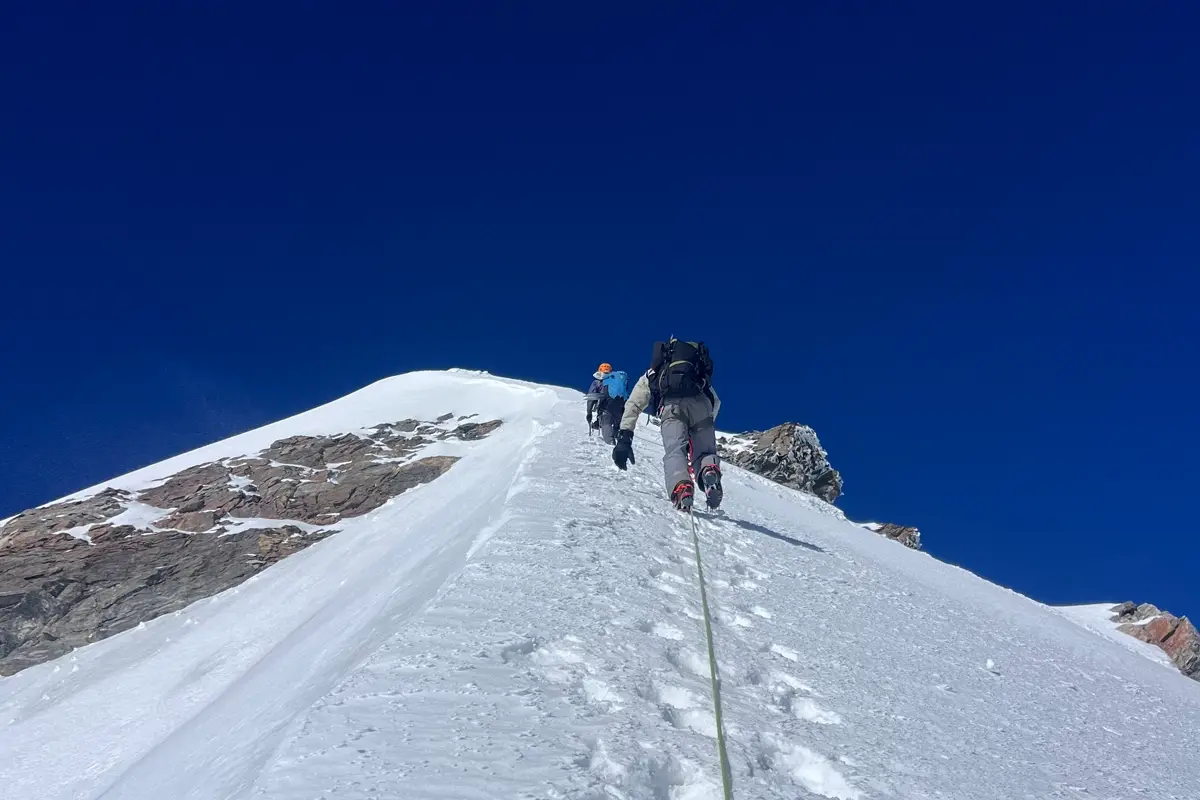
The route chosen — or rather discovered, since nothing existed before — is the southwest face. Selected after a thorough reconnaissance of snow, rock and ice conditions, it proved demanding, varied, and in places genuinely hostile.
The lower section
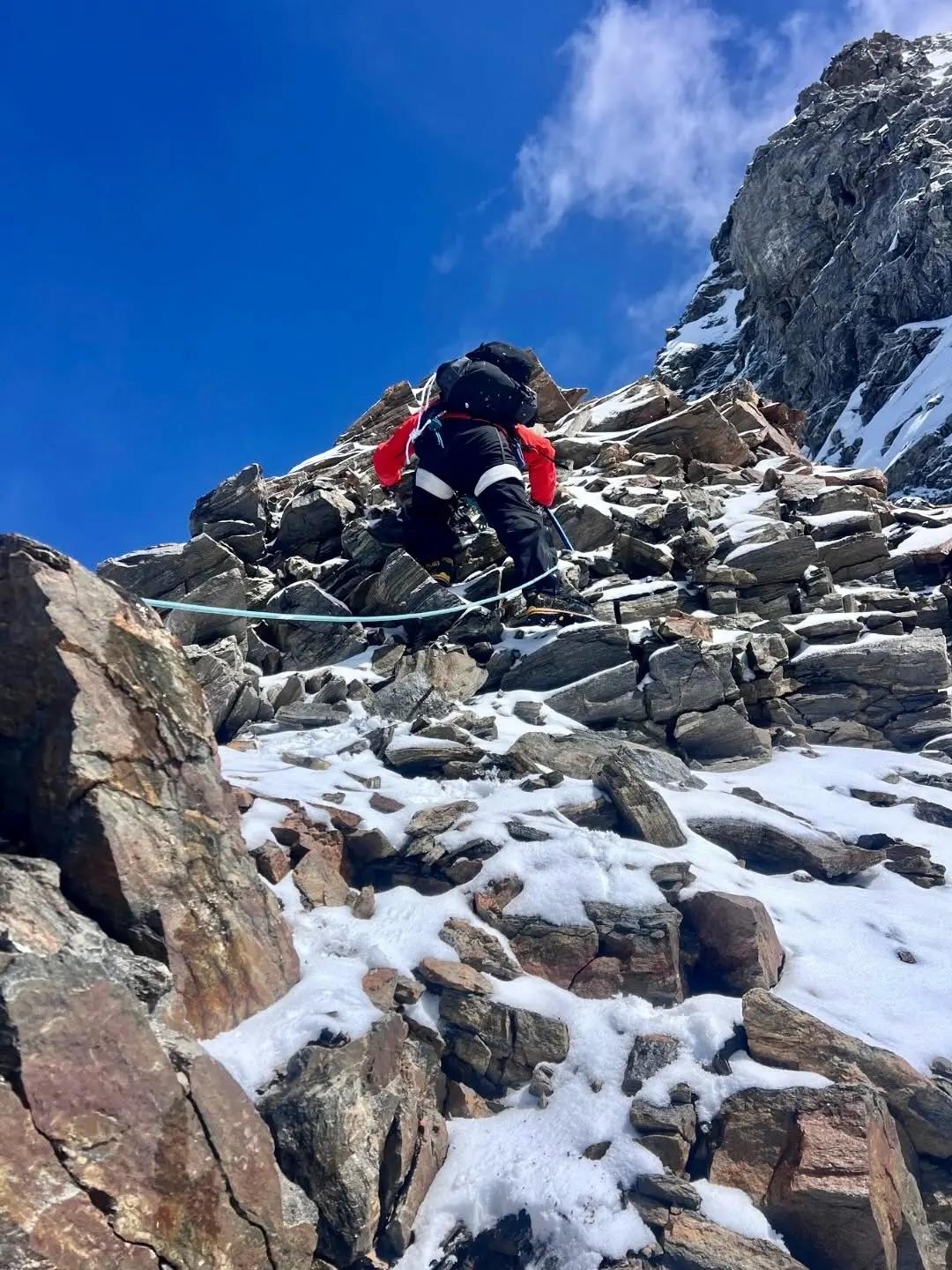
From the very bottom, the tone is set. Heavy scree, unstable rock, sustained slopes at 30–40°. Rockfall was identified as the most serious objective hazard in this section. “On terrain nobody knows, every move demands full attention. You can’t rely on anyone else’s experience — there isn’t any,” Tulsi points out.
The intermediate section
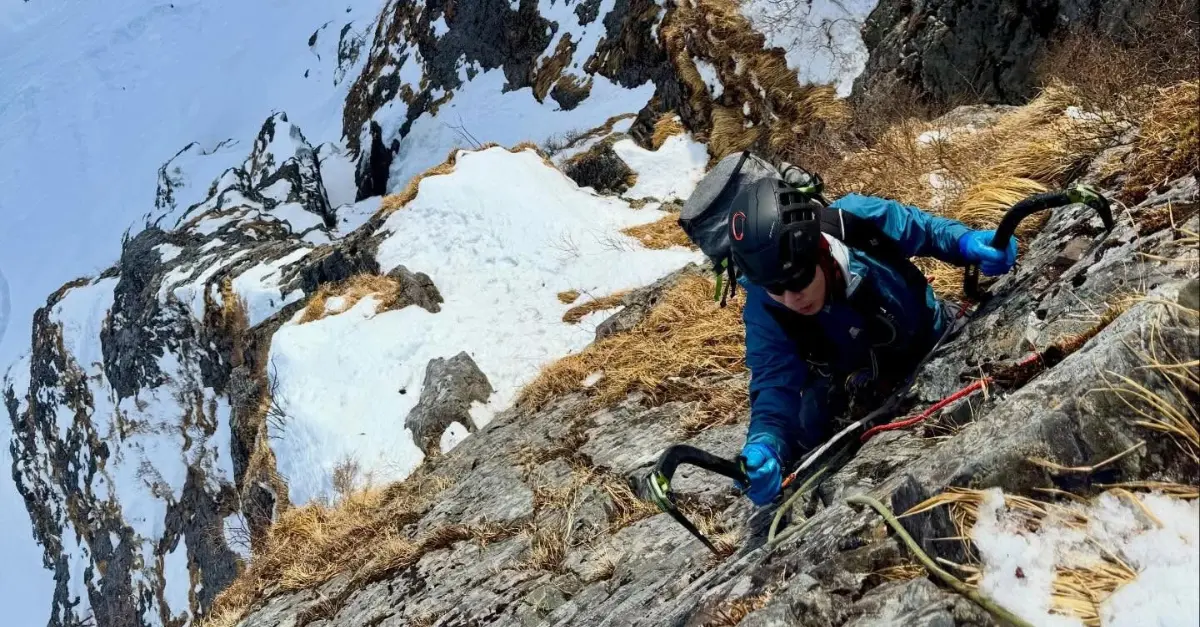
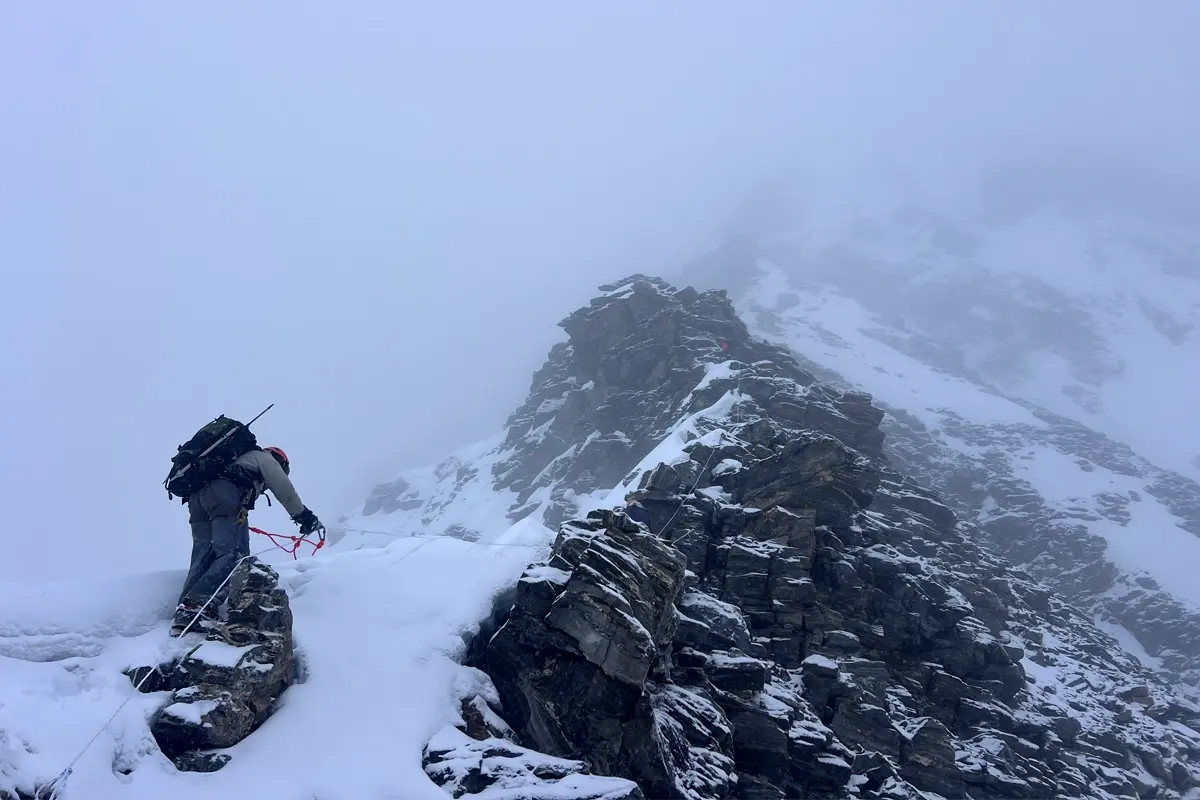
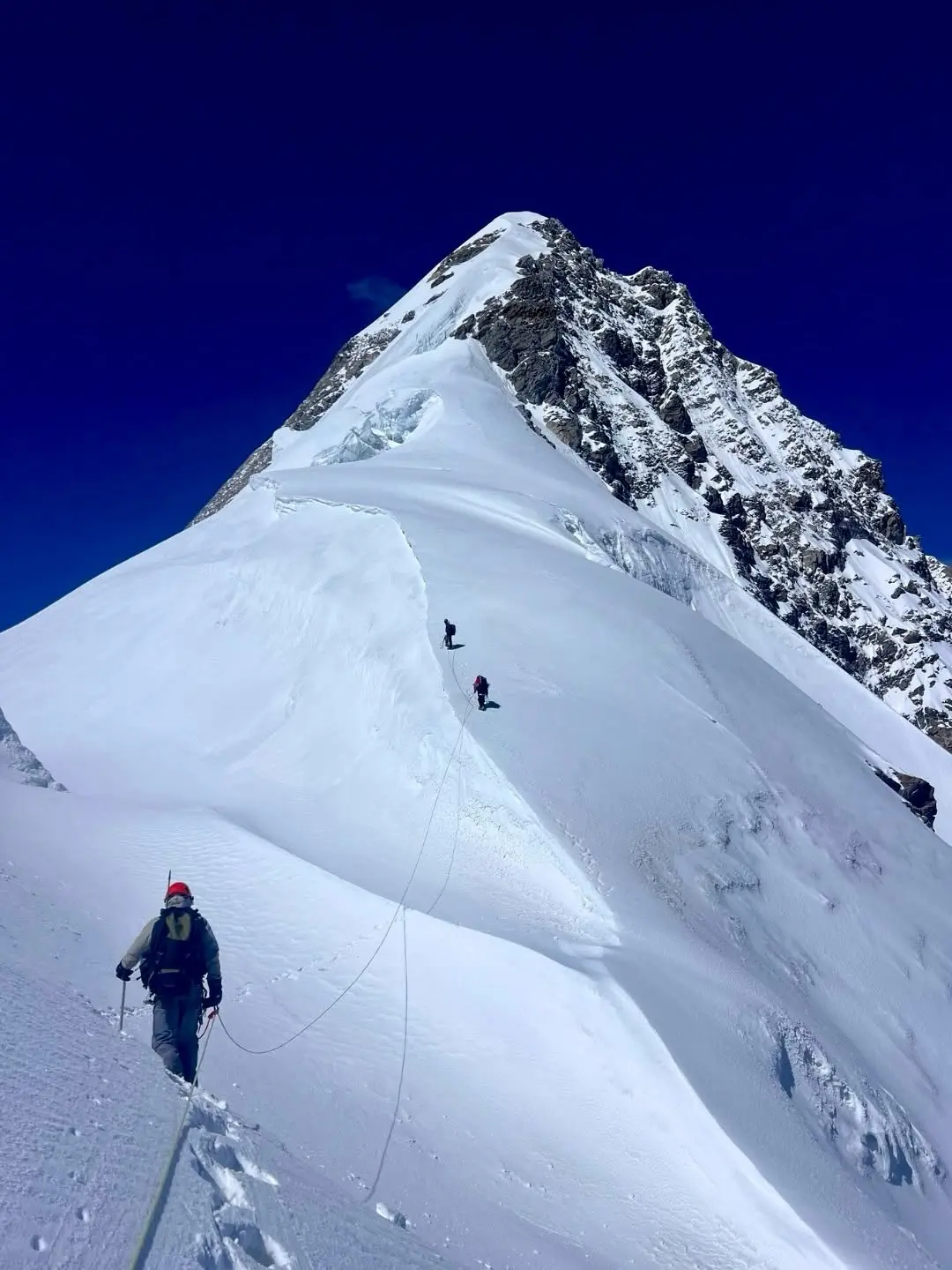
Before the false summit, the mountain toughens considerably. Pitches at 50–70°, continuous mixed terrain, increasing exposure. Over roughly 800 meters of sustained vertical gain, 80% of the route runs along an unstable rocky ridge. The team had to clear snow to secure holds, and 400 meters of fixed rope were installed to protect the most technical passages.
The traverse and the final wall
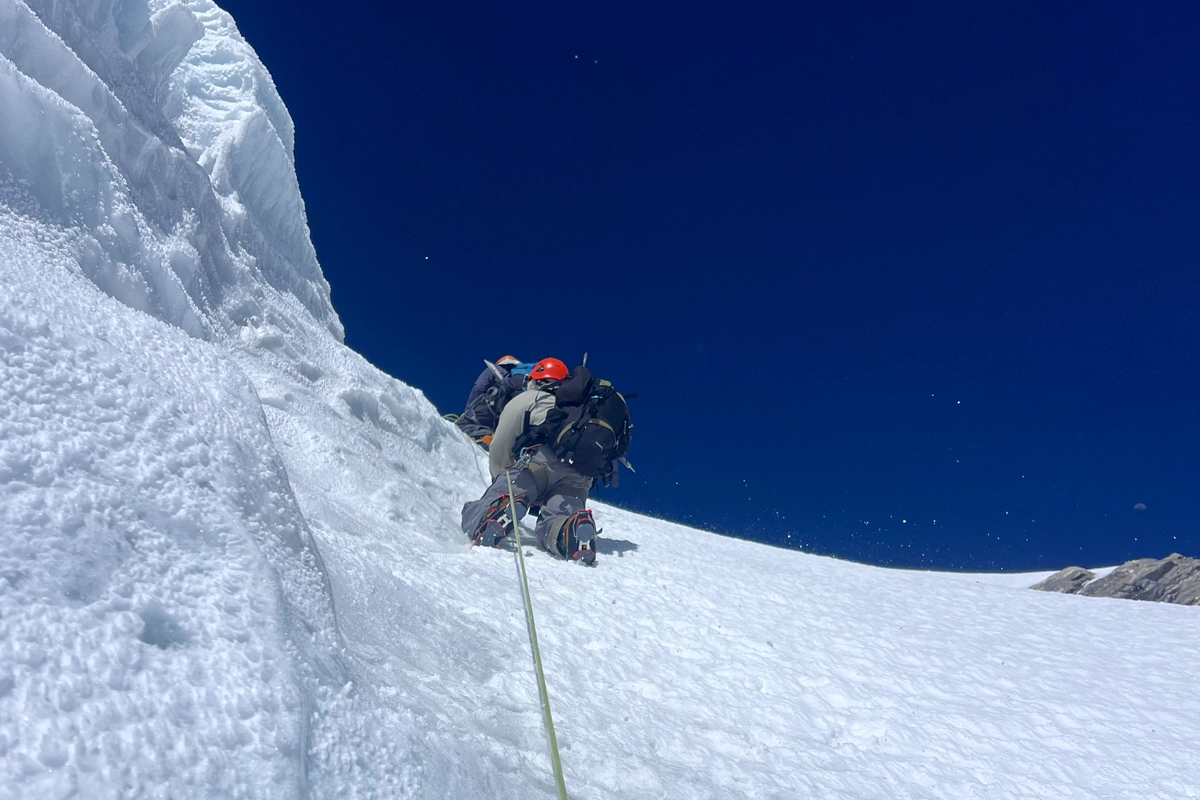
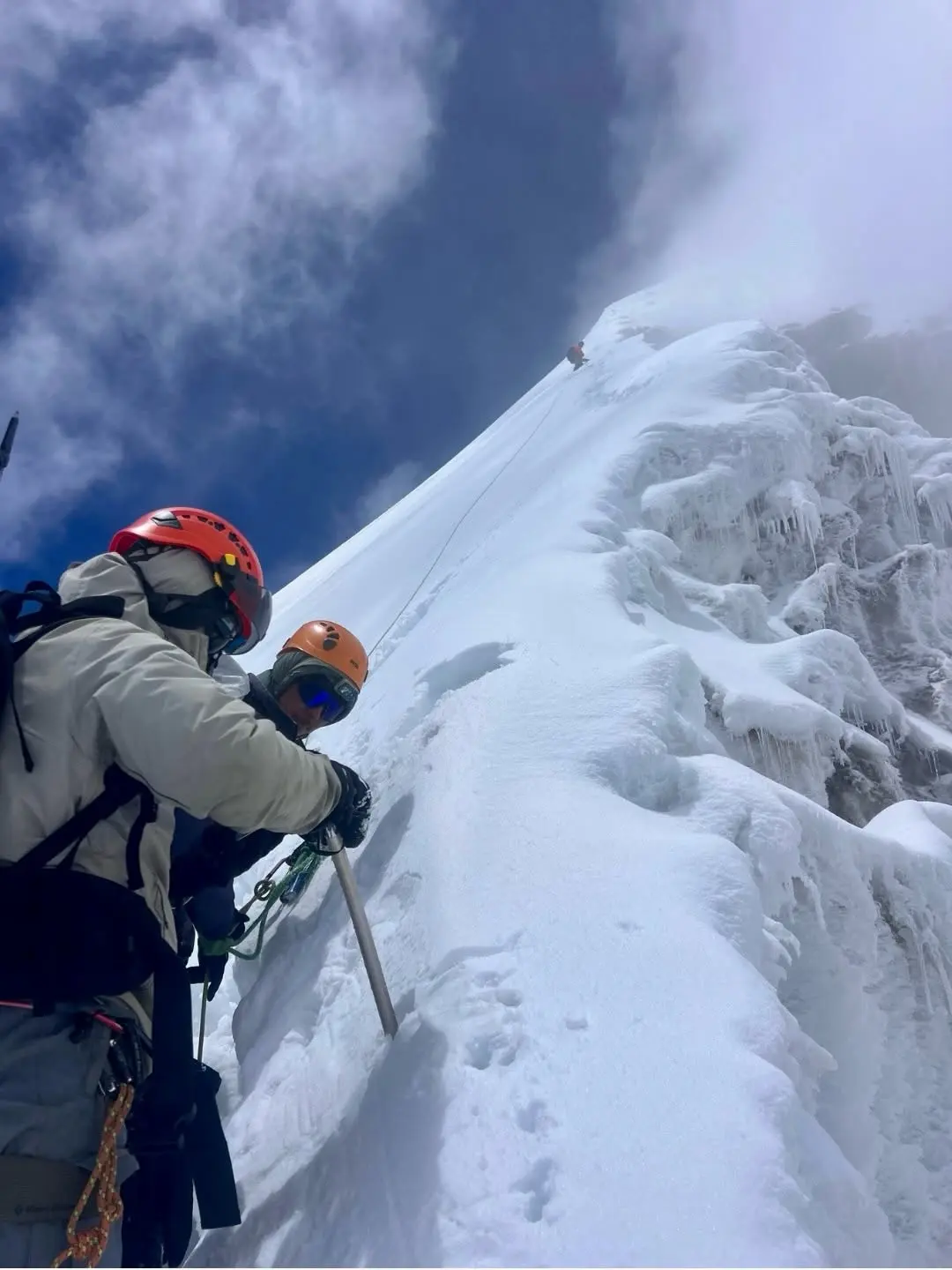
After the false summit, the team shifted to pure alpine style — no fixed protection — for a 300–400 meter traverse across the west face. Slopes ranging from 10–40°, some crevasses, and tricky mixed snow conditions. Then came the summit wall: an ice face at 60–85°, with technical front-pointing required on the steepest sections.
“The final wall — that’s where everything is decided. The fatigue is already there, but you have to stay precise, focused, millimeter by millimeter,” Tulsi recalls.
June 22, 2026: twenty hours to make history
The team left high camp (5,049 m) at 4:00 AM. The night was still complete, headlamps cutting through the dark. By 4:00 PM, they stood on the summit of Lumbo Himal for the first time in history. A summit ridge so narrow that only five or six climbers can stand side by side at once.
“Standing there, on a ridge where no human being had ever set foot — it’s a feeling impossible to describe. Not euphoria. More like an immense and silent gratitude.” — Tulsi Gurung
The descent, careful and technical, brought them back to high camp around 3:00 AM. A total of twenty hours of continuous climbing from the moment they left. One of the most physically grueling days any mountaineer can face at altitude. The team returned safe and sound — on completely unknown terrain, that is the only true measure of success.
The Gurung puja: when mountaineering honours the sacred
This aspect is too often treated as a folkloristic footnote in expedition reports. Here, it deserves far more.
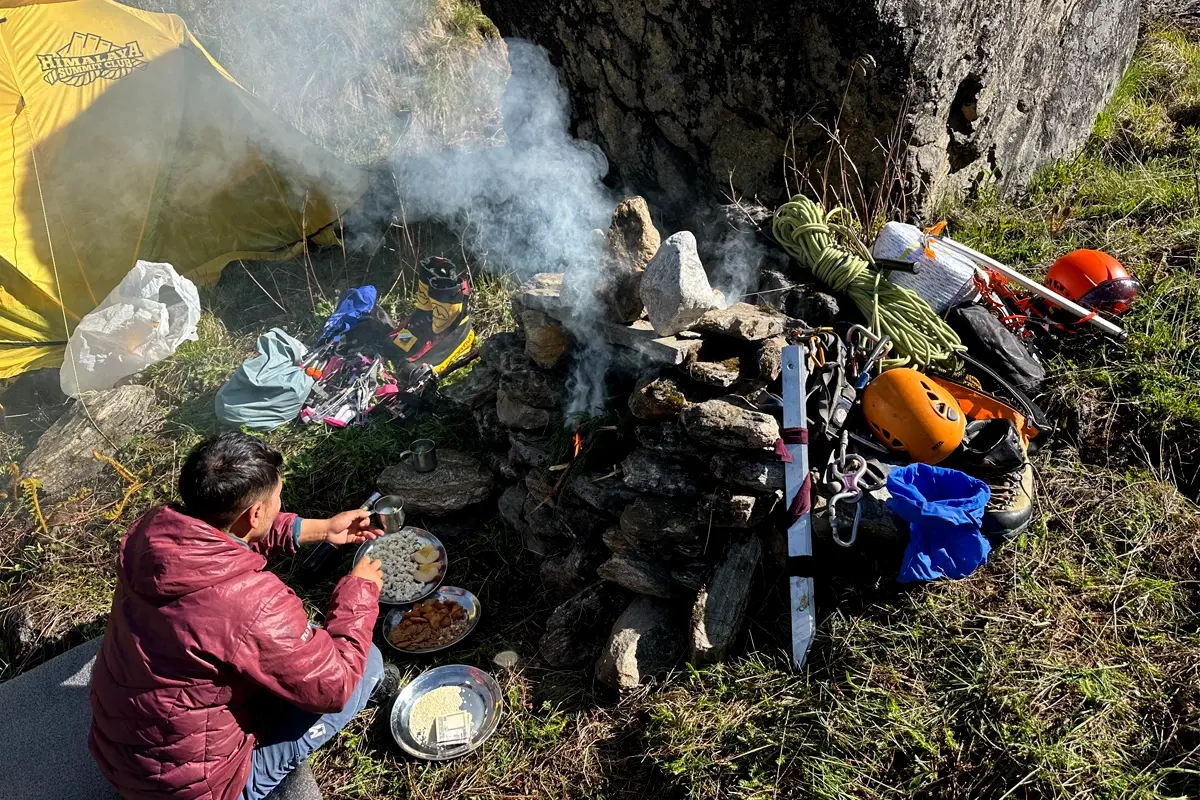
The lower valleys of the Lumbo Himal are home to the Gurung ethnic community, whose ties to these mountains are cultural, spiritual and deeply transgenerational. Local traditions describe this region as a powerful and sacred place. Oral accounts recall expeditions in the 1960s to the neighbouring Ganesh Himal, where climbers reportedly faced fatal incidents — a collective memory that adds a real psychological dimension to any engagement in these valleys.
Before heading to altitude, a traditional Gurung puja was performed, led by Sujal, aspirant IFMGA guide and traditional Gurung priest (जैसी). “For me, the puja is not an optional ritual. It is a way of acknowledging that the mountain does not belong to us — that we are guests,” Tulsi confides. The ceremony sought protection, favourable weather and a successful ascent. But beyond the rite itself, it was a way of saying: we are here with respect, not conquest.
A team built for exploration
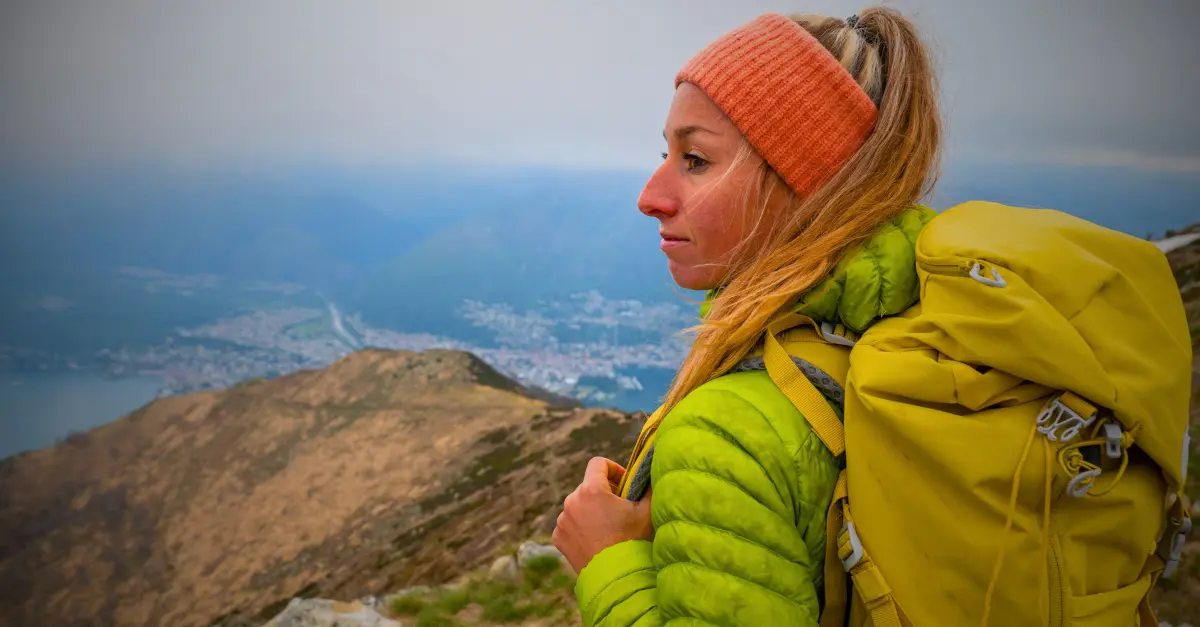
Behind this first ascent stands above all Tulsi Gurung — IFMGA mountain guide, member of the Outwild team, expedition planner and leader from start to finish. In a Himalayan environment that remains heavily male-dominated, her profile and track record command immediate respect. Around her, a tight-knit team of complementary profiles:
- Sujal — aspirant IFMGA guide, architect of the SW route and puja officiant
- Éric — American climber, summiteer
- Ash — expedition guide, whose determination was praised throughout the ascent
This compact format — four members, clearly defined roles — is characteristic of the most effective modern exploration expeditions. No bloat, no diluted responsibilities. Everyone knew exactly why they were there.
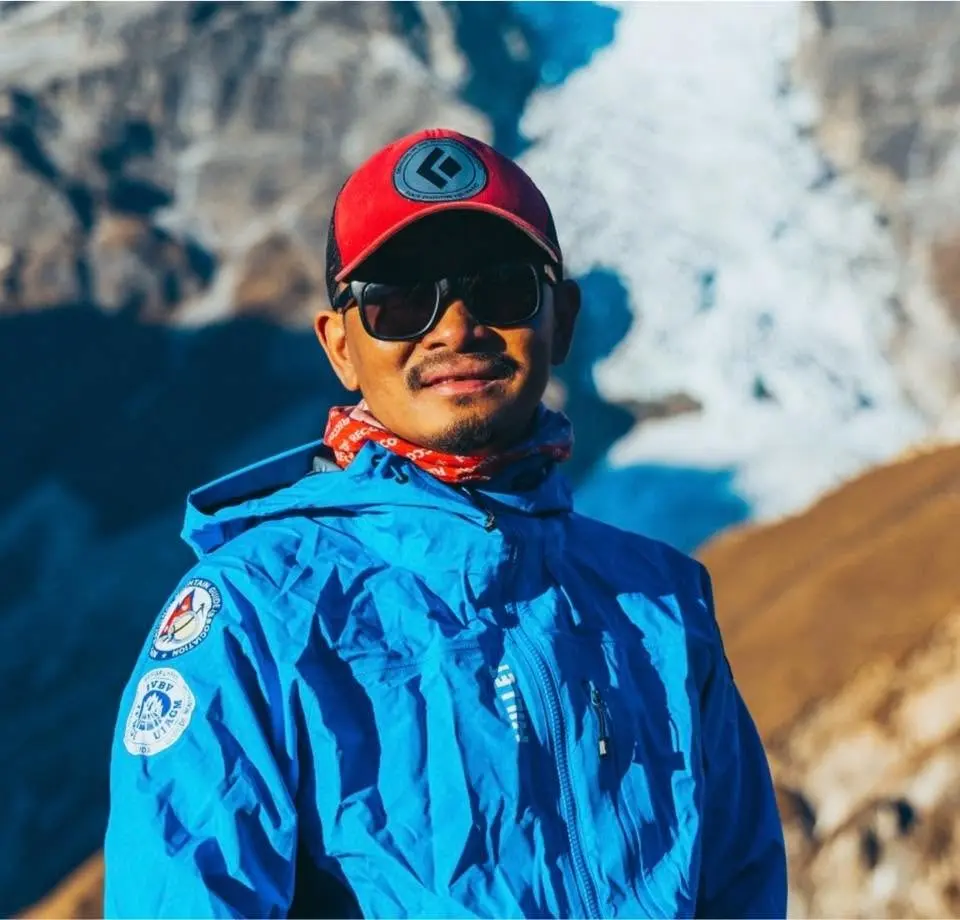
Tulsi
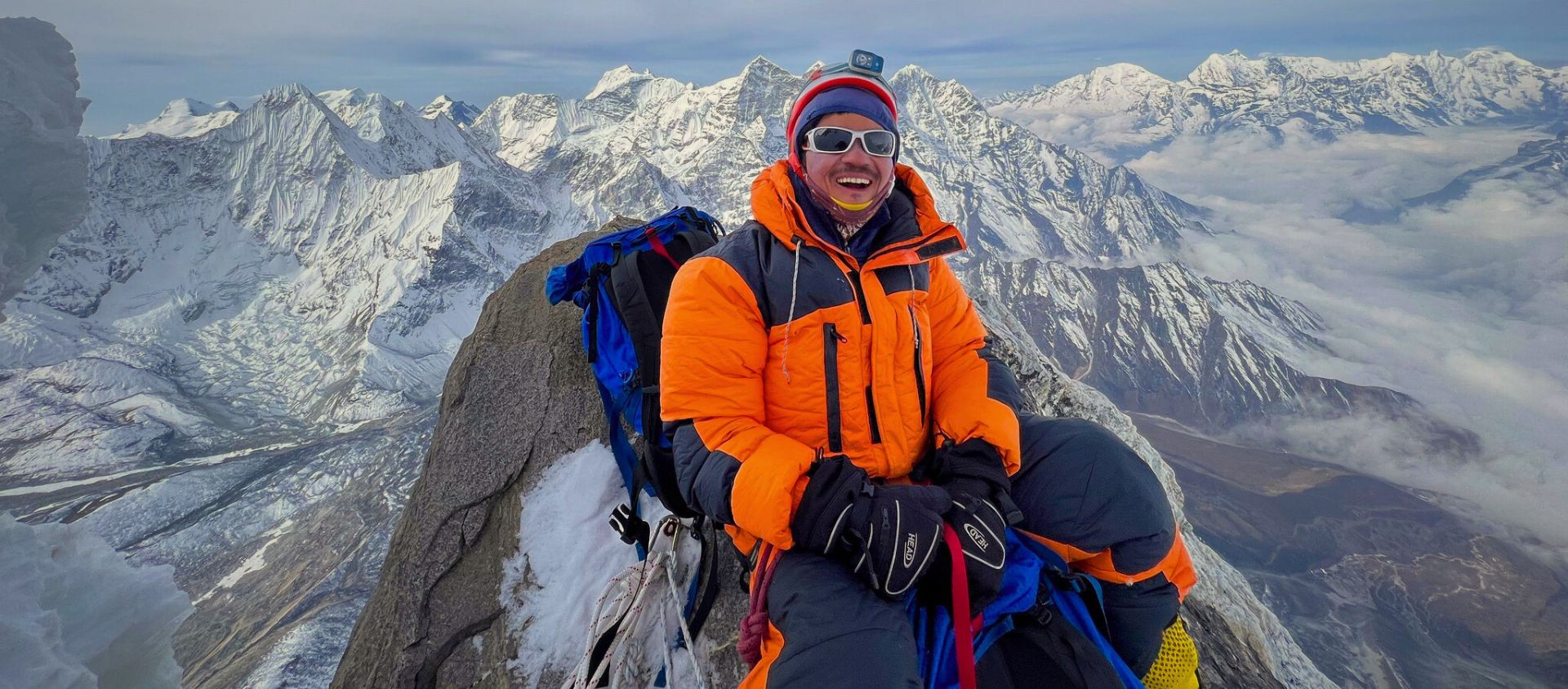
Sujal
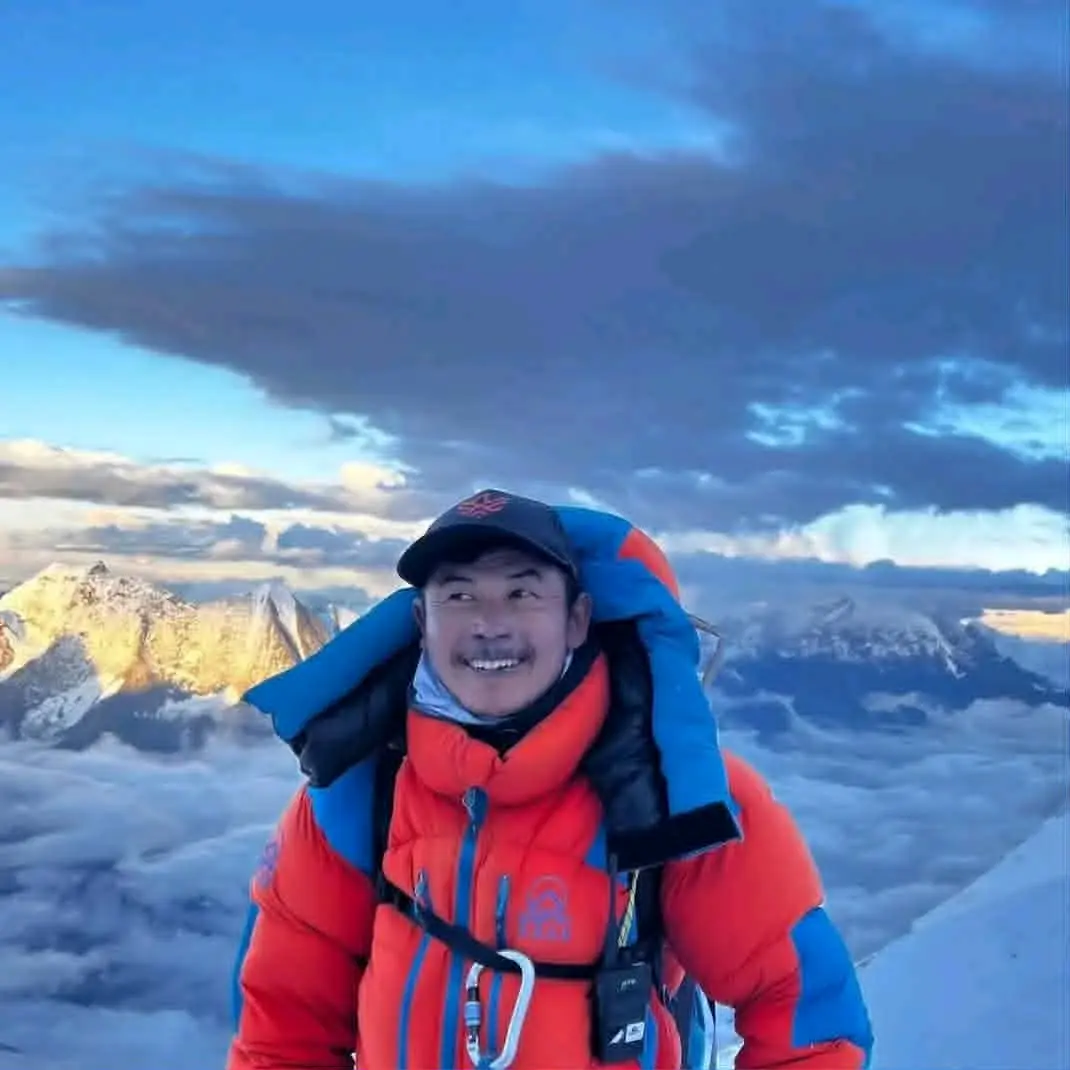
Ash
Why this first ascent truly matters
In 2026, climbing a completely virgin Himalayan peak has become an absolute rarity. Most 8,000-meter peaks are crowded highways in season, the popular 7,000-meter summits overflow, and even many 6,000-meter peaks already have their entry in international alpine databases. Finding a summit with no documented ascent, in a valley with no infrastructure, reachable only after several days of hiking through isolated terrain — that is a positive anomaly very few teams can still claim.
“What moves me most is the idea that this valley existed there, intact, all along. And that we had the chance to be the first.” — Tulsi Gurung
The surrounding valley still holds several virgin summits, some not yet named in any official registry. That is the true legacy of a first ascent: less the story of the past than the possibilities it opens for the future.
What this summit means for future climbers
If you are considering joining an expedition to this region, here is what you need to understand honestly:
- Lumbo Himal is recommended only for experienced mountaineers with several technical summits above 6,000 meters already completed
- The logistics demand a full expedition mindset, not an organised trekking peak approach
- The entire trip can be completed in approximately two weeks from Kathmandu — a genuine advantage
- The region offers rare opportunities for second ascents, new routes and first ascents on still-unnamed peaks
This is terrain for serious climbers who want something real — not another badge, but a line in history.
FAQ
Where exactly is Lumbo Himal located?
Lumbo Himal (6,250 m) lies in one of the most remote and pristine regions of the Nepalese Himalaya.
- Administrative location: The peak is situated in the rural municipality of Dharche, within the Gorkha district of Nepal.
- Geographical position: It rises on the southern flank of the Ganesh Himal range, along the northern boundary of the Manaslu Conservation Area.
Who made the first ascent of Lumbo Himal?
This historic first was successfully achieved on June 22, 2026 by a seasoned international team.
- Expedition leader: The climb was led by Tulsi Gurung, IFMGA-certified high-altitude guide and member of the Outwild team.
- Team members: She was accompanied by Sujal (aspirant IFMGA guide), Éric (American climber) and Ash (expedition guide).
What level of mountaineering experience is required for Lumbo Himal?
This ascent demands a very solid technical background and excellent endurance at high altitude.
- Technical challenges: The southwest face route features steep sections of 60–85° on hard ice and particularly tricky mixed passages.
- Strong logistical commitment: The expedition is reserved for climbers with prior experience on peaks above 6,000 meters. No intermediate camp was established between base camp and high camp.
How long does the full expedition take?
Lumbo Himal benefits from relatively direct access compared to other isolated Nepalese summits.
- Total duration: Departing from Kathmandu, the entire expedition can be completed in approximately two weeks.
- Variables to consider: This overall timeline remains subject to weather conditions at altitude and logistical fluidity on the ground.