
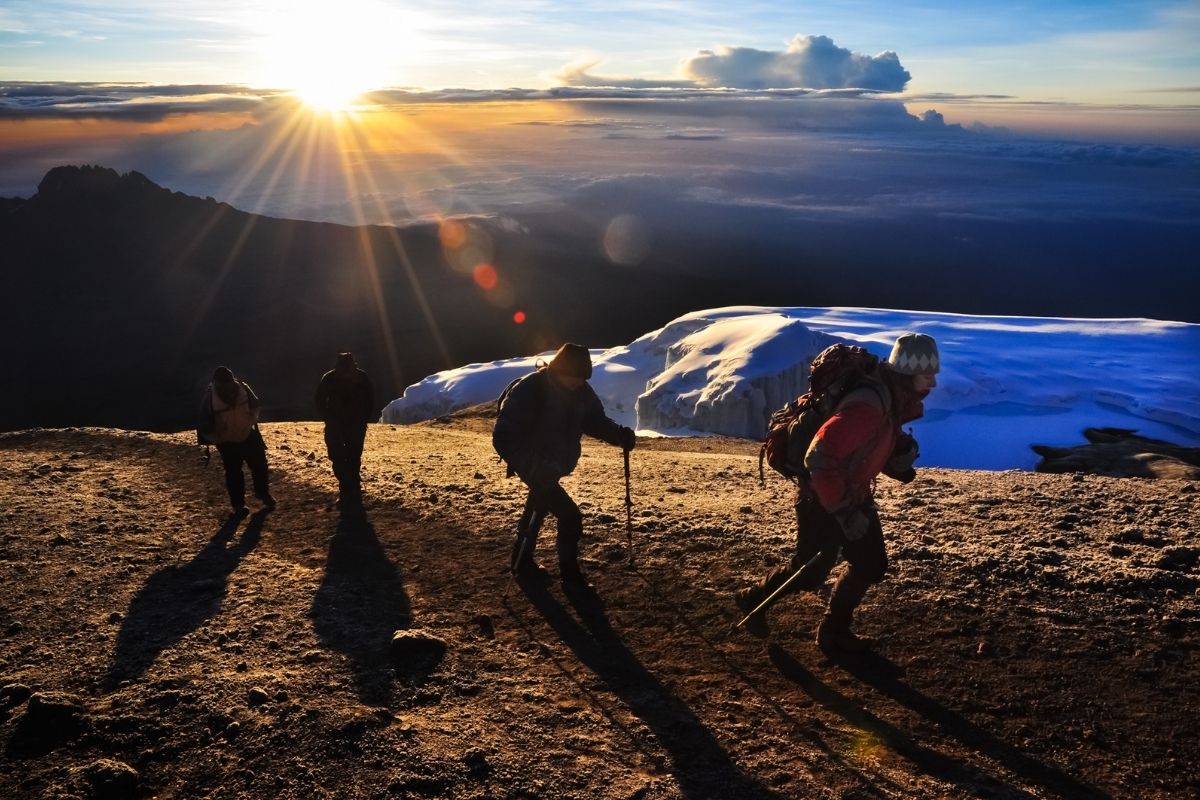
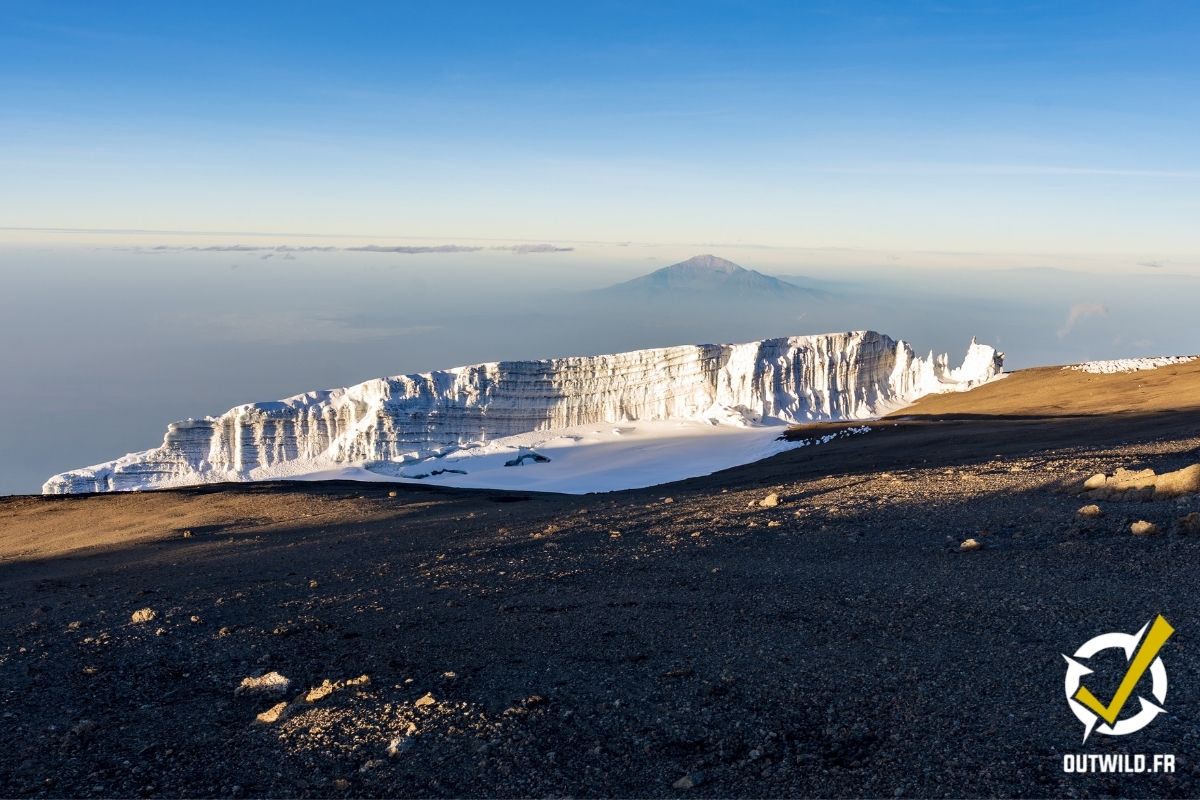
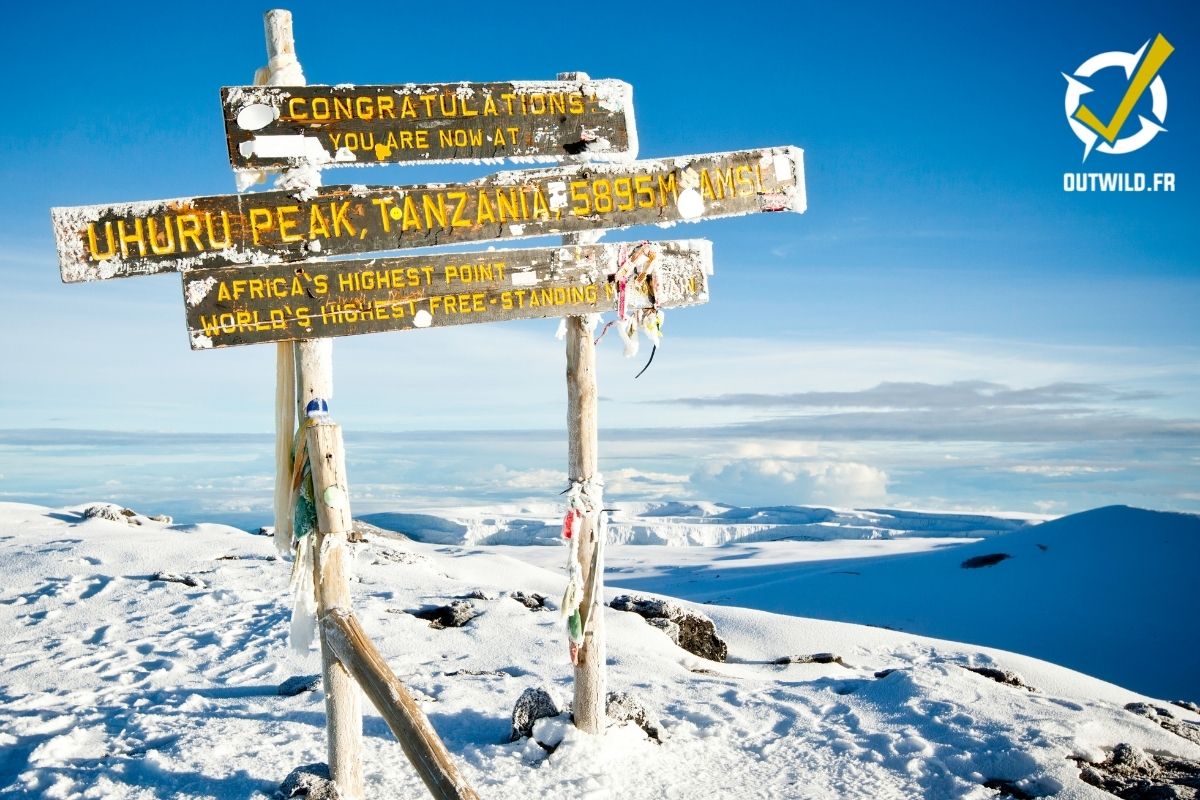
If reaching the summit of Mount Kilimanjaro is not already at the top of your bucket list, it should be. This African gem, located in Tanzania, is the highest peak on the entire continent, and climbing to the top of its staggering 5,895-metre summit will take your breath away and leave your jaw on the floor — it is simply that beautiful!
Can beginners climb Kilimanjaro? Yes, and to have the best experience climbing Mount Kilimanjaro as a beginner, you need to be fully aware of the conditions, seasonal climates, costs and requirements to prepare yourself for this challenge.
To get you ready with everything you need to know for your Kilimanjaro trip, we have created this detailed guide to walk you through every step of your ascent to the summit. Keep reading to learn more about the essentials of climbing the world’s highest free-standing mountain.
Requirements for climbing Mount Kilimanjaro
While climbing Mount Kilimanjaro is accessible to almost all hikers, there are a few requirements you need to meet before you can take part in an excursion or attempt this African ascent.
The following requirements relate primarily to your safety and that of the other people travelling with you, and can make a significant difference to the type of experience you will have on your way to the summit.
Skill level and age
If you are new to hiking and work on your cardio regularly, you will be able to take on Mount Kilimanjaro — there is no need to worry. Although the climb to the summit is a multi-day high-altitude hike, you do not necessarily need climbing training to reach the top, especially with the help of a guide that we can provide (click here). At the right time of year, the terrain and trail conditions are smooth enough for committed hikers to reach the summit.
Age is one of the few restrictions you will encounter when climbing Mount Kilimanjaro. Only those aged 10 and over can embark on this ascent.
Get properly equipped!
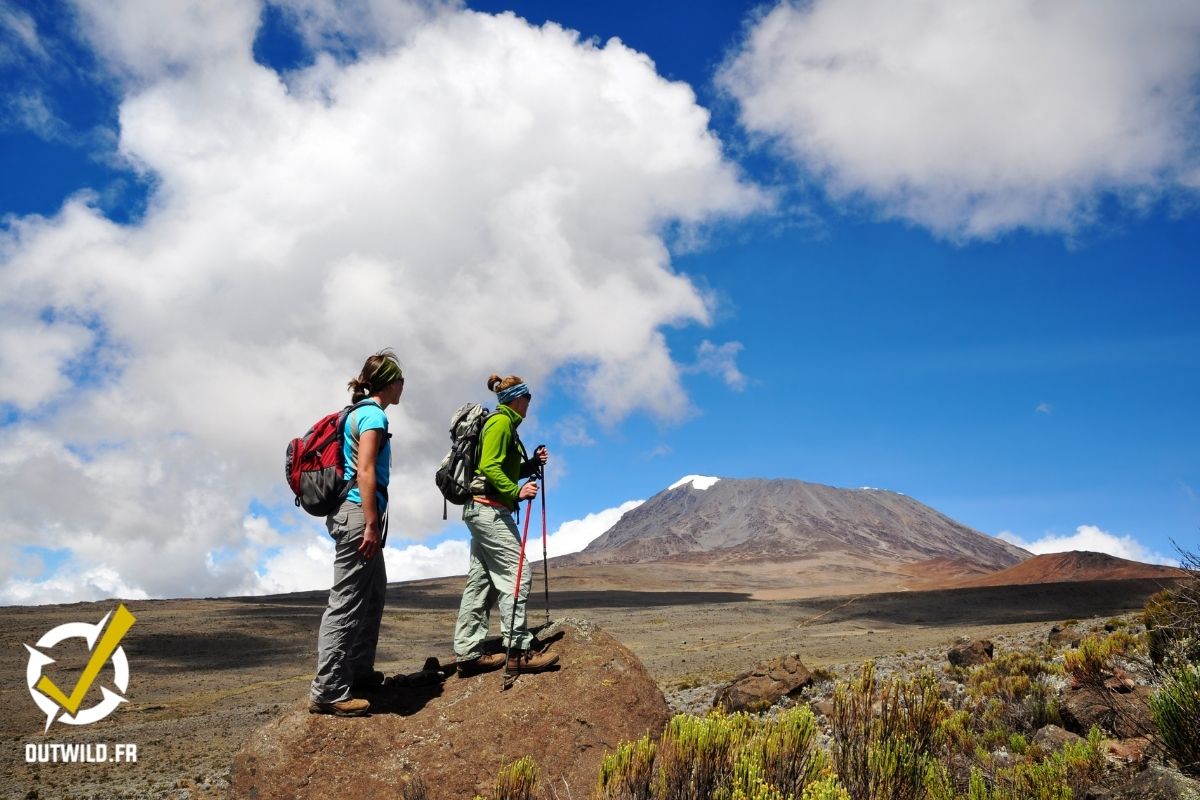
Having quality equipment you can rely on for the dramatic weather changes will be essential for your hike. You can expect extreme heat followed by heavy rain (depending on the time of year you travel) and overnight temperatures dropping below zero — often all in a single day.
That said, it is strongly recommended to have lightweight, weatherproof and waterproof gear for your ascent of Mount Kilimanjaro.
Here are some examples of equipment and gear you may need to bring with you:
- 20-degree sleeping bag
- Sleeping mat
- Trekking poles
- Insulated gloves, trekking trousers and winter jacket
- Hiking boots
- 70-litre main backpack
- 30 to 40-litre day pack
However, one of the most challenging aspects of multi-day long-distance hikes is having to carry your gear. This extra weight can start to weigh on hikers of all experience levels, particularly as they reach higher altitudes.
This is why most tour guides will take care of carrying a large portion of the equipment needed for the trek, such as tents, chairs and tables. Before your trip, make sure to check with your tour operator which necessary items you will need to provide yourself.
Booking a Kilimanjaro guide
If you want to successfully climb one of the world’s highest mountains, especially on your first attempt, it is well worth booking a local travel agency to guide you along the way. This is exactly what we offer — Outwild works with local agencies to keep costs down while maintaining quality. Climbing to an altitude of nearly 6,000 metres is no picnic, but it can be achieved by most hikers with the help of a guide who knows the terrain and local environment.
Here is some of the knowledge you can expect your guides to be well equipped with:
- Terrain: the terrain and trail conditions on multi-day hikes vary, particularly on Kilimanjaro. That is why having a guide who knows how to tackle each changing landscape will ensure you are ready for anything.
- Weather: As we will see below, the weather on Mount Kilimanjaro varies considerably. Having the insight and experience to handle the contrasting conditions on your way to the summit will be vital.
- Safety checks: You can count on professional guides to provide you and every individual in your group with consistent safety checks throughout the expedition. This includes monitoring health risks such as altitude sickness, fatigue and other mountaineering protocols.
Finding a reliable travel agency can be a challenge, with many tour operators achieving a summit success rate of barely 50%. This is due to the lack of accountability and care from less reputable travel agencies, whose goal is to make quick profits rather than guarantee client satisfaction.
So make sure you do your research and book with a trustworthy, professional tour operator with a high summit success rate. When you book with a reliable operator, you can count on their guidance throughout your hike — they will provide all the support you need to get to the top.
That said, look for a guide from a professional tour operator who is certified as a Wilderness First Responder (WFR). They will go above and beyond to make sure you are safe and enjoying your trip.
Getting to Mount Kilimanjaro
The first step in getting to the summit of Mount Kilimanjaro is making your way to Tanzania, Africa. While there are several different airports in the country, the most direct and convenient airport that will get you closest to your destination is Kilimanjaro International Airport. This is particularly handy if your sole reason for flying to Africa is to climb Mount Kilimanjaro, as the airport was essentially established to provide easy access to the mountain.
If your trip includes multiple stops in Tanzania, a flight to the country’s largest airport, Julius Nyerere International Airport, is a good alternative. Once you arrive, you will likely need somewhere to stay near Kilimanjaro, both before and after your hike. Fortunately, there are excellent accommodation options in the area.
You may also find that many tour operators will go out of their way to make your journey to Kilimanjaro as comfortable and hassle-free as possible by offering transfers to and from the airport.
When is the best time to climb Mount Kilimanjaro
One of the advantages of climbing Kilimanjaro is that it is open all year round, making it a versatile destination for your next great hike. However, you should bear in mind that certain times of year are far more conducive to climbing than others, resulting in a safer and more comfortable experience.
Here is what you can expect from your climbing experience at different times of year:
January – early March
If you want to stay dry on your way to the summit of Mount Kilimanjaro, booking an excursion at this time of year is ideal. Not only is the weather pleasant, but you will also find that there is less traffic on the trails.
June – September
You can expect to find some of the most stable weather conditions at this time of year, which is one of the main reasons it tends to be the most popular time for tourists to tackle the mountain.
If the extra foot traffic on your way to the summit does not bother you, this is still a fantastic time of year to trek on Mount Kilimanjaro. We recommend booking your trip closer to June, as the likelihood of rain increases the further towards the autumn season you book.
Off season
The gaps between the seasons mentioned above are considered the “off-season months” for climbing Mount Kilimanjaro (April–May and October–November). However, the trails are still technically open if you decide to head to the summit during these periods.
That said, here are a few things to keep in mind when climbing Mount Kilimanjaro off season:
- Weather: rain will be more prevalent on your journey to the summit, so be prepared to get wet on the way up and pack your bags accordingly.
- Trail conditions: Heavy and often prolonged rainfall during the off season damages the trails, creating mud that makes for a more gruelling trek.
- Visibility: For many people, a trip to Mount Kilimanjaro is all about seeing the magic of its natural beauty and taking top-quality photos to share on social media. If you climb the mountain at this time of year, weather conditions may hinder the view.
While you can expect a few extra hurdles during an off-season ascent, many climbers do not mind the additional ruggedness of the trails. However, if you are a beginner, we strongly recommend visiting Mount Kilimanjaro during the January–March or June–September seasons.
Note: Regardless of the time of year you visit Mount Kilimanjaro, you must be prepared for extreme weather changes from day to night, with daily climates that often swing from intense heat to below-freezing cold.
Mount Kilimanjaro routes to the summit
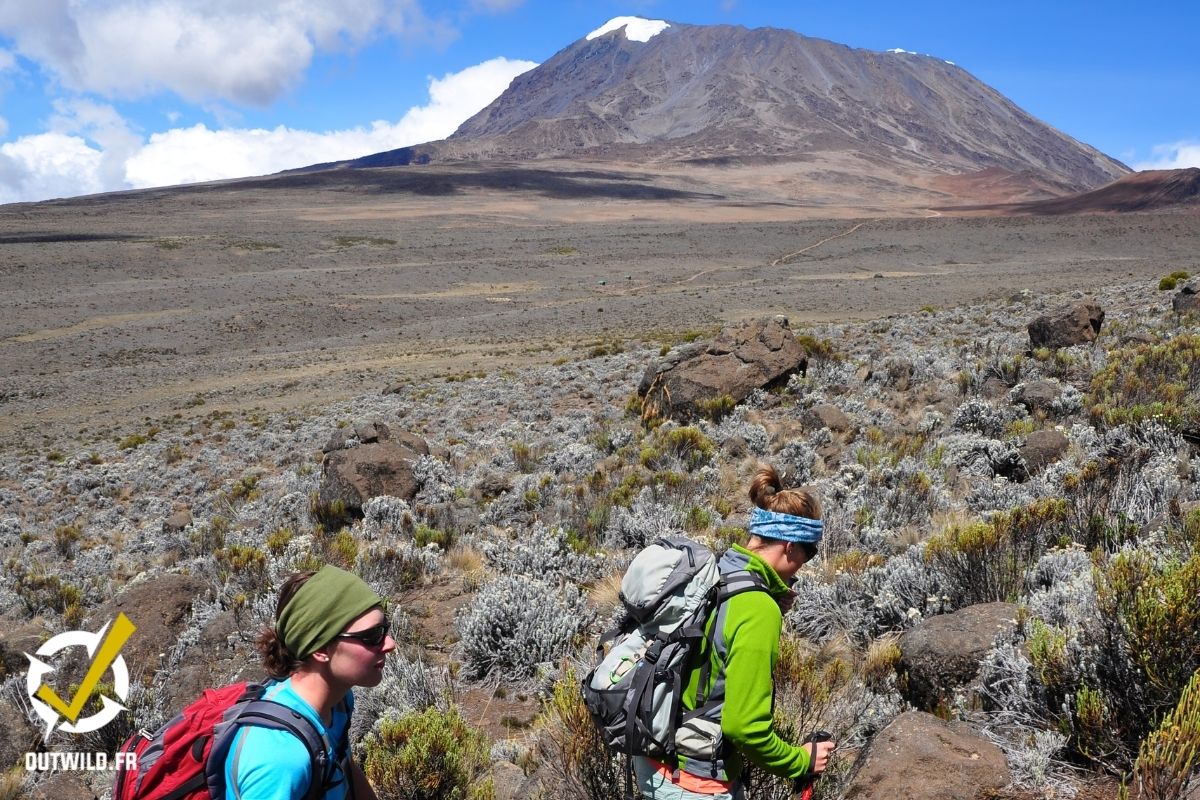
When you choose Mount Kilimanjaro as your next destination, you will find that you have several different routes to choose from to reach the summit. All available paths will offer the incredible, breathtaking views you are hoping to see on the mountain, but may differ in terrain, difficulty level and comfort. You will find tours for each route, and costs can also vary.
Let’s dive into your trail options for reaching the summit:
Marangu Route
The Marangu route, sometimes called the Coca-Cola route, is the oldest path leading to the summit of Mount Kilimanjaro. The Marangu route is a six-day return hike that differs from all other route options in that your sleeping arrangements each night are in designated dormitory huts.
The Marangu route is the easiest and most comfortable, so if you are not confident in your trekking skills or physical abilities, or if you are climbing the mountain for the first time, we strongly encourage you to take this route to ensure a safe and successful ascent to the summit.
Machame Route
The Machame route to the summit of Mount Kilimanjaro has earned the title of the Whisky route, as it is a step up in difficulty from the Coca-Cola route and tends to be the most popular way to reach the mountain’s summit. It is an excellent option if you want a more challenging experience on your ascent.
It will take seven days to complete this route to the summit alone, which is longer than the six-day return of the Marangu route. However, you may be surprised to find that the Machame route is actually shorter than the previous hike.
The key factor that creates this difference is the level of difficulty. To help climbers acclimatise to the challenges they may face on the Machame route, tour guides will build in extra travel time. Each night, you can expect to stay in a tent to sleep and rest before the next stage of your hike.
Lemosho Route
The Lemosho route is one of the newer Kilimanjaro routes and offers the opportunity to enjoy contrasting views compared to other trails. This route is more challenging than the two previous options, but has been widely praised as the most beautiful path to the summit. So if you feel ready to take on the challenge of one of Kilimanjaro’s most demanding trails, you can expect to be rewarded with breathtaking scenery.
As this is a more challenging route, beginners are advised to opt for the eight-day trek.
Rongai Route
This path to Kilimanjaro offers the chance to go “off the beaten track” in more ways than one, as you will approach your hike from the opposite side of the mountain compared to all other routes.
The Rongai route has the appeal of being a less-travelled path with far less foot traffic, which is often a selling point for those returning to Kilimanjaro for a second trip. Because this trail is more remote, you are more likely to encounter unspoilt nature and wildlife. However, previous climbers have noted that its scenery does not quite match the expectations set by the other trails on this list.
Umbwe Route
If you are feeling ambitious and want to take on a genuine trekking challenge, the Umbwe route is the perfect choice for you. It is the most difficult path to the summit, so prepare yourself for a demanding journey that requires you to be in peak condition to ensure you can reach the top.
Due to the difficulty level of this route, many people avoid choosing this option, which means there is less crowd on the trail (whatever the season).
Final safety tips for climbing Kilimanjaro
Even if you have all the right equipment and meet all the requirements to begin your ascent of Mount Kilimanjaro, there are still a few safety protocols you need to be aware of to ensure a safe journey.
This is why it is recommended to have an experienced guide by your side on your first ascent. They will have all the necessary equipment on hand, such as emergency oxygen, pulse oximeters and so on, in case of an emergency. They can also carry out regular safety checks and make sure you are coping well as you climb higher up the mountain.
However, taking personal responsibility for your own safety is equally crucial — staying aware and alert throughout the trek will be just as essential to keeping yourself and everyone else safe during your trip. Here are some key safety tips to keep in mind during your journey:
- Pace yourself: when hiking, particularly on multi-day high-altitude treks, you need to remember that this is a marathon, not a race. Taking your time and not rushing can help you avoid fatigue. Remember, it’s the journey, not the destination!
- Take frequent breaks: It is best to stop, breathe and rest throughout the day to avoid long-term exhaustion. This becomes increasingly important as you get closer to the summit, where the air becomes thinner and the risk of altitude sickness grows with every step.
- Acclimatisation: If you can acclimatise to higher altitudes before starting your hike, you will feel fitter and better prepared for what lies ahead on your way to the summit. A great way to do this is to arrive at your destination a few days early and condition yourself with some day hikes.
- Stay hydrated: There is probably nothing more important than staying hydrated during your ascent of Kilimanjaro. Drink water frequently throughout the day and while resting in the evenings.
Following these safety tips can go a long way towards ensuring a safe and enjoyable experience on any hike (big or small), especially when it comes to long-distance hikes that reach as high an altitude as Mount Kilimanjaro.
To conclude
If you are interested in climbing Mount Kilimanjaro in Tanzania, Africa, you will be glad to know that the experience is open to almost everyone. You just need to be prepared. By following the tips offered above, you will be ready to tick the ascent of Mount Kilimanjaro off your bucket list in no time!
Kilimanjaro FAQ
Why climb Kilimanjaro?
“In 1923, George Mallory answered ‘Because it’s there’ when a journalist asked him why he wanted to climb Mount Everest. It is a one-liner that applies equally to Mount Kilimanjaro, the highest mountain in Africa. Standing at 5,895 m, Kilimanjaro is not only the highest mountain in Africa — it is also the world’s largest free-standing mountain. Free-standing means it is not part of a mountain range. Beyond that, Mount Kilimanjaro is an icon of Africa. For many people, the image of elephants against the vast bulk of Kilimanjaro is simply Africa itself. Although the sheer size of the mountain inspires a sense of awe, it is surprisingly straightforward to climb. Moreover, a week-long mountain climbing trip is easy to incorporate into a standard East African safari.”
How long will it take me to complete the ascent, and does that include acclimatisation time?
“There are several different routes by which Kilimanjaro can be climbed. Some of these are only suitable for people with mountaineering experience. The standard route is the Marangu route, often sold as a four-night, five-day return ascent. However, the reality is that you will be climbing to nearly 6,000 m / 19,685 ft. This five-day programme does not leave enough time to acclimatise safely. You should add at least one day to this schedule to allow for a safer ascent. Or, better still, try one of the other longer, quieter routes that will naturally allow for better acclimatisation. The Shira Plateau Route, the Machame Route or the Northern Circuit Route (the longest of the lot) are all safer ascents. As well as being more rewarding, they all have a fraction of the crowds found on Marangu.”
What level of fitness and experience do I need for a climbing trip on Kilimanjaro?
Mount Kilimanjaro is a big mountain and no attempt on its summit should be taken lightly. That said, it is one of the easiest mountains to climb at its height. For all standard routes, no particular climbing experience or equipment is required. It is simply a long but steady climb. Any reasonably fit and determined person should be able to climb it. You will need very warm clothing, including a thick mountain jacket, thermal underwear, gloves and a hat. You will also need a good warm four-season sleeping bag. The most common reason for not reaching the summit is altitude-related. The standard five-day hiking circuit simply does not allow enough time to fully acclimatise. It is far better to add an extra acclimatisation day or take a longer, more gradual route than to try to rush up and down.
What type of accommodation will I stay in on a Mount Kilimanjaro climbing trip?
“Basic! Accommodation will be either in one of the very simple hiker huts found on the mountain, or camping. The huts are just that: a hut, with beds arranged dormitory-style. The only form of heating will come from the other exhausted bodies sharing the hut. If you are camping, your chosen trekking company will provide small two-person dome tents. These offer a more comfortable night than the huts — and more privacy too! Better tour operators provide a much larger dining tent. The more upmarket companies will also supply camping tables and chairs. These extras may seem minor, but the added comfort they provide can really make a difference during your hike.”
What does a typical day on a Kilimanjaro ascent look like?
“Days start early on Kilimanjaro and, in general, you will be shivering your way out of your sleeping bag shortly after dawn. After a steaming bowl of porridge or similar, you will be back in your hiking boots and ready to start walking. Aside from stops to admire the magnificent scenery or catch your breath, you will walk until lunchtime. There will be a hearty packed lunch. Then a few more hours of walking before arriving at your overnight spot in the mid to late afternoon. With any luck, your porters may have arrived before you and be boiling up a reviving cup of tea. Dinner is served early. Shortly after dark, most people curl up in the warmth of their sleeping bag and drift off to sleep. Note that the higher you go, the more disturbed your sleep is likely to be. Above 4,000 m / 13,123 ft, a combination of cold and lack of oxygen makes nights very uncomfortable. On summit day, you may forgo sleep altogether. Most people leave camp around 1 am. Using headtorches, they walk through the night in order to be at the summit at dawn.”
What should I consider when choosing a Kilimanjaro climbing trip?
“The most important question to ask yourself before deciding to climb Mount Kilimanjaro is whether you truly have the stamina and desire to reach the summit. While it is not a technically difficult mountain to climb, it is certainly not a walk in the park. Expect long and exhausting days, aching muscles, potential altitude issues and extreme cold. If none of these prospects appeal to you, do not sign up for a Kilimanjaro trip. You should also consider the season. July to October and January and February are the driest and most pleasant times to climb. Avoid the rainy season, when trails will be muddy or snowy and views will be limited. Finally, allow yourself enough time to acclimatise. Most people do not, and many end up regretting that decision, as altitude sickness is often the result.”