
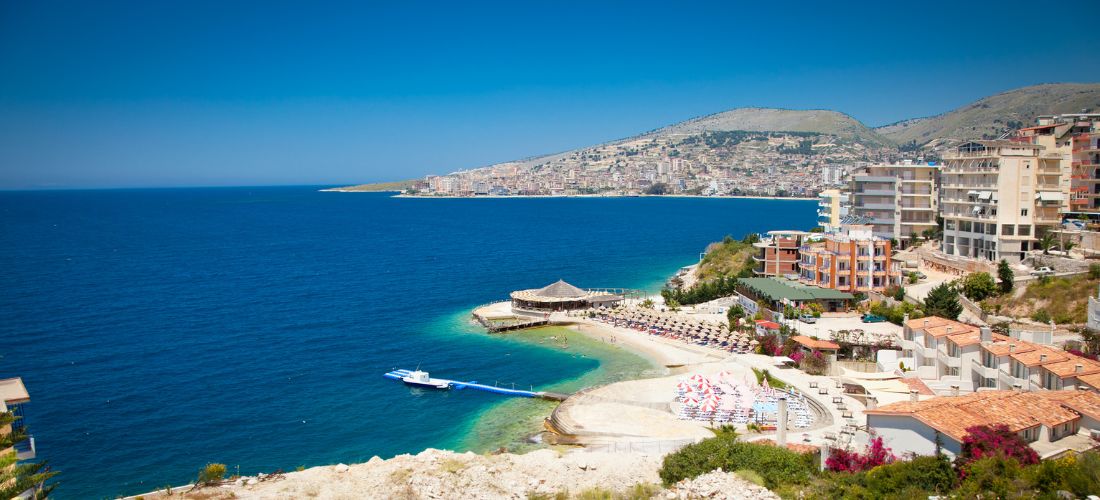
Albania remains one of Europe’s best-kept secrets. Wedged between Greece, North Macedonia and Montenegro, this authentic destination offers a fascinating blend of millennia-old history, breathtaking Mediterranean landscapes and legendary hospitality. Unlike oversaturated tourist destinations, Albania still lets you discover a preserved Europe where prices remain affordable and the warmth of the locals turns every stay into a memorable experience. In 2024, the country recorded a 35% increase in international tourism — a sign that this Balkan gem is finally receiving the recognition it deserves.
Albanian cities each tell a different story. From the cobbled lanes of Gjirokastër to the turquoise beaches of Sarandë, by way of Tirana’s cultural effervescence, every destination has its own character. Ottoman architecture sits alongside Illyrian ruins and communist bunkers, creating an absolutely fascinating cultural patchwork for any curious traveller. Those who have explored Albania often report being surprised by the diversity of landscapes, the quality of local cuisine and above all by that rare feeling of discovering a territory still relatively untouched by mass tourism.
Setting out to explore Albanian cities also means immersing yourself in a culture where the tradition of Besa (the given word) remains sacred, where meals last for hours and where every encounter can turn into a spontaneous invitation. The particularly favourable cost of living allows you to enjoy gourmet restaurants, quality accommodation and a wide range of activities without blowing your holiday budget. For those seeking a European destination off the beaten track, combining sea, mountains, history and authenticity, Albania is the ideal choice for an unforgettable holiday in 2025.
Tirana, the vibrant capital
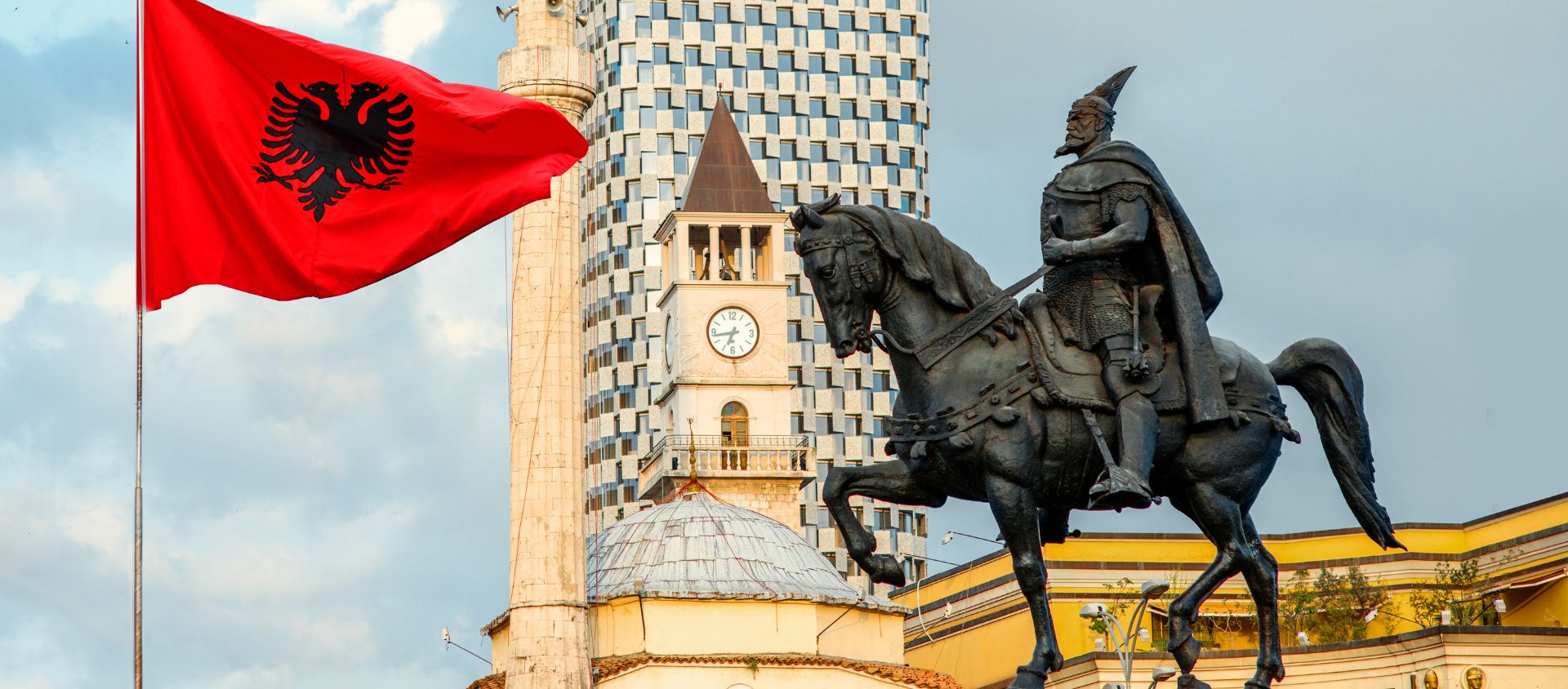
Tirana surprises from the moment you arrive. This dynamic metropolis of nearly 900,000 inhabitants has undergone a spectacular transformation over the past twenty years. Once grey apartment blocks have been repainted in vivid colours by former mayor and artist Edi Rama, creating a cityscape unique in Europe. The city centre pulses with energy, blending trendy cafés, contemporary art galleries and traditional markets where elderly women still sell hand-grown vegetables. Skanderbeg Square, recently redesigned, covers 40,000 square metres and forms the beating heart of the capital, surrounded by landmark buildings such as the Et’hem Bey Mosque and the National Opera.
Albania’s turbulent history is an open book in the streets of Tirana. The Bunk’Art museum, installed in a vast anti-nuclear bunker built under Enver Hoxha’s communist regime, offers a fascinating plunge into that dark period. Five underground floors, transformed into exhibition space, recount forty years of dictatorship through poignant artistic installations and moving testimonies. A few streets away, the Blloku neighbourhood — once a forbidden zone reserved for the communist elite — has become the trendiest area in the city, with cocktail bars, fusion restaurants and local designer boutiques.
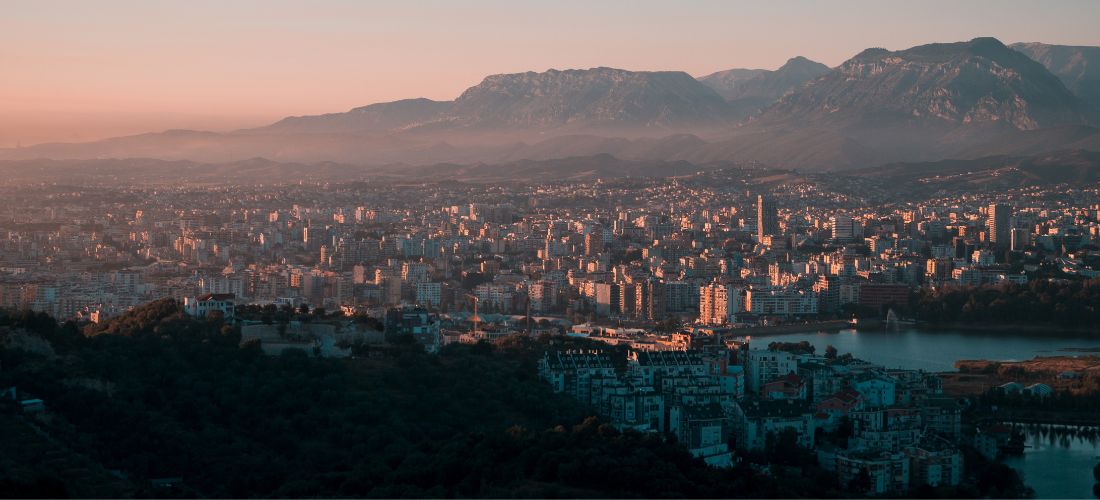
Tirana’s culinary scene is worth the trip on its own. Traditional restaurants such as Oda and Mullixhiu offer refined Albanian cuisine, reinventing ancestral recipes with local organic produce. Byrek (filled pastry), tavë kosi (lamb with yoghurt) and countless mezze bear witness to Ottoman, Greek and Italian influences perfectly absorbed into the local tradition. Prices are unbeatable: a full gourmet meal rarely costs more than €15–20 per person. For night-life enthusiasts, Tirana never sleeps. Clubs like Folie Terrace and Radio host memorable evenings with international DJs, while bars like Komiteti serve artisan raki in a more intimate setting.
Berat, the city of a thousand windows
Listed as a UNESCO World Heritage Site since 2008, Berat more than deserves its nickname of museum-city. White Ottoman houses with multiple windows stack up on the hillsides like an impressionist painting, creating an architectural spectacle unique to Albania. Founded in the fourth century BC, the city has passed through the ages while miraculously preserving its authenticity. Its three historic quarters — Mangalem (Muslim quarter), Gorica (Christian quarter) and Kalaja (the citadel) — recount two millennia of history through their cobbled lanes and exceptionally well-preserved monuments.
The climb up to Berat’s citadel is an experience in itself. Steep cobbled lanes wind between century-old houses where nearly a thousand inhabitants still live, perpetuating an ancestral way of life. At the summit, the fortress offers vertiginous panoramas over the Osum valley and houses several remarkable Byzantine churches. The Church of the Holy Trinity, with its perfectly preserved sixteenth-century frescoes, bears witness to the artistic richness of the era. The Onufri Museum, housed in the Cathedral of the Dormition, holds Albania’s most important collection of icons, some dating back to the thirteenth century. The vibrant colours used by master painter Onufri — particularly his famous red — continue to astonish visitors five centuries on.
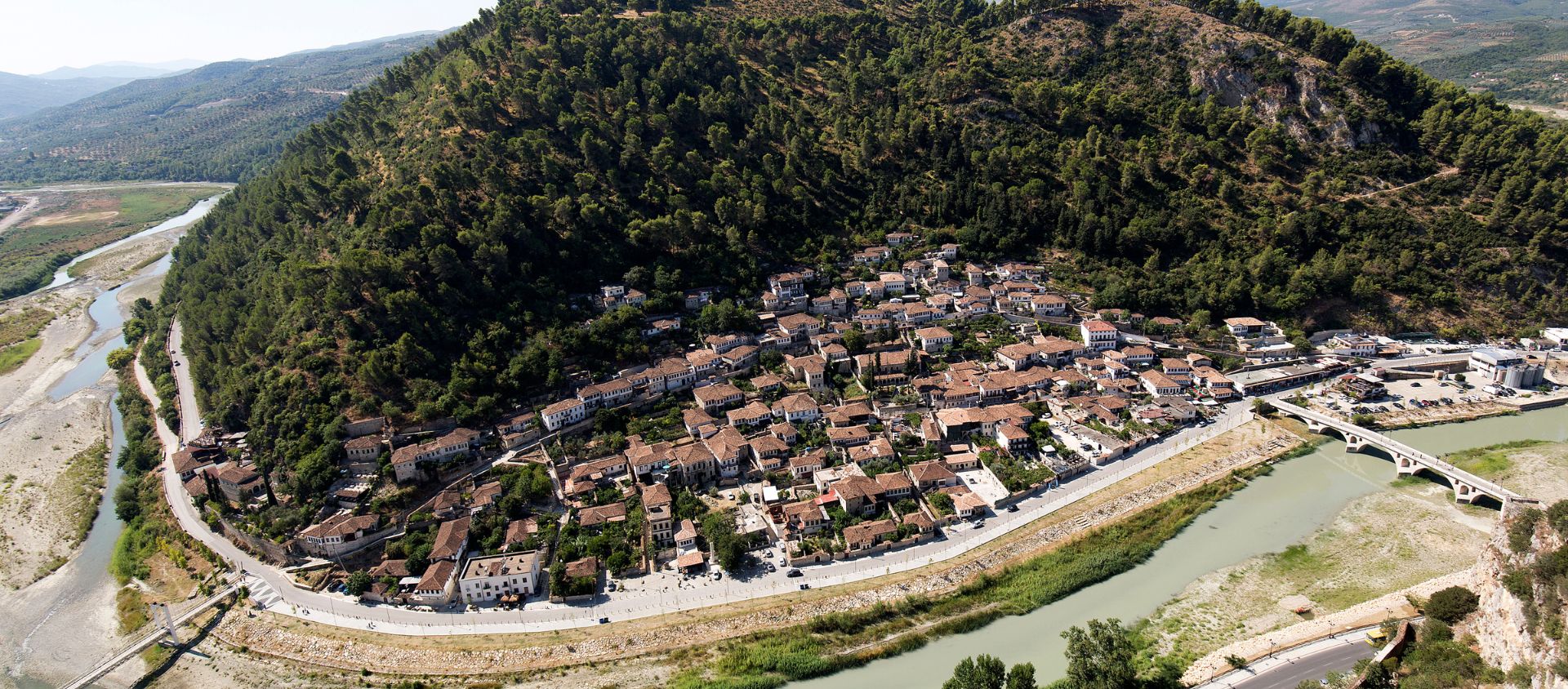
The atmosphere in Berat transports you to another time. Craftspeople continue age-old skills: traditional embroidery, carved woodwork, rug-making using patterns passed down from generation to generation. The local market, particularly lively on Wednesdays, is the place to discover local produce: aged sheep’s cheese, mountain honey, olive oil from a region renowned for its exceptional quality. Family restaurants such as Antigoni and Onufri serve authentic home cooking in enchanting settings with views over the illuminated city. For a truly immersive experience, several Ottoman houses converted into guesthouses allow you to sleep in a preserved historic setting with modern comfort included. On summer nights, when the lights illuminate the white façades, Berat reveals its full magic 🌙.
Sarandë, the pearl of the Albanian Riviera
Sarandë embodies the seaside face of Albania. This Mediterranean beach resort of 40,000 inhabitants faces the Greek island of Corfu, visible just 14 kilometres away. The seafront promenade stretches for several kilometres, lined with palm trees, fish restaurants and bars where you sip cocktails watching the sunset. The crystalline water of the bay displays shades of blue impossible to capture in a photograph, and sea temperatures regularly exceed 25°C in summer. Unlike saturated Mediterranean destinations, Sarandë maintains a relaxed atmosphere where it is still possible to find quiet spots even at the height of the season.
The proximity of major archaeological sites makes Sarandë an ideal base for exploring the region. The ancient site of Butrint, just 20 minutes by car, ranks among the most important archaeological treasures of the Mediterranean. This former Greek and then Roman city, nestled in a green setting on the edge of a lagoon, offers an extraordinary journey through twenty-five centuries of history. The third-century BC Greek theatre, the Roman baths, the early Christian baptistery with its splendid mosaics and the Venetian fortifications bear witness to the successive civilisations that occupied this strategic location. UNESCO listed Butrint as a World Heritage Site in 1992, recognising its exceptional importance for understanding Mediterranean history.
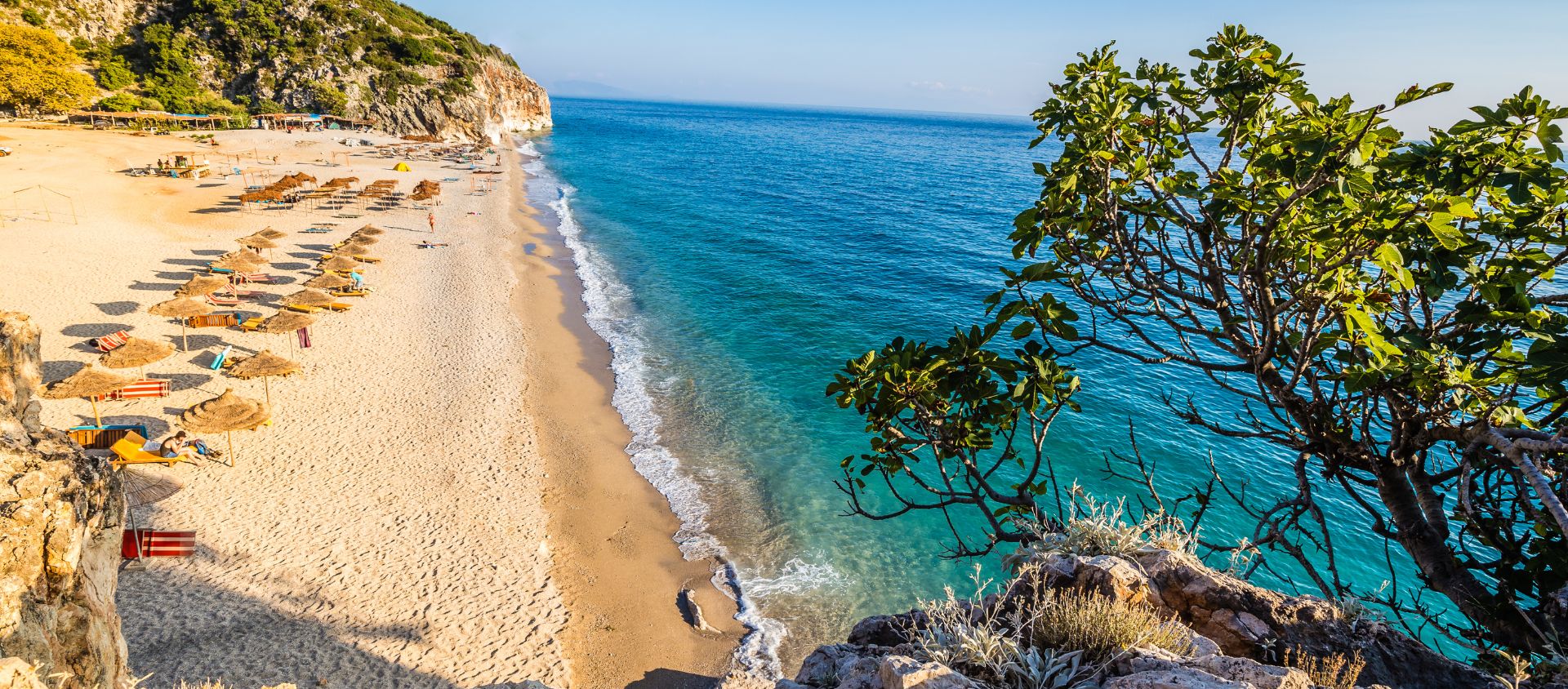
The beaches around Sarandë compete in beauty. Ksamil beach, 15 kilometres to the south, is regularly ranked among the finest in Europe, with its white sand, turquoise waters and four small islands reachable by swimming. Mirror Beach lives up to its name — the water is so transparent and calm. For diving enthusiasts, several clubs offer explorations of seabeds exceptionally rich in Mediterranean flora and fauna. Seafood gastronomy naturally takes centre stage: the port restaurants serve fish and shellfish of incomparable freshness, often caught that very morning. The value for money is unbeatable: a seafood platter for two typically costs between €25 and €40. Summer evenings come alive to the sound of live music in the seafront bars, creating a festive yet never aggressive atmosphere 🍹.
Gjirokastër, the stone city
Gjirokastër seems frozen in time. This spectacular Ottoman city, also listed by UNESCO, clings to the mountainside like an eagle on its nest. Traditional houses known as “kulla” stand out for their unique architecture: defensive stone towers with slate roofs that glisten in the sun. More than 600 of these remarkable dwellings are preserved, forming a coherent and impressive architectural ensemble. The steeply sloping cobbled lanes invite slow exploration, punctuated by pauses to admire sculpted façades and inner courtyards with flower-filled gardens. The atmosphere in Gjirokastër is reminiscent of certain villages in Anatolia or the Peloponnese — a living testament to the Ottoman heritage still tangible today.
The fortress dominating the city is one of the largest castles in the Balkans. Built in the twelfth century and expanded under the Ottoman Empire, it offers spectacular panoramic views over the Drino valley and the surrounding mountains. Inside, a weapons museum presents an impressive collection tracing the region’s military history, while an American aircraft captured during the Cold War stands surreally in the courtyard. Every summer, the fortress hosts the National Folklore Festival, drawing troupes from across Albania to celebrate ancestral musical and sartorial traditions. Concerts then resonate within the medieval walls, creating a moving communion between past and present.
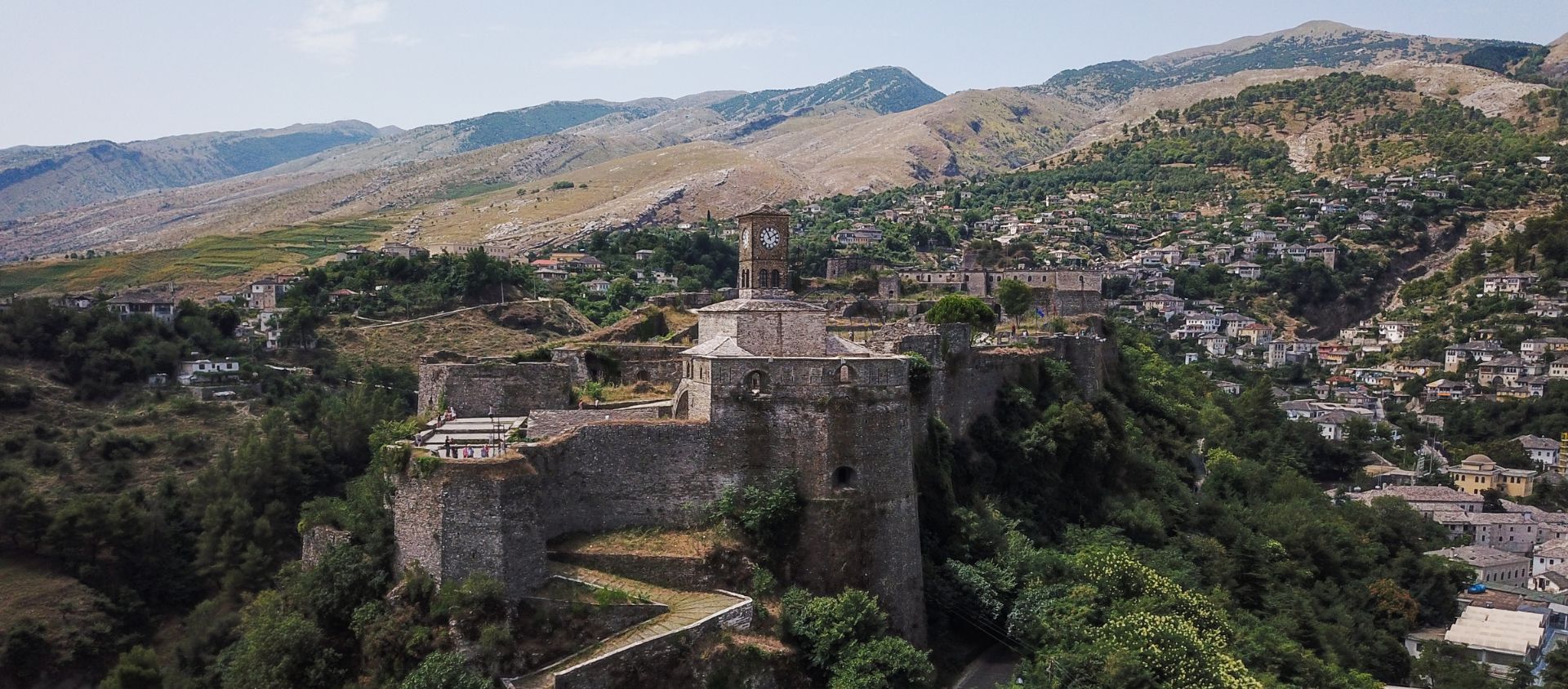
Gjirokastër was the birthplace of two major Albanian figures: writer Ismail Kadare, Prince of Asturias Award laureate and perennial Nobel Prize in Literature candidate, and former dictator Enver Hoxha. Kadare’s childhood home is open to visitors and offers insight into the early life of a writer whose works have been translated into more than forty languages. The Ottoman bazaar, carefully restored, is home to craftspeople and traders perpetuating centuries-old traditions. The local silver filigree workshops — a local speciality — produce jewellery of extraordinary delicacy using techniques passed down since the seventeenth century. To understand the unique architecture of these tower-houses, a visit to the Skenduli House is essential: this perfectly preserved eighteenth-century dwelling reveals how daily life was organised in a wealthy Ottoman-era family. Evenings in Gjirokastër invite contemplation at one of the panoramic restaurants such as Kujtimi or Kotoni, where traditional cuisine is accompanied by unforgettable views over the illuminated city 🏰.
Shkodër, gateway to the Albanian Alps
Shkodër is the ideal starting point for exploring the wild north of Albania. This city of 135,000 inhabitants, one of the oldest in the country with over 2,400 years of history, combines cultural heritage with privileged access to the spectacular mountains of the Albanian Alps. Lake Shkodër, the largest in the Balkans at 370 km², stretches to the city’s doorstep, offering exceptional terrain for kayaking, fishing or simply strolling along the water’s edge. Local life maintains a tranquil pace, far from tourist bustle, allowing for genuine immersion in everyday life in northern Albania.
The Rozafa fortress majestically dominates the city from its rocky promontory. A poignant legend accompanies the castle: Rozafa, a young bride, is said to have been walled up alive in its foundations so that the construction would hold — a sacrifice she accepted so the building would protect the population. Visitors can still see a spring said to represent the milk of this courageous mother. Beyond the legend, the fortress offers exceptional panoramas over the confluence of the Buna, Drin and Kir rivers, as well as over the lake stretching to Montenegro. The current fortifications date mainly from the Venetian and Ottoman periods, though Illyrian and Roman remains attest to the site’s millennia-old strategic importance.
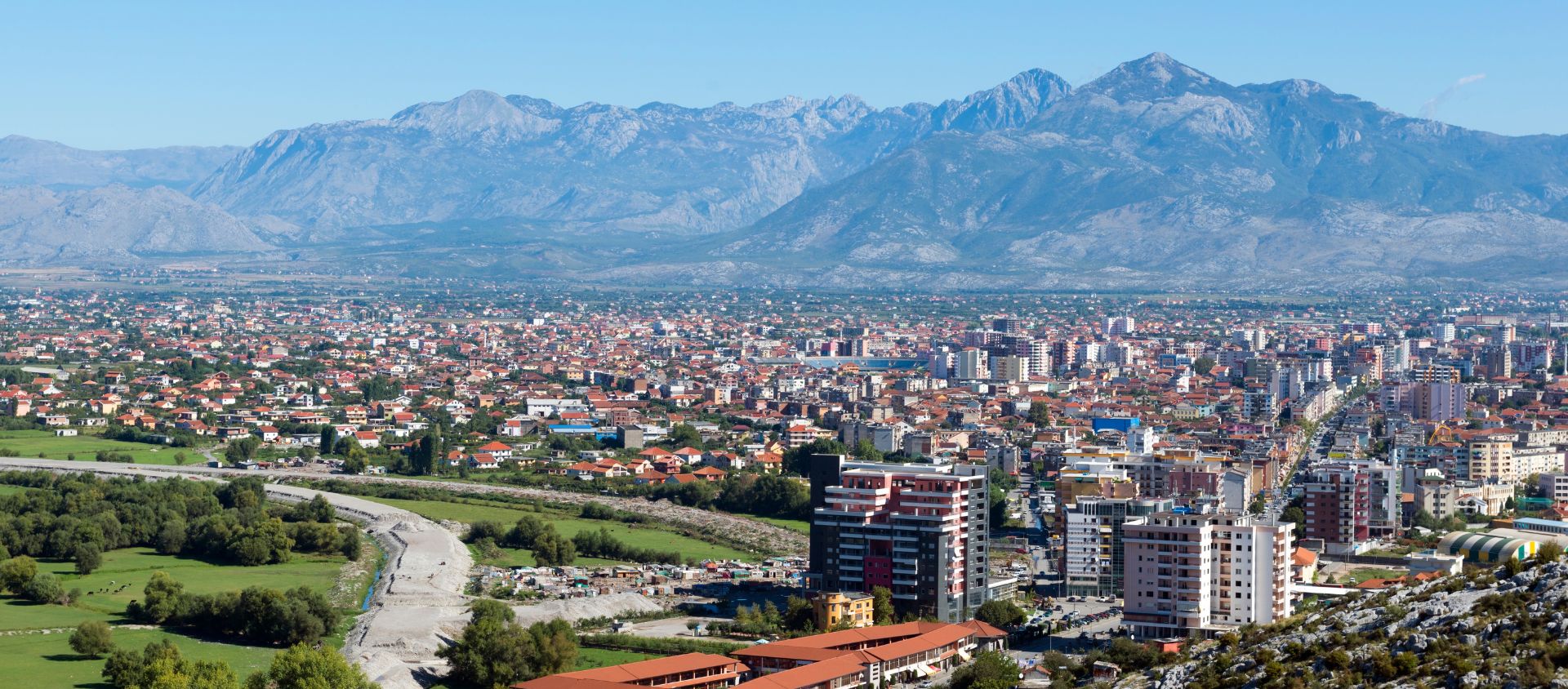
Shkodër’s pedestrianised historic centre breathes the atmosphere of a relaxed European city. The main street, Kol Idromeno, lines up cafés, shops and elegant Austro-Hungarian buildings with colourful façades. The Marubi Museum houses an exceptional photographic collection considered one of the most important photographic archives in the Balkans. Photographs by the Marubi photographers, spanning more than a century, constitute a unique visual record of Albanian society’s evolution. For nature lovers, Shkodër serves as a base camp for exploring the Albanian Alps: the Valbonë and Theth valleys, reachable in a few hours by road, offer some of the most spectacular hiking in Europe amid preserved alpine landscapes. Local gastronomy celebrates mountain specialities: aged cheeses, grilled meats, slow-cooked dishes with wild herbs. The Tradita Geg & Tosk restaurant serves particularly flavoursome northern cuisine in a warm traditional setting.
Practical tips for visiting Albania
Planning your trip to Albania requires a few essential pieces of information to make the most of the experience. The best period runs from April to October, with a preference for May–June and September–October, which combine pleasant weather with moderate tourist numbers. Summer (July–August) is ideal for beach holidays, but temperatures can exceed 35°C in the cities. Albanians use the lek as currency (€1 is equivalent to approximately 108 leks in 2025), though euros are widely accepted in tourist areas. ATMs are available in all cities, and bank cards work in most establishments.
Getting between Albanian cities is generally straightforward and affordable. Minibuses known as “furgon” connect all main destinations for a few euros, though timetables can sometimes be approximate. Car rental is the ideal solution for greater flexibility, especially as the main roads have been considerably improved in recent years. Be aware, however, that local driving can surprise those accustomed to strict rules: the highway code remains somewhat open to interpretation in Albania. For the Tirana–Sarandë or Tirana–Shkodër routes, companies such as Eagle Travel offer comfortable buses with Wi-Fi for under €15. Tirana International Airport receives direct flights from Paris, Lyon, Geneva, Brussels and several other European cities, often at very competitive prices.
What to pack
- Suitable clothing: pack light outfits for summer, but also a jumper for cool mountain evenings or air-conditioned interiors, and comfortable walking shoes for exploring cobbled cities
- Sun protection: the Mediterranean sun is intense — high-factor sunscreen, a hat and sunglasses are essential in summer
- Electrical adapter: Albania uses standard European plugs (type C and F), voltage 230V
- Personal medication: although pharmacies are plentiful, bring your usual treatments with a prescription
- Translation app: English is improving but remains limited outside tourist areas — a few words of Albanian are always appreciated
- Cash in euros: even though ATMs are widely available, having euros allows you to exchange at better rates
- Swimwear: essential, of course, to enjoy the sublime beaches and natural springs
The cost of living in Albania allows you to travel comfortably on a moderate budget. A meal at a local restaurant costs €5–10, at a more upscale establishment €15–25. Accommodation ranges from €20–30 for a decent double room to €60–100 for a boutique hotel. Activities remain affordable: entry to archaeological sites €3–5, sunlounger rental on the beach €5–8 per day. With €50–70 per person per day (excluding accommodation), you can fully enjoy Albania without going without.
FAQ: everything you need to know before visiting Albania
Do you need a visa to travel to Albania? No, citizens of France, Belgium, Switzerland and the European Union can stay in Albania for up to 90 days without a visa, with simply a valid identity card or passport. This administrative ease makes the destination particularly accessible for spontaneous trips.
Is Albania a safe destination? Yes, Albania is considered a safe destination for tourists. The crime rate remains low, and Albanians are renowned for their legendary hospitality. The usual precautions are sufficient: keep an eye on your belongings in busy tourist areas and avoid ostentatious displays of wealth. Women travelling alone generally encounter no particular problems.
What language is spoken in Albania? Albanian is the official language. Italian is widely understood, particularly in the south and on the coast, thanks to geographical proximity and decades of receiving Italian television channels. English is progressing rapidly, especially among younger generations and in the tourism sector. A few words of Albanian (përshëndetje = hello, faleminderit = thank you) are always very much appreciated.
Can you drink tap water? In major cities such as Tirana, Shkodër and Berat, tap water is generally safe to drink, though some prefer bottled water as a precaution. In rural areas and small mountain villages, stick to bottled water. Local mineral water is excellent and very inexpensive (under €1 for a 2-litre bottle).
What is the best city for a first trip to Albania? Tirana makes an excellent starting point for discovering the country. The capital helps you understand Albania’s evolution, offers all necessary services and serves as a base for exploring other destinations. For a seaside holiday, Sarandë combines magnificent beaches with proximity to major cultural sites. Travellers seeking authenticity will prefer to start with Berat or Gjirokastër for an immersion in historic Albania.