
Key Takeaways
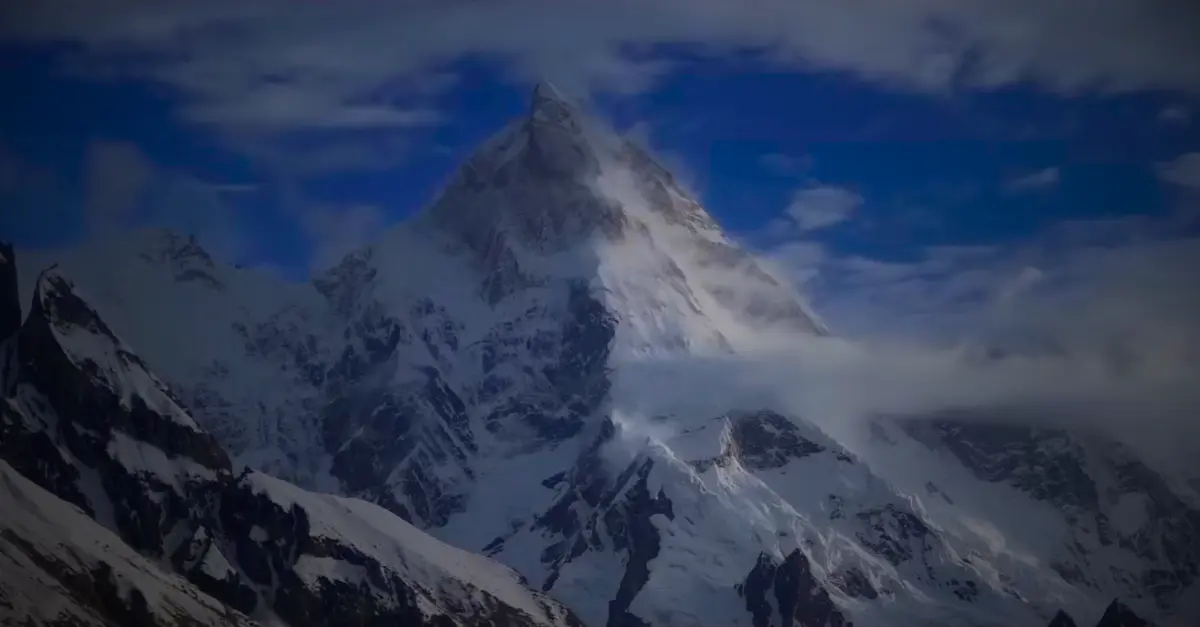
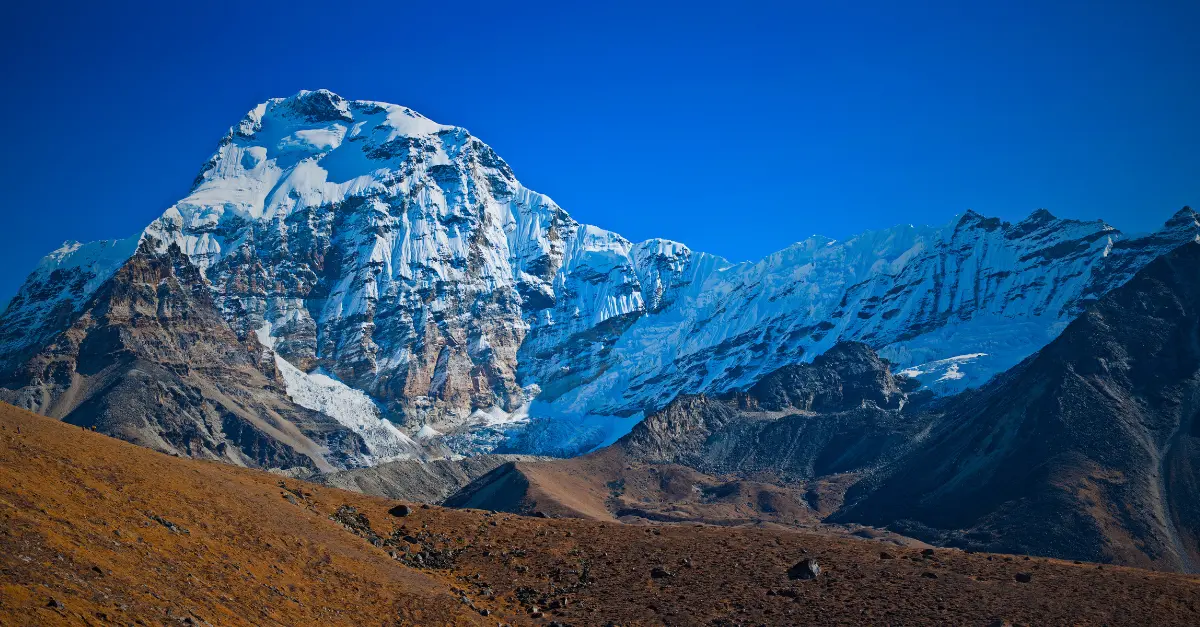
Baruntse (7,129m) is THE Himalayan springboard to Everest: located at the border of the Everest-Makalu massifs, this high-altitude summit offers complete preparation in real conditions — glaciers, high-altitude camps, Himalayan weather management — over a 35-day expedition, without the ultimate pressure of the 8,000-meter peaks.
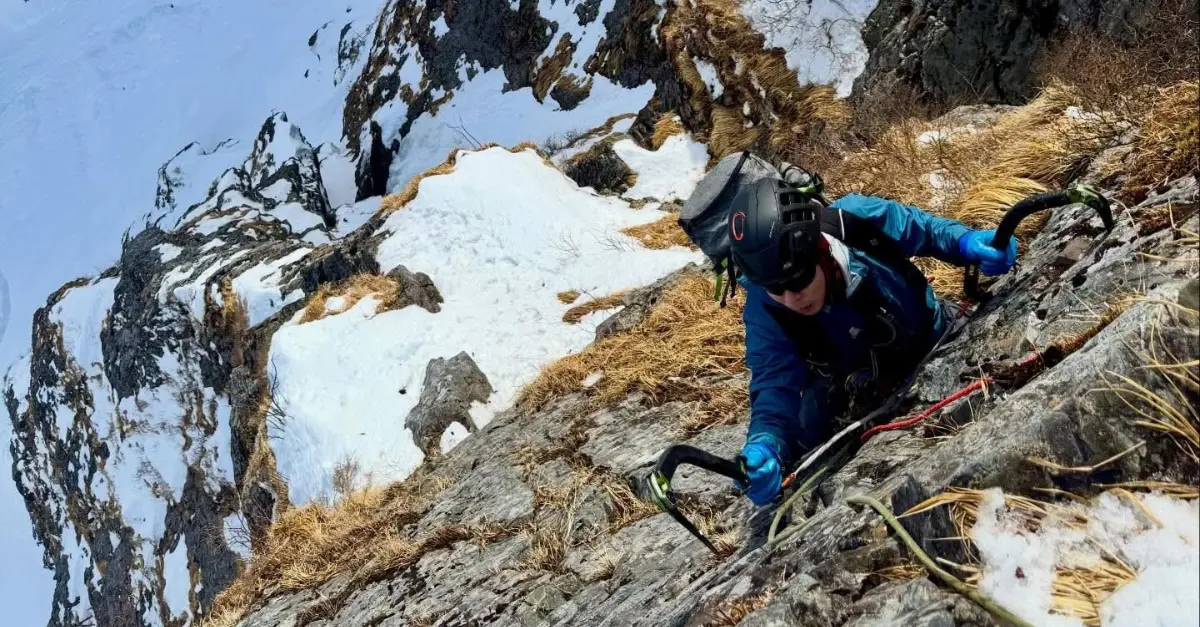
It combines every technical skill you will need: progression on crevassed glaciers, glacial sections up to 75°, management of two high-altitude camps (6,100m and 6,400m), fixed ropes, high-altitude nights and progressive acclimatization above 7,000m.
What truly sets it apart is its geographical position: from its summit, you see Everest, Lhotse, Makalu and Cho Oyu all at once. This is not symbolic — it is total immersion in the terrain you are preparing to face, with a historically higher success rate than most 7,000-meter Himalayan peaks.
Baruntse is not a summit you choose by default. You choose it because you have understood that Everest cannot be prepared for in a gym or on an Alpine 4,000-meter peak. It is prepared for in the Himalayas, above 6,000 meters, crampons biting into the glacier, with cold that cuts and a head that spins slightly. And for that, Baruntse at 7,129 meters is, in my view, one of the best springboards that exists.
I remember passing through Everest Base Camp at 5,300 meters — altitude hits differently when you are actually there, watching teams gear up for the Khumbu Icefall. What I understood that day was that Everest begins long before base camp, long before the flight to Kathmandu. It begins with the right preparation decisions.
Baruntse is one of the most beautiful Himalayan summits accessible to ambitious mountaineers. Join the Outwild expedition and live an exceptional adventure in the heart of Nepal.
Why Nepal included Baruntse in its Everest criteria
It is no coincidence that Nepalese authorities have tightened their Everest access requirements in recent years. Since the climbing regulation reform, Nepal now requires any Everest candidate to have previously climbed a 7,000-meter summit — and Baruntse features prominently on the official list of accepted peaks, alongside Ama Dablam, Himlung Himal and Hiunchuli.
This change replaced the old 6,500-meter standard, which was dropped when it caused permit sales to fall. Today the logic is different: the goal is to verify that the climber physiologically understands what it means to operate at high altitude — hypoxia, frostbite, impaired decision-making. Baruntse fulfills this function perfectly.
What sets Baruntse apart from other recommended 7,000-meter peaks is that the bulk of the technical difficulty is concentrated above 7,000 meters, precisely where the body begins to genuinely suffer. The real challenge is not technique itself — it is controlling body and mind under the grip of high altitude. That is exactly what Everest will demand of you, but more severely.
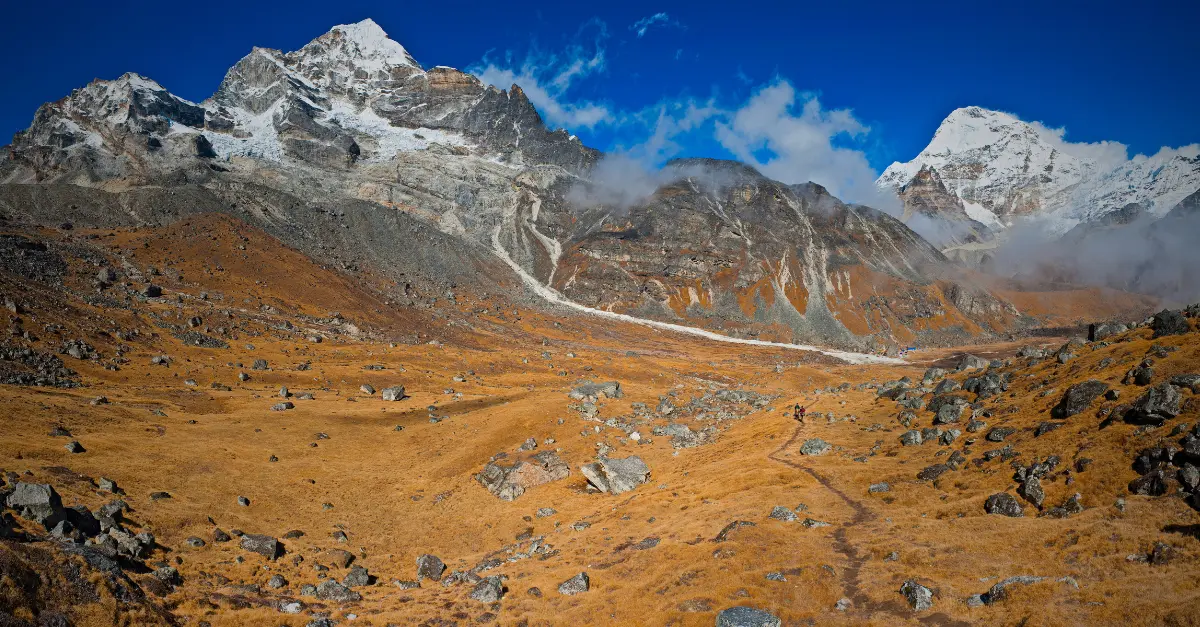
A terrain that resembles Everest, in a more accessible form
Geography: at the crossroads of two legendary massifs
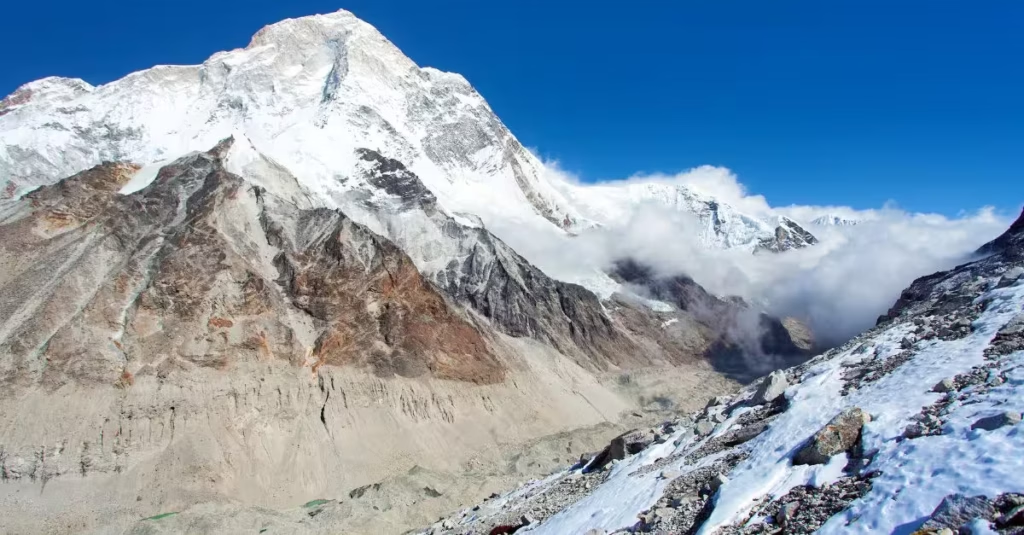
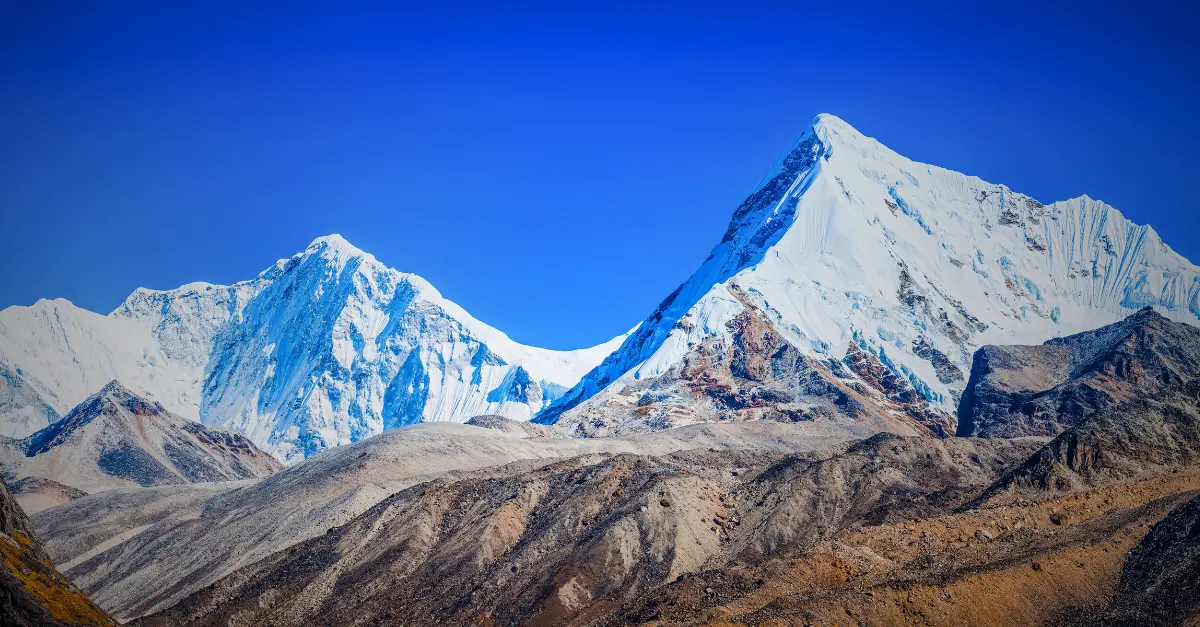
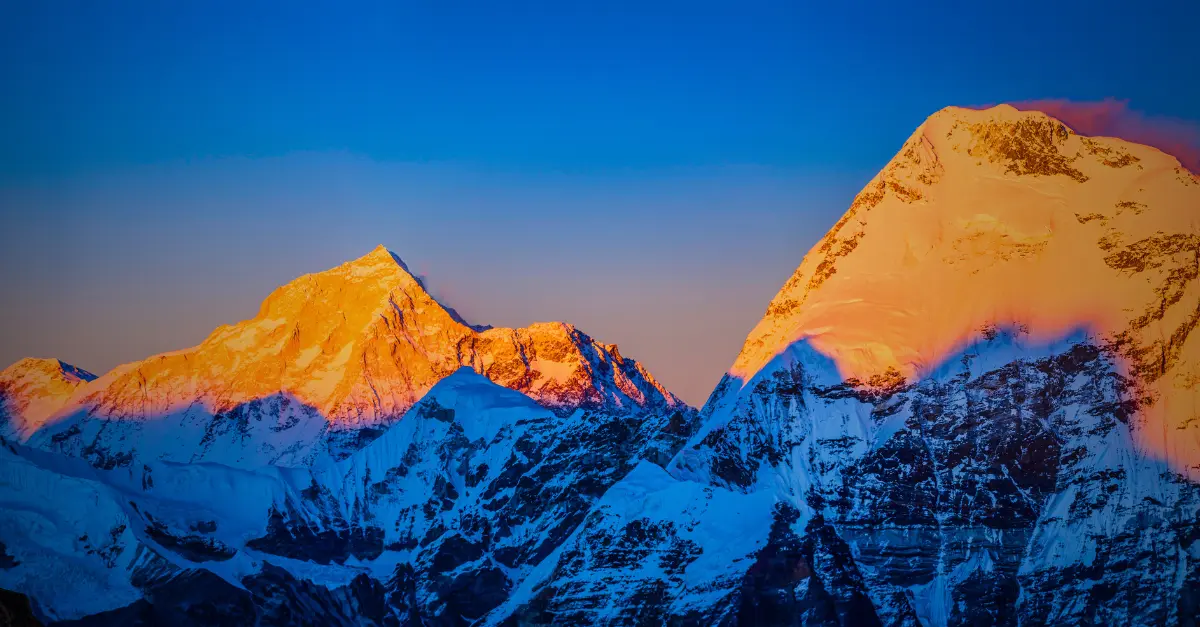
Baruntse stands at the border of the Everest and Makalu massifs, isolated by vast glacial expanses that make its approach unique. From the summit, the panorama is truly breathtaking: Lhotse, Everest and Makalu are visible simultaneously. For someone preparing for Everest, this is not trivial — seeing your objective from 7,000 meters, visually understanding your place in that landscape, changes something in your mind.
Baruntse is surrounded by the Barun Glacier to the east, the Hunku Glacier to the south and the Imja Glacier to the northwest — three glaciers that form a demanding and formative environment. Navigating this type of terrain is exactly what you will encounter on the flanks of Everest.
The normal route: technical but accessible
Baruntse is accessible to any mountaineer who has already developed autonomy on classic snow routes. It involves only technical passages on snow and ice. That does not mean easy — it means that a seasoned alpine climber can attempt it, provided they are clear-eyed about what “high altitude” truly means.
The technical figures speak for themselves:
- Base camp at 5,400m, already in the zone where acclimatization starts to weigh on you
- Camp 1 at 6,100m on the southeast ridge, slopes up to 45°
- Camp 2 at 6,400m in the Upper Barun Glacier
- Final passage between Camp 2 and the summit: a 75-degree ice face leading to a small col at 6,500m, then the summit ridge
- 50-degree slopes requiring fixed ropes, with cornices demanding an extremely cautious approach
This technical program maps almost point for point onto the normal route of Everest — replacing the 7,000 meters with 8,848 meters, with all the additional challenges that entails.
What Baruntse actually teaches you
Managing high-altitude camps
One of the most underestimated aspects of an Everest expedition is the logistics of camp rotations. Climb, descend to acclimatize, climb again, wait for weather. Repeat. Baruntse imposes exactly this pattern across two successive camps, over a roughly 14-day window dedicated to the ascent phase.
Sleeping at 6,400 meters is not an abstract statistic. It is a night of broken sleep, a spinning head and every liter of water counting. Experiencing this before Everest fundamentally changes how you manage your effort — you know what to expect, you have a real frame of reference.
Everest is not just a summit — it is the culmination of a mountaineer’s life. Prepare yourself for the ultimate challenge and join the small number of women and men who have reached the roof of the world at 8,849 meters.
👉 Join the Everest Expedition and write your own story at the top of the world.
Glacial progression at high altitude
The route to the summit crosses numerous crevasses and carries avalanche risk during certain periods, requiring strict adherence to fixed ropes. This is a situation identical to what you will face in the Khumbu Icefall and beyond, on the flanks of Everest. Navigating a crevassed glacier at 6,000 meters, as a team, with full high-altitude gear on your back — this is where true technical automatisms are built.
Progressive acclimatization: the real luxury of Baruntse
A Baruntse expedition is structured over approximately 35 days in total, with 14 days dedicated to the high-altitude camps and the acclimatization phase itself. This pace is invaluable. The classic mistake on Everest is rushing the stages. Baruntse educates you in Himalayan patience.
The common combination with Mera Peak (6,461m) — which often serves as a warm-up before Baruntse — reinforces this logic further. Climbing Mera Peak as a prelude allows the body to acclimatize for pushing above 7,000 meters, with a natural and realistic progression.
My personal view on Baruntse as Everest preparation
Those who arrived at base camp without ever having slept above 6,000 meters all shared one thing in common: a certain naivety about what their body was going to go through. Not arrogance on their part — simply a lack of reference point.
Baruntse corrects that. It puts the body in the actual situation — the cold, the broken effort, the difficult nights, managing hydration and nutrition at high altitude. And it does so in an environment that resembles Everest, not a training ground at low altitude.
What I also appreciate about this mountain is that it is not a goal disguised as training. It is a real summit, with a real itinerary, real exposure, real difficulties. There are no shortcuts. And when you reach the top, facing the Everest-Lhotse-Makalu panorama, you do not think “that was just a warm-up.” You think you have just done something that matters.
The alternatives and why Baruntse remains the best choice
There are other valid candidates in the “formative Himalayan 7,000-meter” category: Himlung Himal, Mera Peak, Pumori. Each has its arguments. But Baruntse combines advantages that none of the others offer simultaneously:
- Sufficient altitude (7,129m) for genuine high-altitude acclimatization
- Geographical position within the Everest-Makalu massif
- Realistic technical terrain with crevassed glaciers, fixed ropes and successive camps
- A solid success rate on the normal route for a well-prepared mountaineer
- A coherent expedition of approximately 35 days, comparable in length to what Everest demands
- Officially recognized by Nepalese authorities as a valid prerequisite for Everest
No other summit in this category checks as many boxes at once. That is why it is regularly recommended by experienced Himalayan guides as the logical step between Alpine 6,000-meter peaks and Everest.
What to plan for a Baruntse expedition
Some practical benchmarks for those seriously considering this route:
- Best season: spring (March–May) or autumn (September–November) — the two main Himalayan windows, the same as for Everest
- Total duration: allow 35 to 38 days including international travel
- Technical prerequisites: glacier autonomy, crampon and ice axe proficiency, altitude experience above 5,000m, knowledge of fixed ropes
- Budget: organized expeditions with guide and Sherpas generally range from €7,000 to €12,000 depending on the agency and services included
- Permit: managed by Nepal’s Ministry of Tourism, to be factored into the overall budget
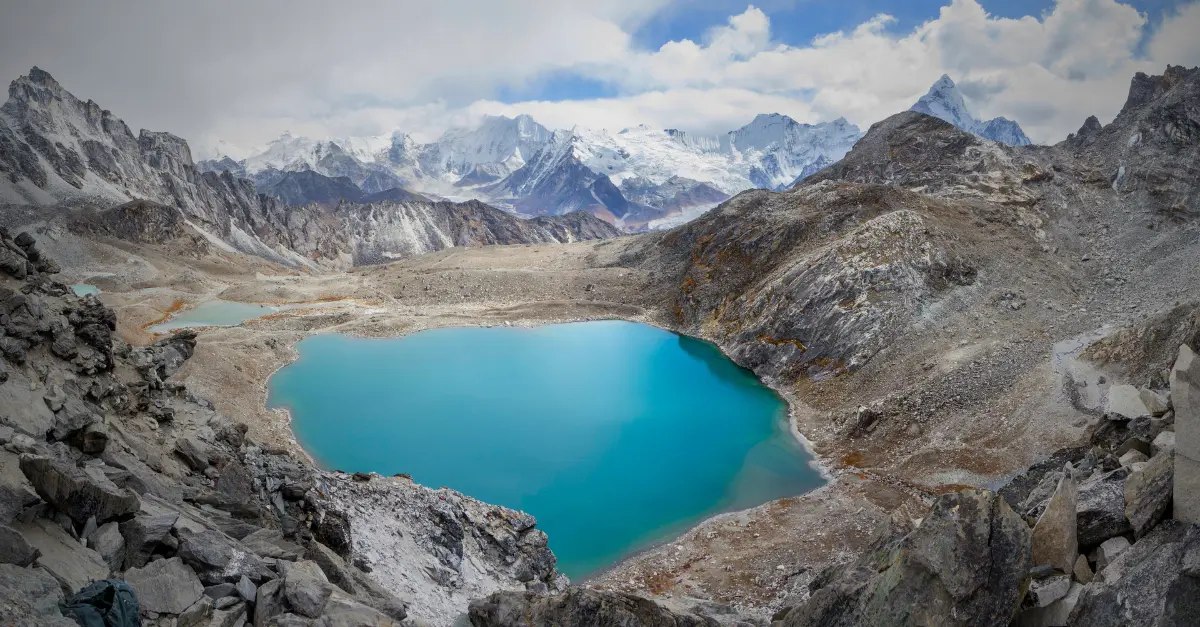
The standard approach from Lukla, via the Mera La (5,800m) and the Hinku and Hunku valleys, is itself excellent training. The approach trek through the Hinku and Hunku valleys — between gleaming glaciers and emerald lakes — provides outstanding progressive acclimatization before tackling the mountain itself.
FAQ
Is Baruntse mandatory before attempting Everest?
No, it is not a legal requirement, but it is widely regarded as one of the best preparation tests available.
- The official criteria: To obtain an Everest permit, Nepalese authorities require proof of having previously climbed a summit above 6,500 or 7,000 meters in Nepal. Baruntse (7,129m) fulfills this criterion perfectly, though other peaks such as Himlung Himal or Hiunchuli are also accepted within this administrative framework.
- The technical value: While it is not the only option, Baruntse is the preferred choice for preparation expeditions because it offers a complete experience: an altitude crossing the symbolic 7,000-meter mark, an aesthetic snow ridge and technical passages that closely simulate the difficulties you will later encounter on the slopes of Everest.
What minimum experience is required before attempting Baruntse?
This summit demands a solid technical background and prior experience at high altitude.
- The required profile: Baruntse is absolutely not intended for beginner mountaineers. It is aimed at climbers with regular practice in glacial alpine environments — proficiency with crampons, ice axe and roping techniques.
- Physical prerequisites: Before considering this ascent, it is strongly recommended to have already completed several summits above 5,000 or 6,000 meters. Excellent physical condition is essential to sustain prolonged effort and cope with oxygen depletion, as well as genuine familiarity with how your own body responds to hypoxia.
Can Mera Peak and Baruntse be combined in a single expedition?
Yes — and this combination has become the gold standard for maximizing your chances of success.
- Optimized acclimatization: Climbing Mera Peak (6,461m) in the first part of the trip provides a perfect acclimatization stepping stone. By sleeping at high altitude on Mera, your body produces the red blood cells needed to approach Baruntse’s 7,129 meters with far greater ease.
- A logical progression: This pairing allows for a technical and psychological build-up. Time spent at Mera Base Camp offers progressive immersion into the world of Himalayan high-altitude mountaineering before tackling the more committed and steep sections of Baruntse.
What is the best season to plan a Baruntse ascent?
The calendar mirrors the classic Himalayan weather windows, with two preferred periods.
- Spring and autumn: The months of April–May (pre-monsoon) and September–October (post-monsoon) are the most recommended. These windows offer more stable weather and less extreme temperatures than mid-winter.
- Visibility conditions: During these months the sky is generally clear, offering spectacular panoramas of Everest, Lhotse and Makalu. Additionally, the risk of unpredictable snowstorms and large-scale avalanches is statistically lower, ensuring better safety on the summit ridges.