
Key takeaways
- The concept & the promise: Organizing a corporate event at the foot of the Himalayas is now possible and accessible thanks to Outwild, a free platform connecting you directly with independent local guides in Nepal — everything is tailored to your needs, whether you’re a company of 10 or an association of 80.
- The technology & features: Outwild handles complete logistics (domestic flights, accommodation, French-speaking guides, trekking itineraries, cultural activities, altitude management) and adapts every program to the group’s level and objectives — whether it’s a seminar, incentive, team building, or group bonding trip.
- The added value: Where a traditional agency sells you a fixed catalogue, Outwild builds a real experience, rooted in the field, led by independent Sherpa guides who live the Himalayas every day. All with no hidden commissions or unnecessary intermediaries.
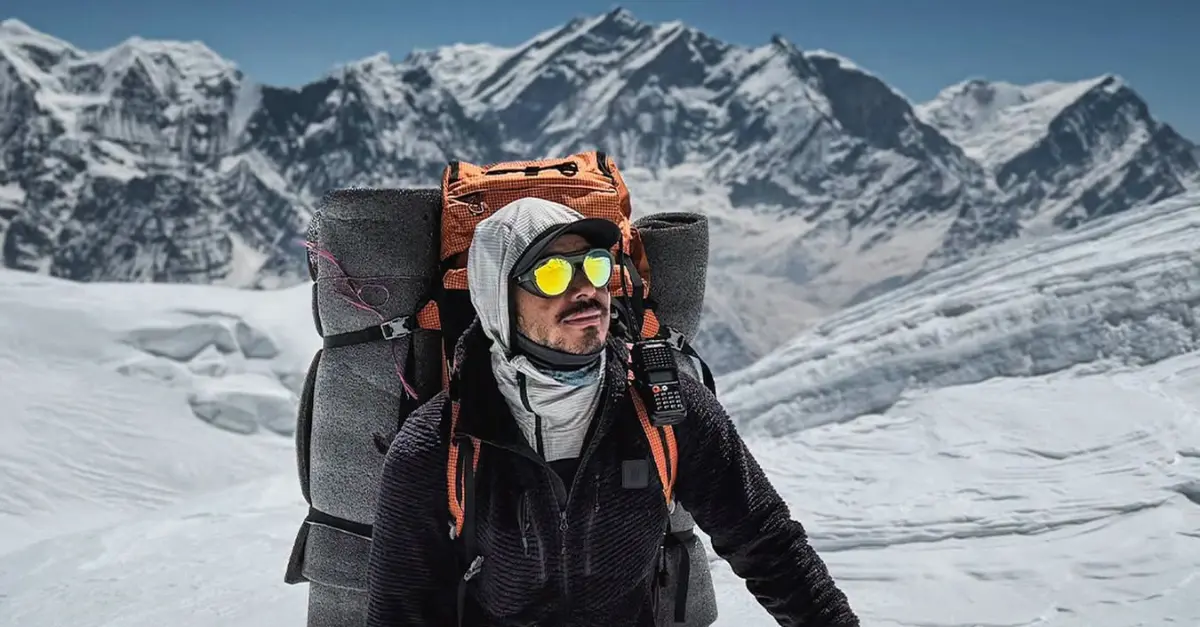
A corporate event at the foot of the Himalayas — the idea may seem far-fetched at first. And yet, every year, dozens of French teams choose Nepal for their seminar, incentive, or team retreat. Not out of exotic whim. Because certain environments change people in ways that conference rooms never will. I’ve walked to Everest Base Camp, crossed Namche Bazar and Pheriche with short breath and wide eyes — and I can tell you that this kind of experience transforms a group. It reveals inner resources, it creates bonds, it leaves a lasting mark.
Organizing this kind of event doesn’t happen overnight. But with the right partner, it becomes not only feasible, but remarkably well-calibrated. That’s exactly what Outwild offers: a platform for direct connection with independent local guides, specializing in tailor-made expeditions in the Himalayas and beyond.

Why the Himalayas are an ideal setting for a professional event
There is something about the mountains — and even more so the Himalayas — that resets the counters. The office routine fades away. Hierarchies redefine themselves. On a trail at 4,000 metres, the CFO and the executive assistant move at the same pace, catch their breath at the same pass, share the same tea in a teahouse in Lukla or Namche. This isn’t travel poetry — it’s a well-documented human dynamic.
Nepal also offers a diversity of formats that few destinations can match. Between the Annapurna region, the Everest valley, Langtang, or less-traveled circuits like Mustang or Dolpo, the possibilities are virtually endless. Some itineraries suit groups with no mountain experience. Others allow reaching a pass at 5,400 metres for the most motivated. This modularity is key for an event organiser: you can calibrate the level of challenge according to your team, your objectives, your budget, and the time available.
Nepal is home to eight of the world’s fourteen highest peaks, and its network of marked trails — the famous Great Himalaya Trails — spans the country from east to west. Logistically, the country is also well-equipped for hosting international groups: domestic flights from Kathmandu, comfortable lodges on the main routes, and one of the most professional guide infrastructures in the world.
What Outwild concretely changes about the organisation
Most event agencies offering Nepal work with local intermediaries, stack up margins, and deliver a standard product. Outwild works differently. The connection is direct — you speak to your guide, your Sherpa team, the people who have known the terrain for decades. There is no fixed catalogue, no pre-packaged “Himalaya product”.
For a corporate group, that changes everything. Here is concretely what Outwild allows you to structure for your event:
- A tailor-made trekking programme, calibrated to your group’s actual level — from accessible hiking for sedentary participants to challenging itineraries for sporty profiles
- Integration of workshops or team-building moments at altitude, at base camp, in Sherpa villages, or during nights in teahouses
- Acclimatisation management, crucial above 3,500 metres, and often poorly anticipated by generalist agencies
- French-speaking guides capable of facilitating, contextualising, and going beyond the simple role of map-carrier
- Full logistics: domestic flights Kathmandu–Lukla (or Kathmandu–Pokhara), accommodation, meals, trekking permits, collective equipment, transfers
- Formats adapted for associations and NGOs wishing to combine adventure with cultural immersion or solidarity engagement with local communities

The most suitable formats for a professional group
The team-building trek seminar
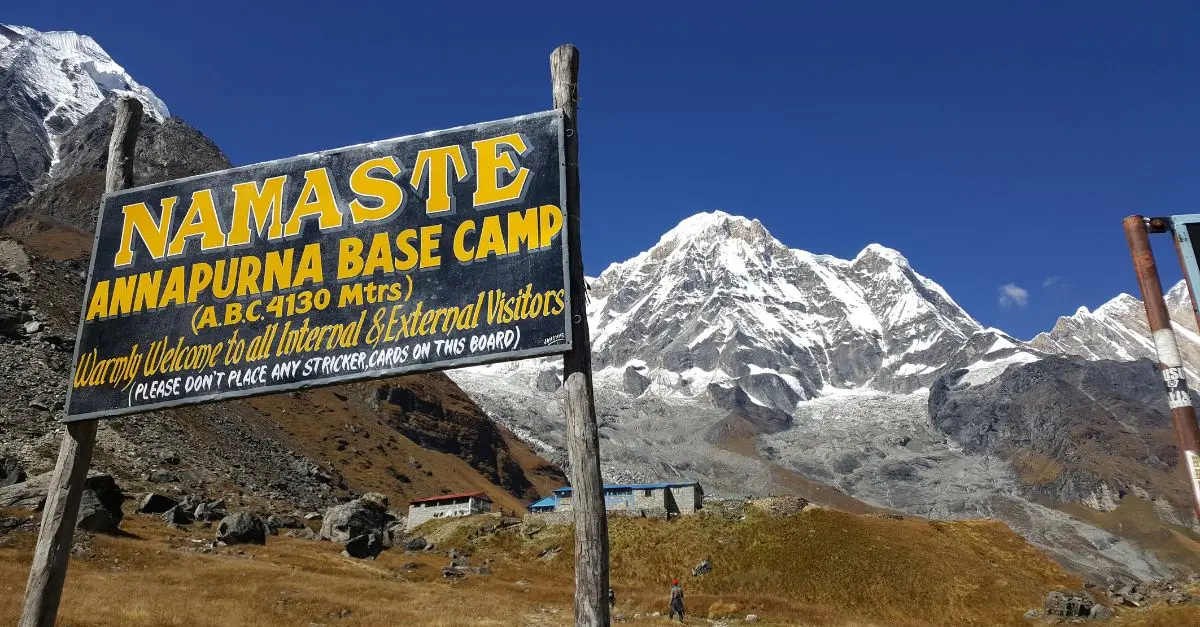
This is the most requested format. Over 7 to 14 days, a group of 10 to 30 people advances together on a progressive itinerary. The trek to Everest Base Camp remains the most impactful experience — two intense weeks, a gradual ascent to 5,364 metres, breathtaking scenery at every turn. But for less trained groups or shorter budgets, the Annapurna region with Poon Hill (3,200 m) is a perfect alternative: 5 to 7 days are enough to live something authentic and deeply impactful.
The high-altitude incentive
To reward high-performing teams, nothing beats an unforgettable experience. A trip to Nepal, organised with Outwild, represents something fundamentally different from a spa weekend or a gourmet dinner. There is a dimension of personal commitment, voluntary surpassing of limits, and rare collective sharing. Managers who have tried the format often speak of a before and after in their team’s dynamic.
The cultural immersion seminar
Not everything has to be physical effort. Some companies seek above all a change of scenery, an encounter with other ways of living, a shift in perspective. In Kathmandu, Pokhara, the villages of Langtang, or the monasteries of Solu Khumbu, there is ample material for collective reflection on topics such as our relationship to work, nature, and community. Outwild can build a hybrid programme: a few days of trekking, a few days of cultural immersion, and a collective debrief session.
The sporting expedition for experienced groups
If your team is athletic and you’re looking for something truly challenging, Nepal has so-called “trekking peaks” — such as Island Peak (6,189 m) or Mera Peak (6,476 m) — accessible to non-mountaineers with appropriate preparation. Outwild works with experienced high-altitude guides capable of leading these ascents safely.

My personal experience in the region
I trekked to Everest Base Camp in two stages: the first time solo, eyes fixed on my own limits, and a second time with a small group. The difference was striking. The mountain reveals something different when you experience it together. Teahouse conversations at 4,200 metres, the solidarity during the climb to Kala Patthar, the short nights in Pheriche with altitude sickness lurking — all of this creates bonds in a way that no escape room or incentive organised in a converted warehouse ever could.
What I remember most is the levelling effect the mountain produces. Hierarchical rank has absolutely no grip on a pass at 5,000 metres. And when you return to Paris or Lyon, something has changed in the way people look at each other in the office.
How much does it cost and how is it planned
One question that comes up systematically: what budget should I plan for? The good news is that Nepal remains one of the most affordable destinations for this type of international event. A one-week seminar in Nepal — including flights from Paris — starts from €2,500 to €3,500 per person all inclusive, depending on the comfort level, the region chosen, and the group size. This is comparable to or less than many high-end European seminars, for an infinitely more memorable experience.
Planning requires between 3 and 6 months of lead time. Trekking permits, domestic flights, and accommodation on popular routes (especially during peak season in October–November and March–April) must be booked in advance. Outwild accompanies this phase from start to finish, with a dedicated contact who knows the on-the-ground constraints.
Participants must also plan for serious physical preparation, especially if the itinerary exceeds 4,000 metres. Outwild can provide tailored preparation advice adapted to each participant’s fitness level.
Why choose Outwild over a traditional agency
The question is legitimate. There are event agencies, Nepal-specialist tour operators, and incentive agencies. But Outwild stands out on three specific points.
First, the direct relationship. You speak to the guides, not to sales representatives. You build the programme with people who grew up in these mountains, who know every route variant, every lodge, every logistical challenge. It’s not a catalogue — it’s a conversation.
Second, price transparency. No stacked margins, no “event service” invoiced at twice the real cost. Outwild operates on a direct connection model that eliminates unnecessary intermediaries. The budget goes to the field, to the local teams, to the experience itself.
Third, genuine flexibility. A group of 8 or 80 — Outwild adapts. A charity that wants to combine trekking with a solidarity project, an SME looking for a strategic seminar with working sessions at altitude, a multinational wanting to reward its top salespeople with an ascent — every format is built from scratch.
FAQ
Is Nepal accessible to employees with no mountain experience?
Yes, absolutely. The country offers magnificent itineraries that require no technical mountaineering background.
- Adapted routes: Classic trekking circuits, such as the Poon Hill panorama in the Annapurna region or the Langtang Valley crossing, are perfectly calibrated for occasional hikers who simply have a good general fitness level.
- Tailored support: Outwild structures each corporate travel project by adjusting the intensity of each stage to the group’s actual level. Itineraries natively incorporate very gentle progression stages to ensure the comfort and safety of every participant throughout the trip.
What is the best time to organise a corporate event in Nepal?
The ideal calendar revolves around two main seasons, dictated by the rhythm of the South Asian monsoon.
- Autumn (October to November): This is the prime trekking season. The monsoon has just ended, the air is particularly clear, the sky is a crisp blue, and the views of the Himalayan range are completely unobstructed, all with very pleasant daytime temperatures.
- Spring (March to April): An excellent alternative that coincides with nature’s awakening. Temperatures warm up and the forests of the Annapurna region burst into spectacular colour with the blooming of giant rhododendrons, offering a memorable team-building backdrop.
How many people can participate in a corporate event with Outwild?
The logistics are designed to be highly flexible and adapt to the size of your company.
- From SMEs to large groups: There is no cap. Expeditions regularly accommodate between 8 and 60 participants within a single session.
- Safety segmentation: To preserve conviviality, safety, and the quality of exchanges with local communities, Outwild systematically splits groups of more than 30 people into independent sub-groups. Each sub-group has its own French-speaking guides and a dedicated support team on the trails.
How do you manage the altitude factor for participants who are unaccustomed to it?
Safety at altitude is the absolute priority of professional leadership in the Himalayas.
- Scientifically calibrated itineraries: Whenever the route crosses the 3,500-metre threshold, Outwild designs elevation profiles that mandatorily include “active rest” days to allow participants’ bodies to naturally produce red blood cells.
- Medically trained guidance: All team guides hold certified training to detect the first symptoms of Acute Mountain Sickness (AMS). A strict safety protocol, including appropriate emergency equipment, is deployed on every event. The golden rule shared with teams remains simple: progress slowly, stay well hydrated, and immediately report any fatigue.