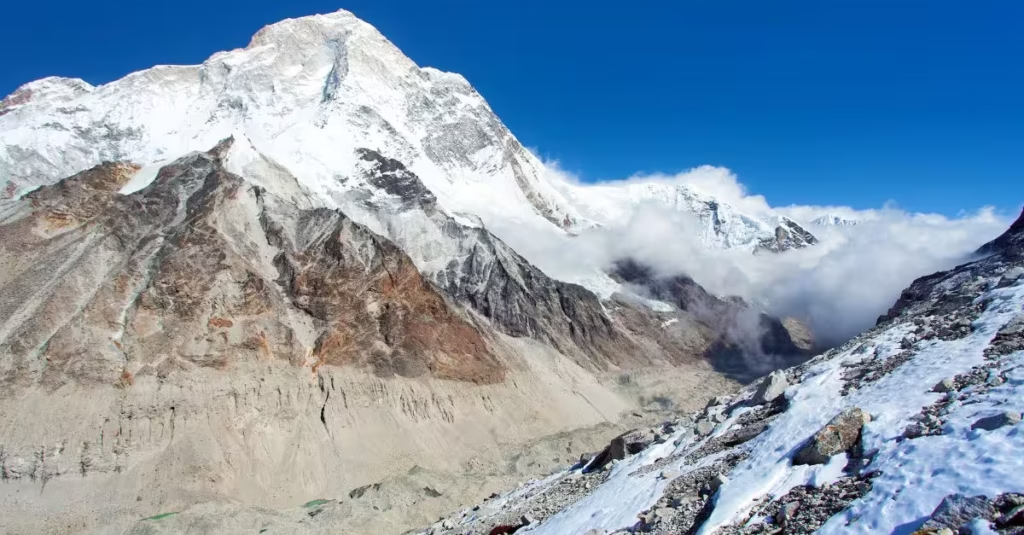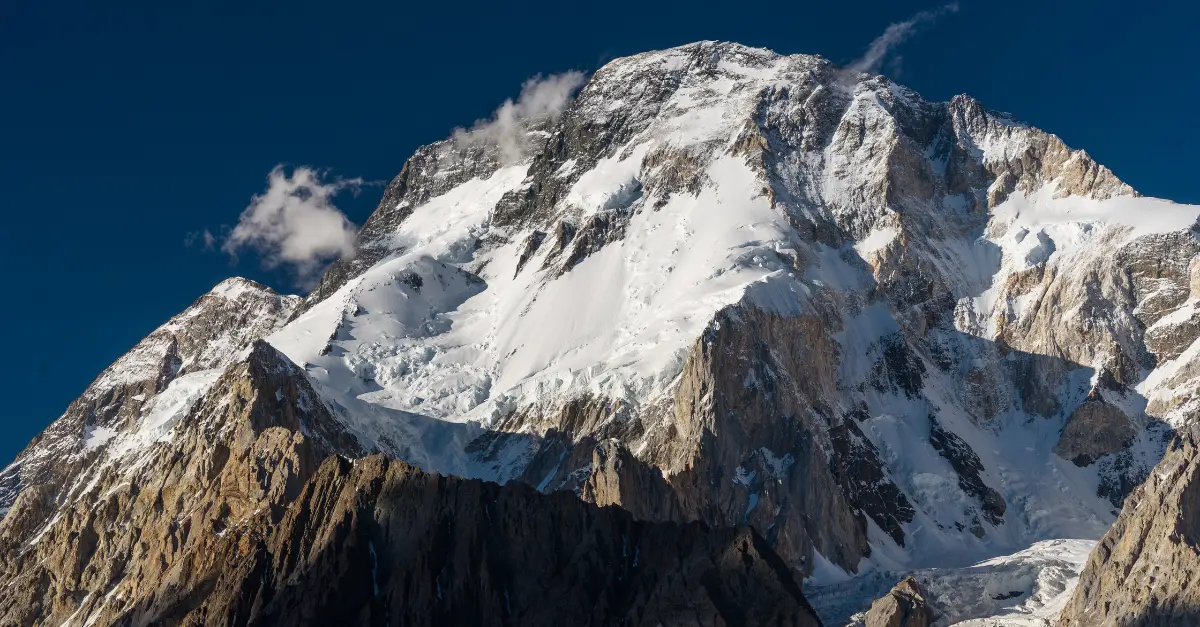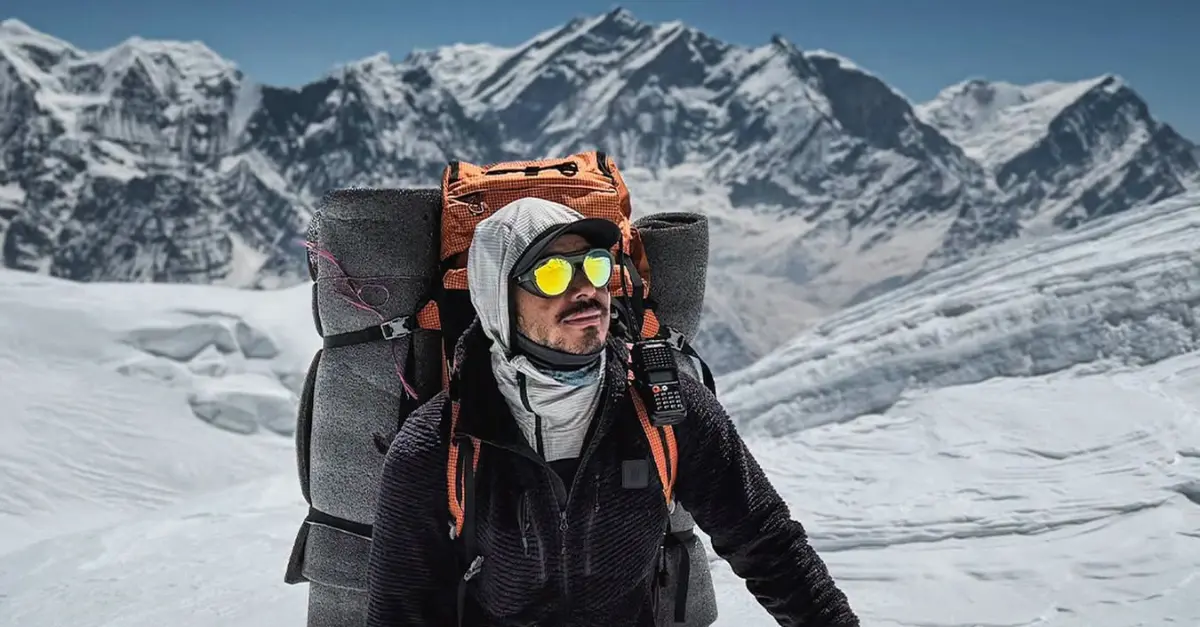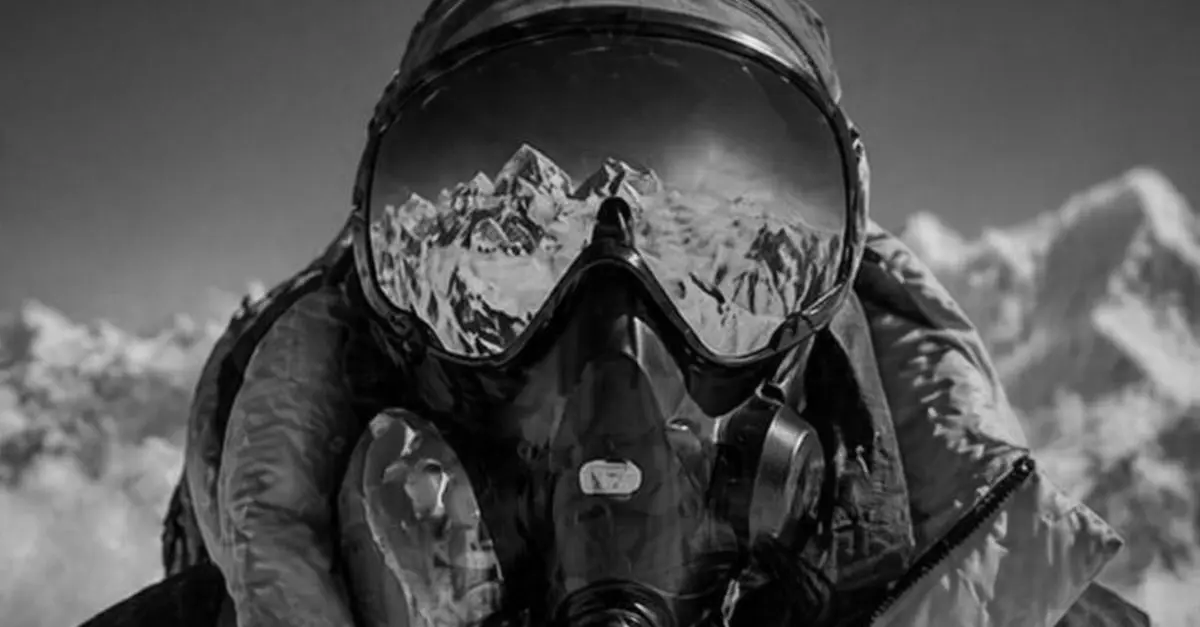


Bartek Ziemski has just accomplished something few ski mountaineers would even dare to imagine: the first ski descent of Lhotse (8,516 m) without bottled oxygen, from the summit to base camp, crossing the formidable Khumbu Icefall in thick, impenetrable fog. No fixed ropes, no pre-existing track, no support team in the upper section. Just him, his skis, and a mountain that shows no mercy.
I have to admit: when I followed this expedition in real time, I could barely believe it. We’re talking about the fourth highest peak in the world, a face notorious for its steep couloirs and unpredictable snow conditions. And this 37-year-old man simply… skied to the bottom.
The original plan upended by Himalayan logistics
Ziemski had planned everything. His initial intention was clear: get up Lhotse before everyone else, take advantage of untouched snow and ideal conditions for a safe descent. But the mountain — and above all the reality of high-altitude operations — decided otherwise.
The Sherpas were mobilised on Everest, the season’s absolute priority. Installing ropes simultaneously on Lhotse would have required additional manpower that nobody was willing to provide. As a result, Ziemski’s schedule had to adapt.
Paradoxically, this setback turned into an advantage. The summit couloir, particularly narrow, had not been fixed with ropes. For a skier of his level, this was a blessing. “If there had been ropes and a track, the ski descent would have been quite tricky,” he acknowledges. Fixed ropes are his pet peeve — he says it bluntly: “I hate ropes when I’m skiing.”
He ultimately became the first climber to reach the summit of Lhotse this season, entirely self-sufficient in the upper section.
The night ascent to 8,516 metres
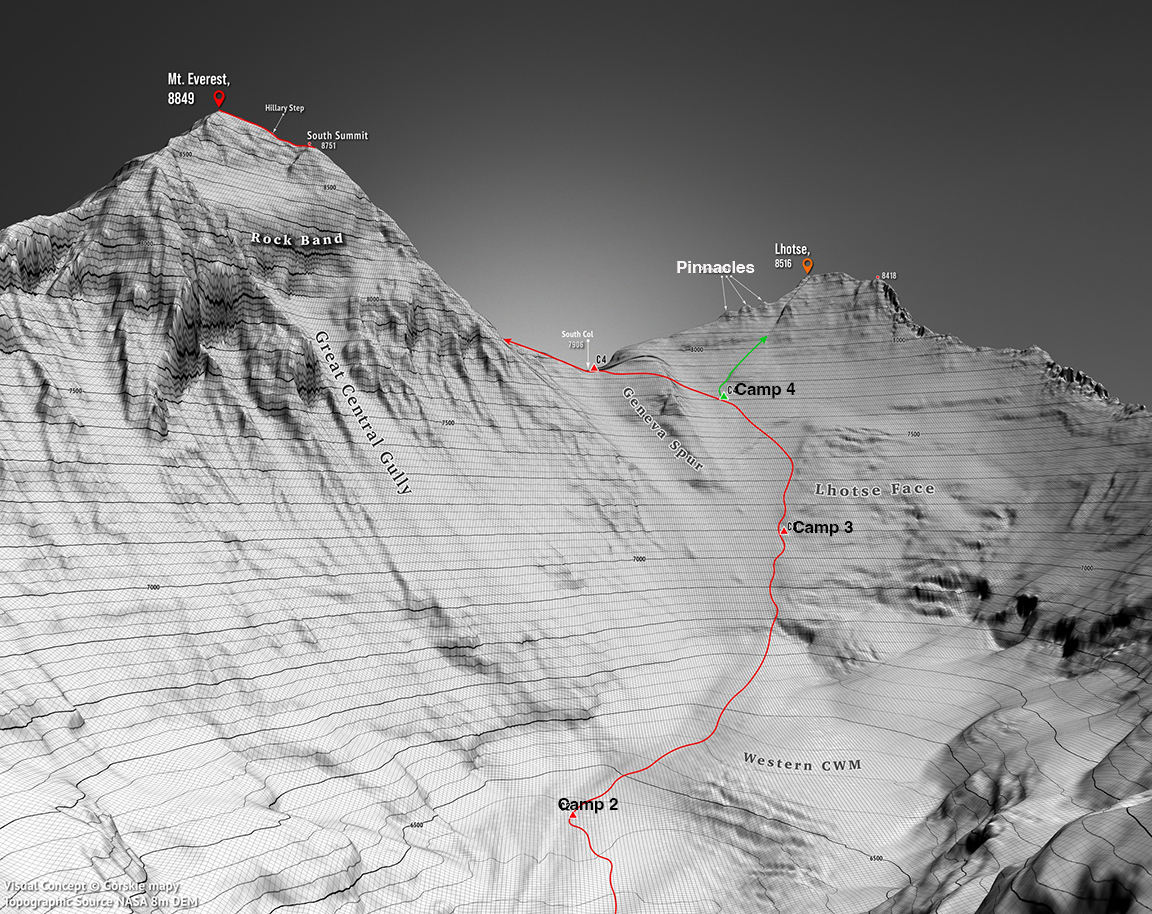
After a night at Camp 3, Ziemski transferred his tent and gear to Camp 4. A brief rest, then departure for the summit at 1 a.m. The route from that point diverges from the Everest line and had not been used since the previous year.
Navigating in total darkness? No problem for him. “The usual routes on summits above 8,000 metres are all marked. I always download the GPX files and follow them.” A methodical approach that stands in sharp contrast to the romantic image of a climber lost in the vastness.
Conditions on the way up were reasonable:
- First half: hard snow, pleasant underfoot, no ice
- Second half: some trail-breaking required, without excessive difficulty
- No strong winds reported, a usable weather window
He reached the summit at 12:14 p.m. “I didn’t linger; I don’t like being on the summit.” A few photos, swapping his hiking boots for ski boots, and off he went.
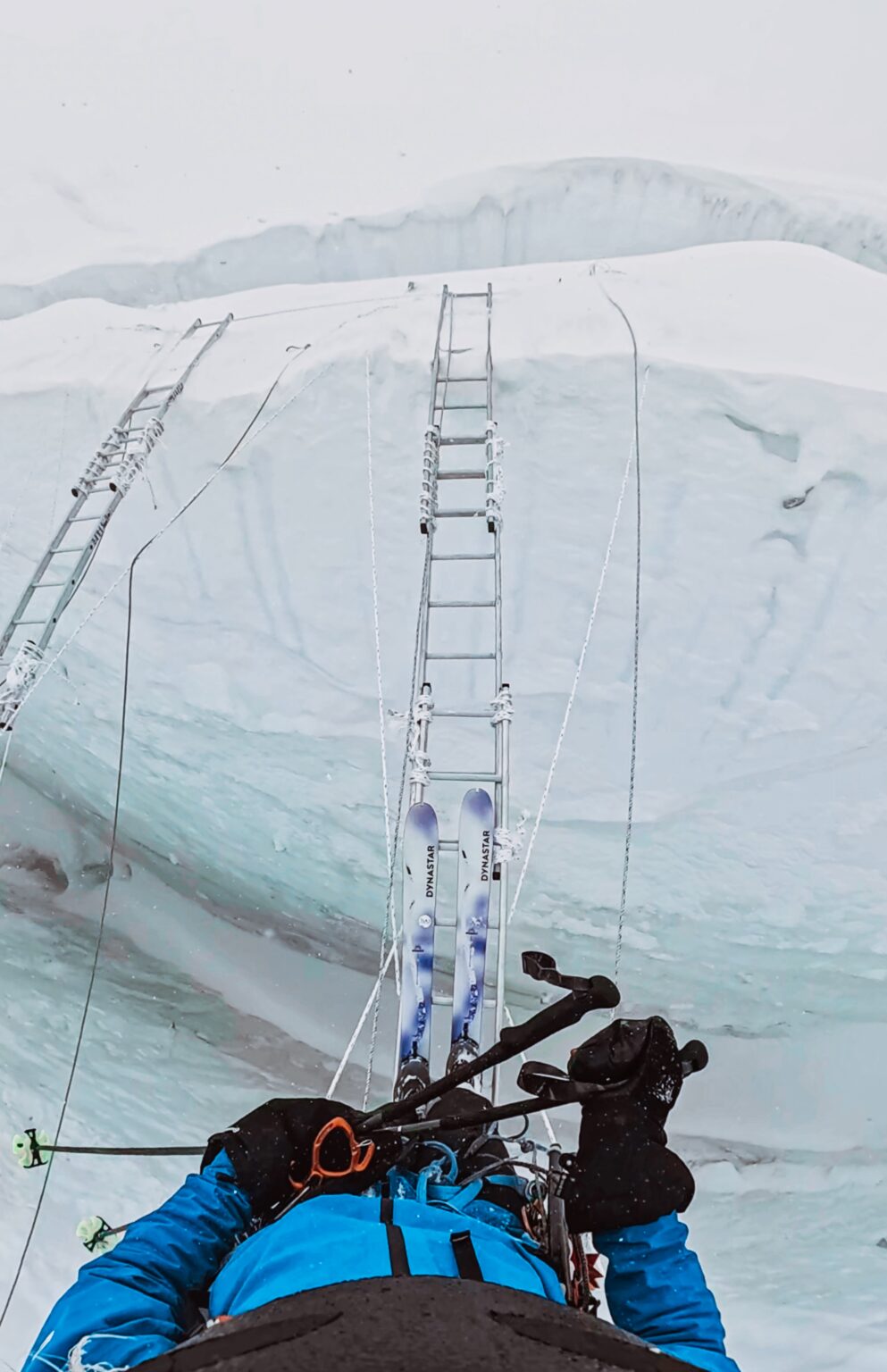
Photo: Bartek Ziemski
The descent of Lhotse: snow, rock and a narrow couloir
The first metres below the summit
The reality of the terrain asserts itself immediately. The first metres offer good snow, but a short section of bare rock appears where Ziemski least expected it. His reaction? Ski through it anyway, without unclipping, without a rope. The terrain was manageable, and he handled it.
Then comes the Lhotse couloir, notorious for its exposure and narrowness. He had arranged for a friend’s drone to survey it a few days earlier — at that point, snow coverage was insufficient. But the snowfall in the following days changed everything. The couloir had filled in, and overall conditions were excellent: hard snow, no ice, no significant avalanche risk on the face.
The descent camp by camp
Ziemski skied methodically, collecting his equipment at each camp and carrying it back down with him. A precisely managed logistics operation requiring calculated stops. At Camp 2, he allowed himself a longer break — the heat in the middle of the day is stifling, and the Khumbu Icefall is not a place to venture lightly when temperatures rise.
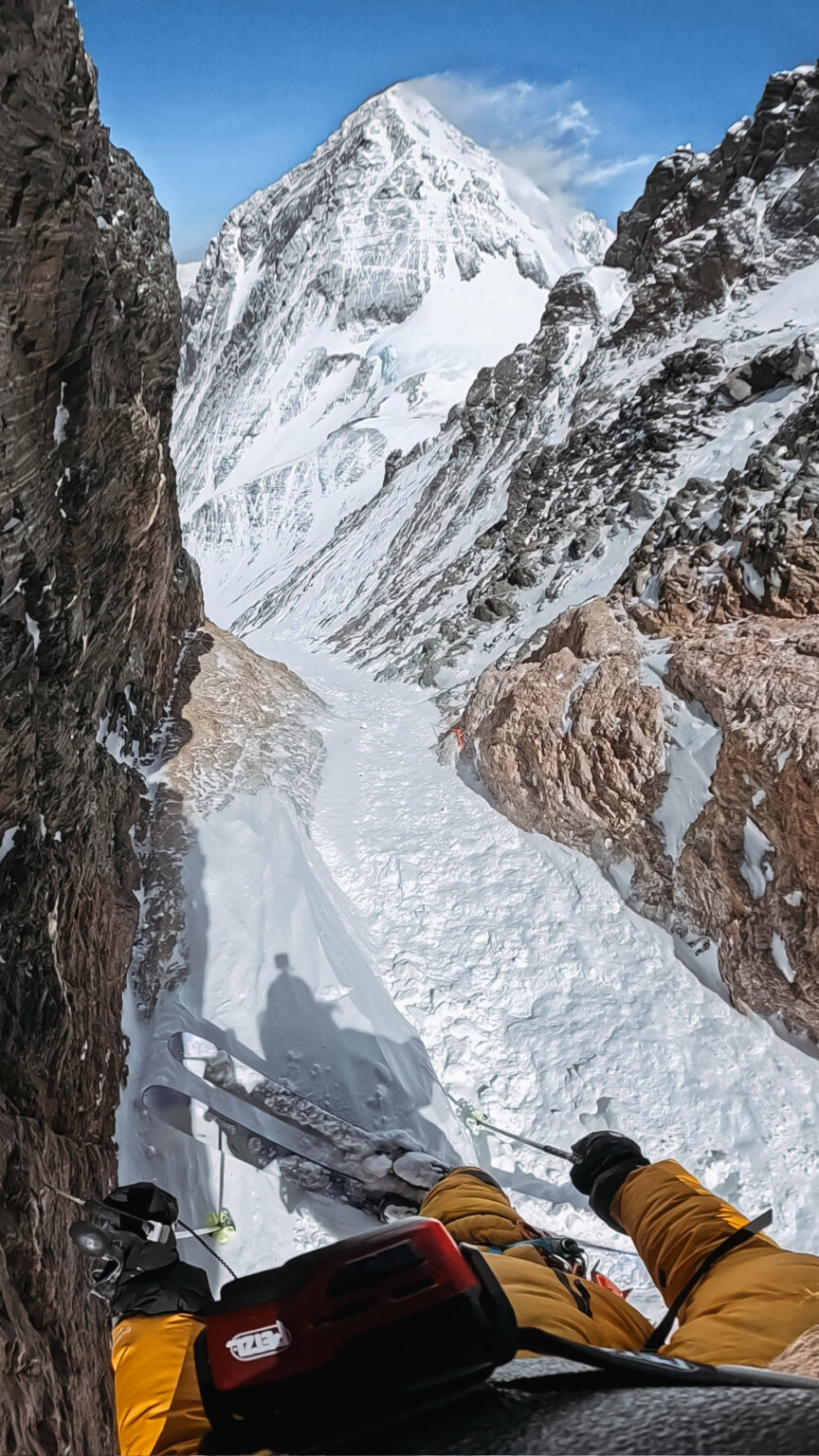
Photo: Bartek Ziemski
The icefall in whiteout conditions
A sudden weather change
This is where the expedition shifts into something else entirely. Less than two hours after his break at Camp 2, a thick, sudden fog swallowed the mountain. Temperature dropped sharply. Visibility virtually zero. Ziemski waited 45 minutes, motionless, before pressing on.
Skiing through the Khumbu Icefall in good conditions is already an achievement. Doing it in zero-visibility fog requires a level of mastery — and terrain knowledge — that is truly extraordinary.
No drone, no ropes: memory as a compass
How did he manage? No drone like Andrzej Bargiel used during his Everest descent in autumn 2025, no human guide. Simply: memory and accumulated experience.
Since arriving at base camp, Ziemski had crossed the icefall solo on numerous occasions. He had even helped a group of Nepali climbers find an alternative route to Camp 1 when an unstable serac had blocked the usual path. He knew every twist, every ice step, every snowfield.
“I had already skied in fog before, so the lack of visibility wasn’t an issue for me,” he says simply.
An alternative ski line through the icefall
A fascinating detail: for roughly half the route, Ziemski did not follow the standard path used by climbers and porters. For the lower section, he took an entirely different line — a series of snowfields beneath a rock wall, on the right flank of the icefall. A ski line conceived and memorised well before the day itself.
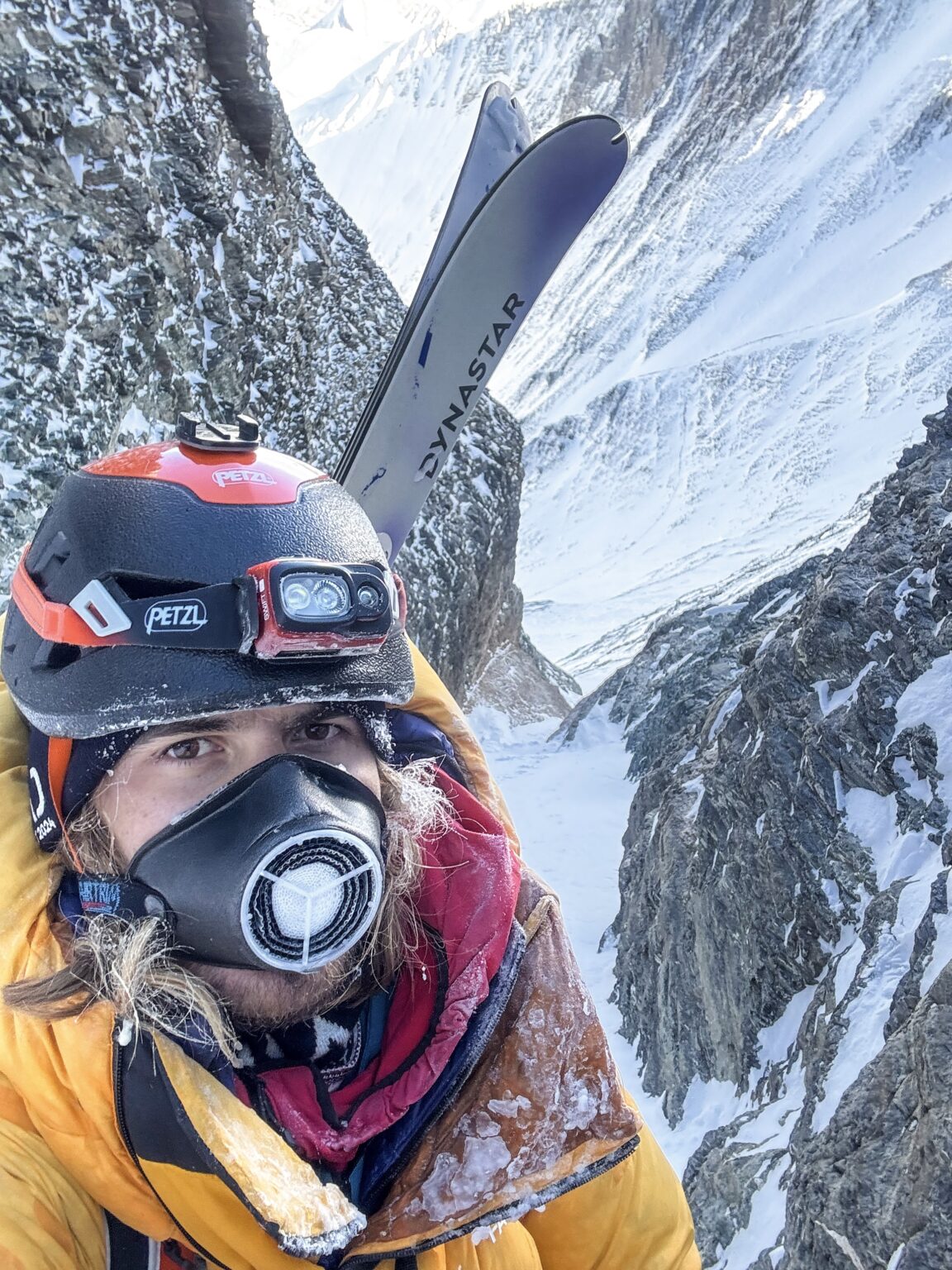
Photo: Bartek Ziemski
What this descent reveals about Ziemski
The relative solitude of Everest-Lhotse in season
There is something interesting in what Ziemski says about the notion of isolation. Yes, he was alone between Camp 4 and the summit. But “alone” on the Everest massif in the middle of the season remains a very relative concept.
“There were many Sherpas following the usual route to the South Col, supplying commercial clients. I could see their headlamps.” This image — the high-altitude soloist surrounded by an invisible flow of lights — says a great deal about what the massif has become.
What he truly missed was the pure mountaineering experience — the kind he lived on Kangchenjunga with Oswaldo Pereira, or on Gasherbrum II where he was literally the only human being on the mountain. “In a way, it spoils the experience. But that’s how it is.”
A record etched in the history of extreme skiing
To put this in context: Jim Morrison and Hilaree Nelson had completed a ski descent of Lhotse in 2018, from the summit to Camp 2, using supplemental oxygen. A remarkable achievement, but one that stopped before the icefall.
Ziemski went all the way to the bottom. Without oxygen. Alone in the upper section. This is the first complete ski descent of Lhotse without bottled oxygen in history.
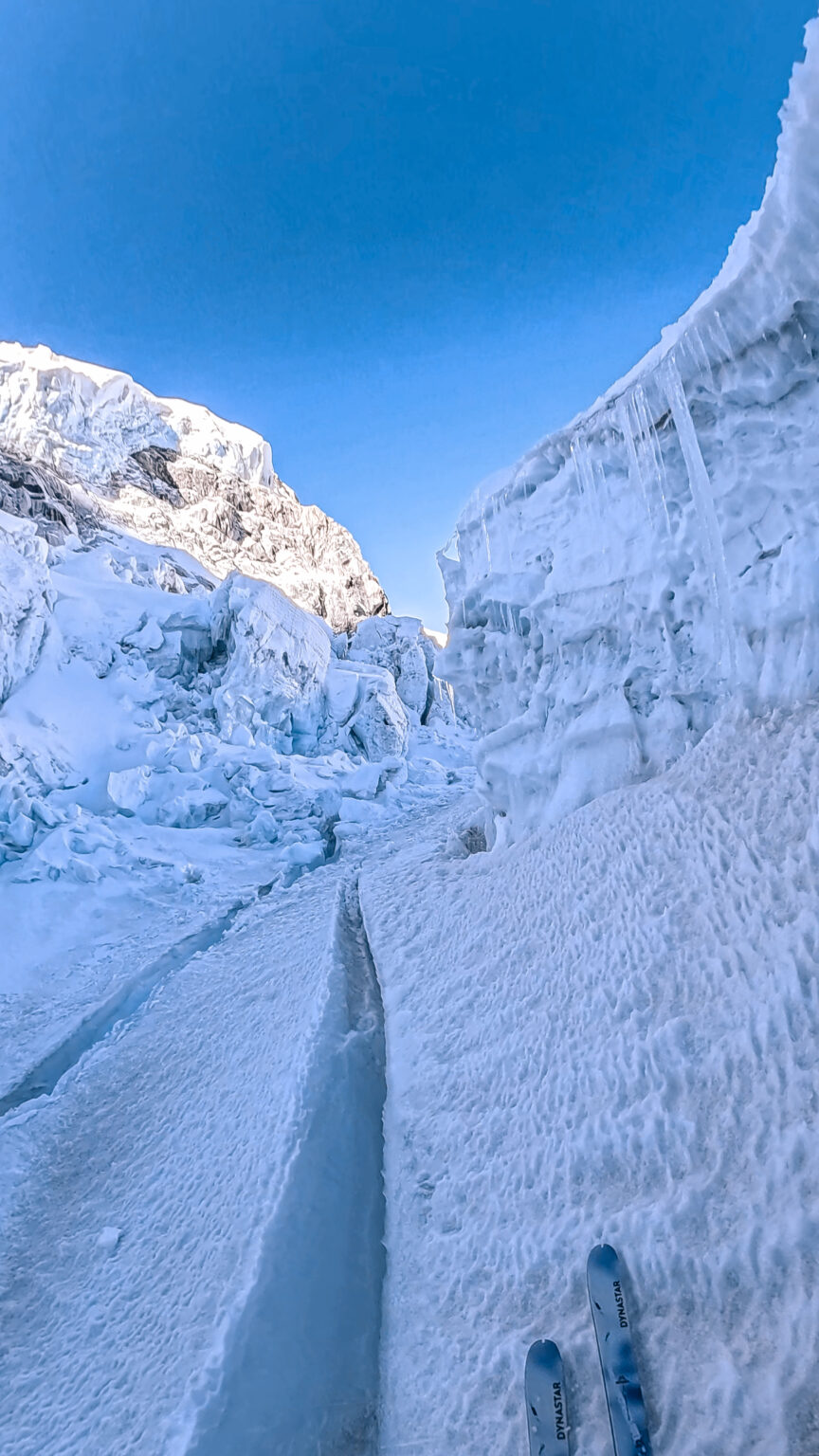
Photo: Bartek Ziemski
And Everest now?
The question was inevitable. Ziemski holds a permit for Everest. Was he going to go for the double?
“I don’t know yet what I’ll do, because there are enormous crowds. The season is shorter than expected, so we’ll see.” A cautious answer, characteristic of a climber who refuses to take unnecessary risks. The only complete ski descent of Everest without oxygen was achieved by Andrzej Bargiel in autumn 2025 — with a substantial support team and the help of drones. Ziemski, for his part, prefers to travel light.
What is certain: this descent of Lhotse will go down in the annals of high-altitude skiing as one of the cleanest and most controlled achievements ever performed above 8,000 metres.
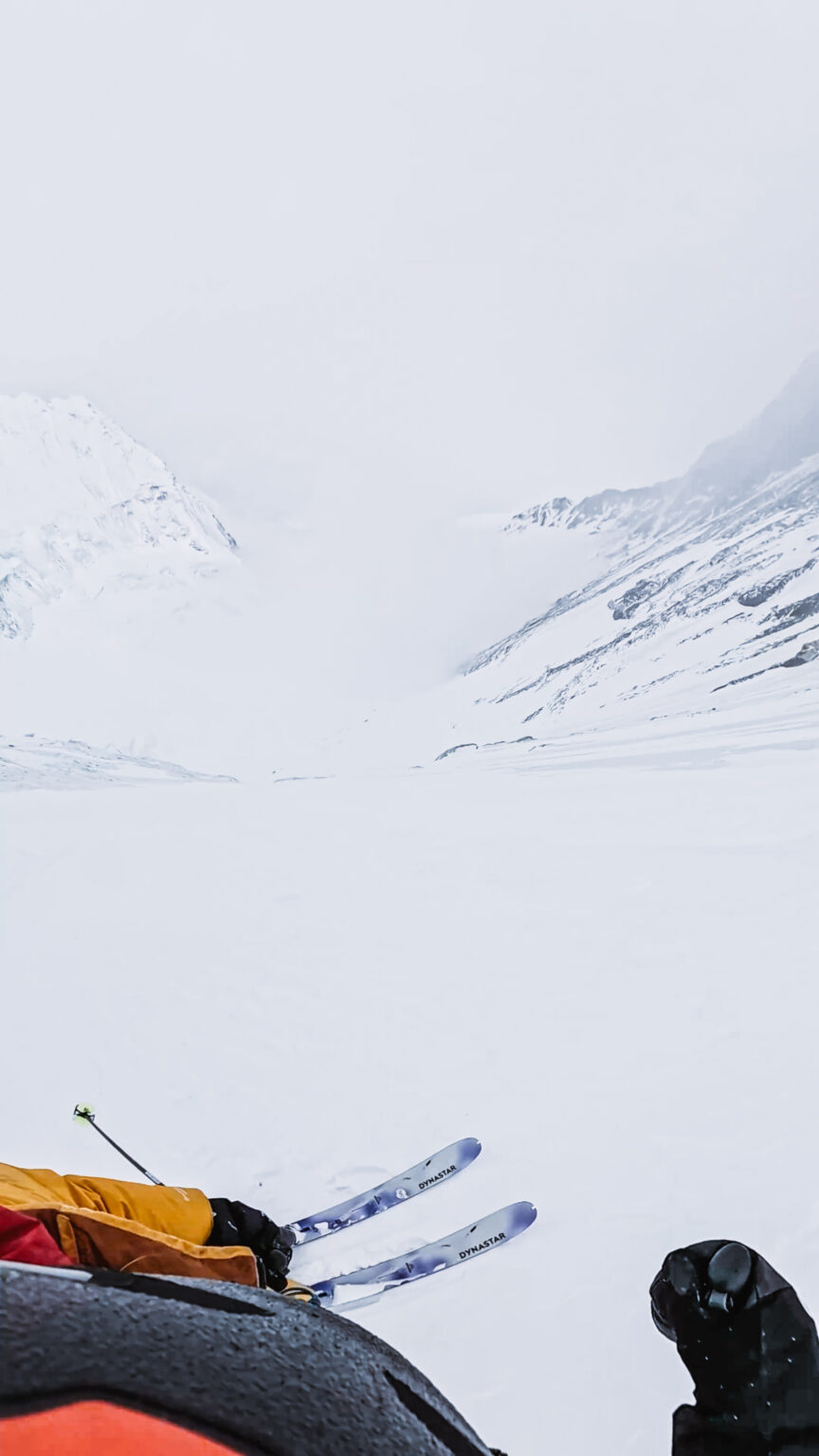
Photo: Bartek Ziemski
FAQ
Did Bartek Ziemski use oxygen to ski down Lhotse?
No, and that is precisely what makes this feat a landmark in mountaineering and steep skiing history.
- Pure performance: Bartek Ziemski completed the entire descent of Lhotse (8,516 m) without using a single bottle of supplemental oxygen.
- Full descent: He skied from the very summit of the mountain all the way to base camp, including through the legendary and formidable Khumbu Icefall — a world first under such pure stylistic conditions.
What is the difference compared to the Morrison and Nelson descent in 2018?
While the 2018 performance was immense, Ziemski’s pushes the boundaries of commitment even further.
- The route: In 2018, Hilaree Nelson and Jim Morrison made history by skiing the couloir on the west face (the “Dream Line”), but their descent stopped at Camp 2. They crossed the icefall on foot.
- The style: The American team used supplemental oxygen for both the ascent and descent. Ziemski skied every metre of the mountain in complete autonomy, with no breathing assistance whatsoever.
How did Ziemski navigate the icefall with zero visibility?
His success rested on exceptional mental preparation and terrain memory.
- Zero assistance: Despite the fog and total lack of visibility, the Polish skier used neither a reconnaissance drone nor a guide to lead the way.
- Memorisation: His strength came from his intimate knowledge of the serac labyrinth, built up through multiple solo crossings on foot during acclimatisation. He had mentally mapped a specific ski line through the lower section of the Icefall, deliberately diverging from the classic fixed route used by other climbers.
Will Bartek Ziemski attempt a ski descent of Everest?
The project is administratively cleared, but terrain conditions will dictate the final decision.
- The permit: Ziemski does hold the official permit to attempt the double with the world’s highest peak.
- The uncertainties: Extreme crowding on Everest’s normal route and a particularly short weather window make steep skiing there highly precarious. As of now, the Polish mountaineer remains undecided and has not confirmed whether he will attempt the descent.