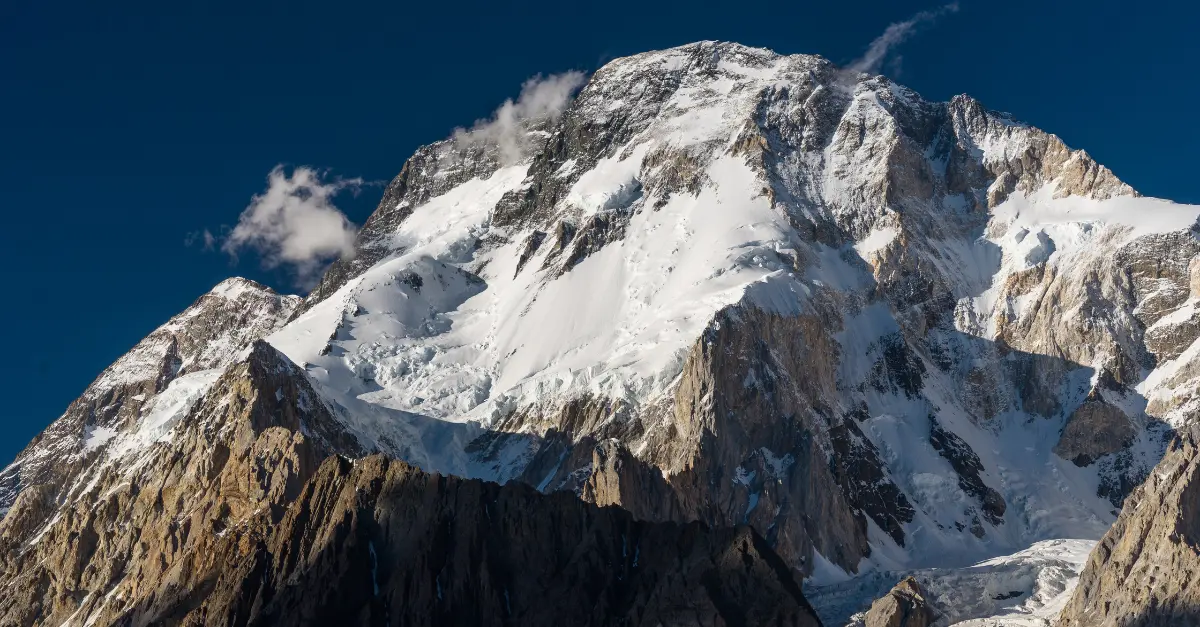

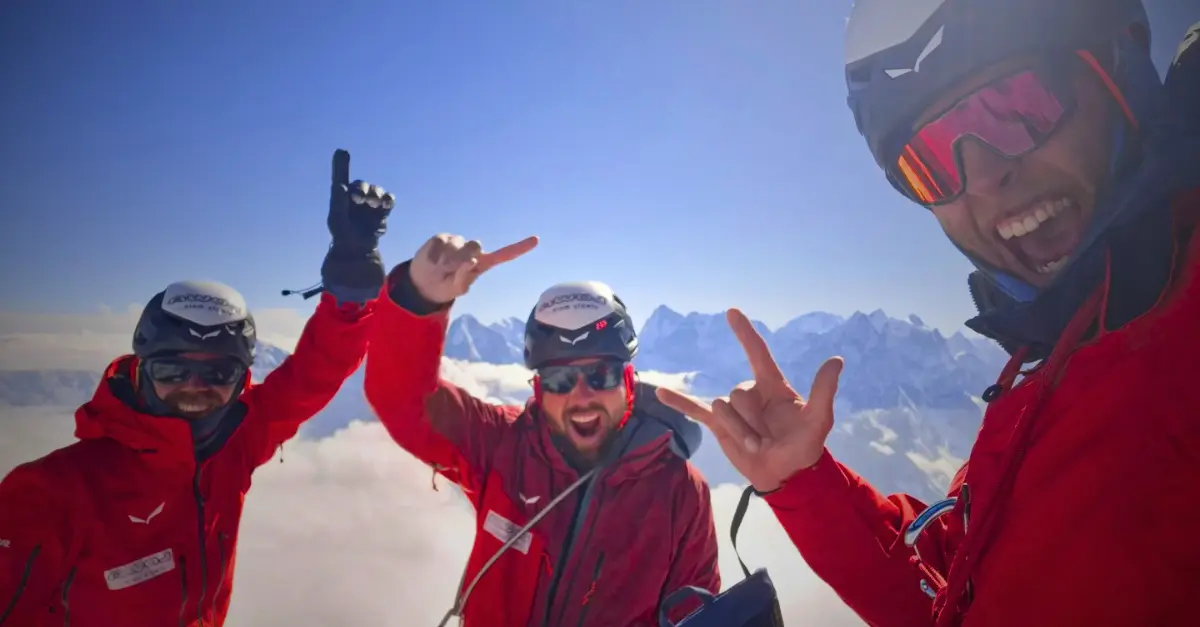
The first ascent of the north face of Kongde Ri Sar (6,093 m) went almost unnoticed last May, overshadowed by the annual Everest circus just a few kilometers away. Three Austrian alpinists — Elias Hangweyrer, Max Muck, and Jakob Ritzl — quietly achieved something no one had done before: opening a direct 1,250-meter route on the north face of this Khumbu summit, within eyeshot of Namche Bazaar. They named their line “The Edge of Patience” (M7+, A2, AI6 R, 2,500 m total development), and the name says it all.
This kind of ascent fascinates me deeply. Not the big-budget expeditions with sherpa teams and five-figure permits, but three guys staring at a wall nobody has ever climbed and asking themselves: why not?
An overlooked face within reach of Namche Bazaar
One of the first questions the Austrians asked when they arrived in the region: how could a 1,250-meter wall remain free of any direct route, just a few kilometers from one of Nepal’s busiest villages?
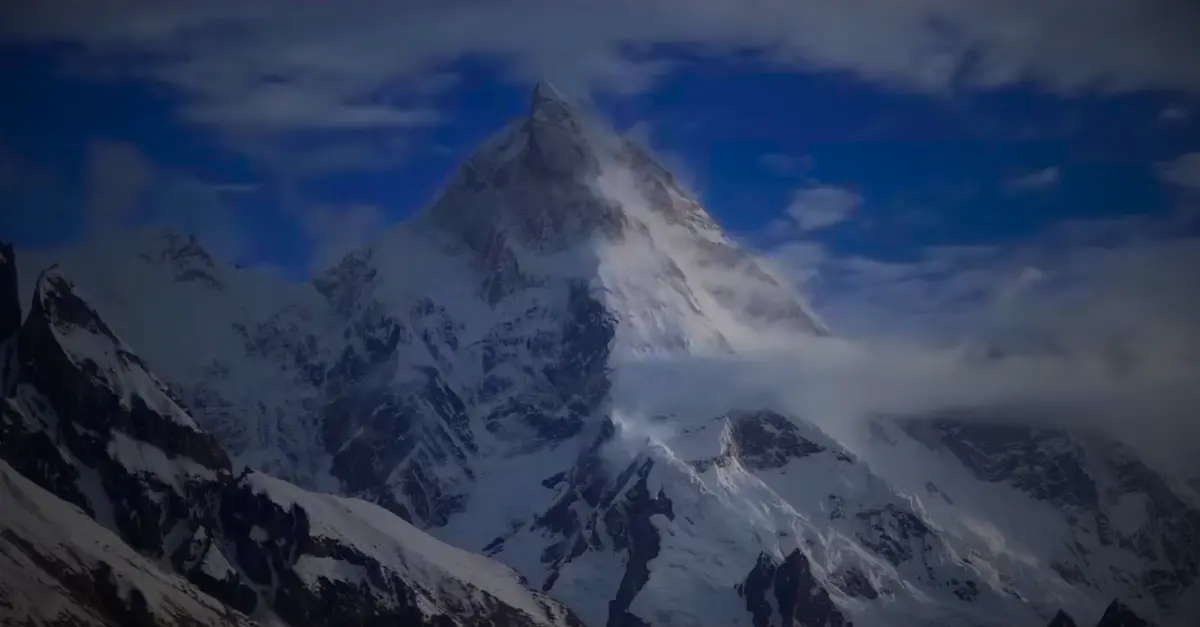
Namche Bazaar is the hub of the Khumbu, the mandatory stopover for every Everest expedition. Thousands of trekkers and mountaineers pass through every year. And yet the north face of Kongde Ri Sar — a massif clearly visible from the valley — had never been directly attempted. Not for lack of interest, most likely, but because eyes stay fixed on the giants: Everest, Lhotse, Ama Dablam.
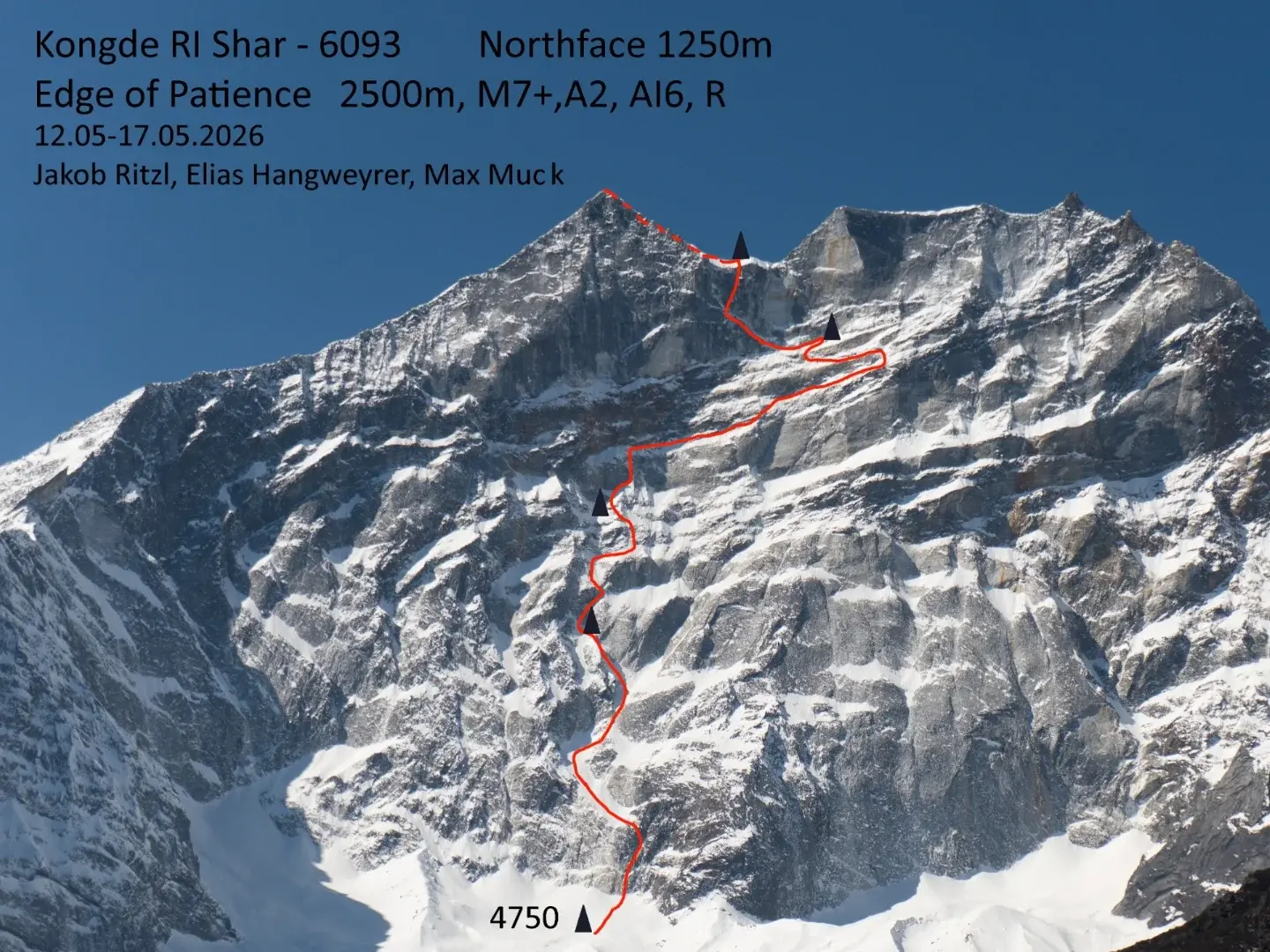
Photo : @elias hangweyrer
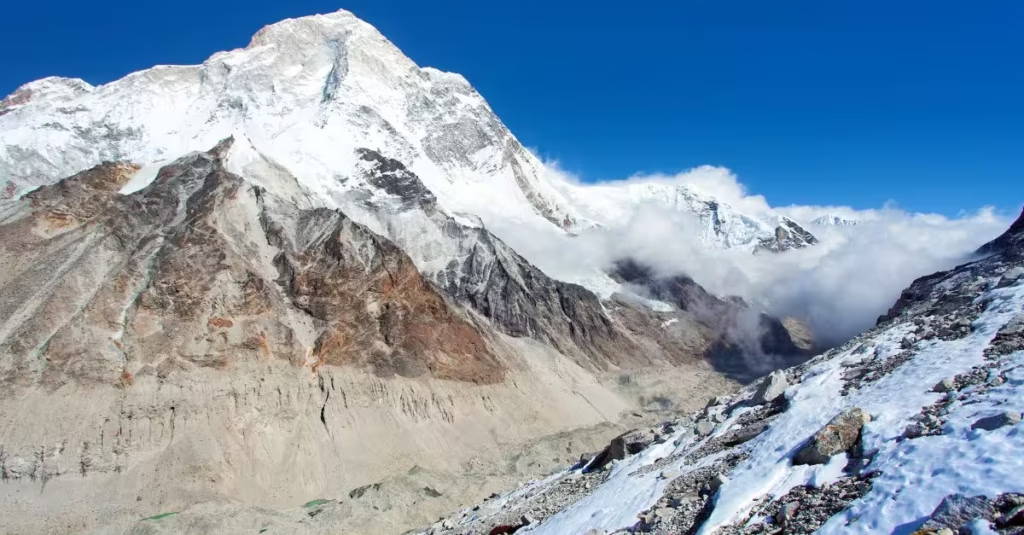
Kongde Ri is a group of summits ranging from 5,500 to 6,200 meters, dominating the western bank of the Dudh Koshi. From Namche, the silhouette is imposing. The north face — exposed, icy, compact — had everything needed to put people off. That’s precisely what drew Hangweyrer, Muck, and Ritzl to it.
The first attempt, 100 meters from the summit
The three men arrived in the area in May 2025, captivated by the north face. Muck fell ill at base camp — the classic high-altitude constraint, nothing is ever straightforward in the Khumbu. Hangweyrer and Ritzl set off on a reconnaissance and launched a first attempt in mid-May.
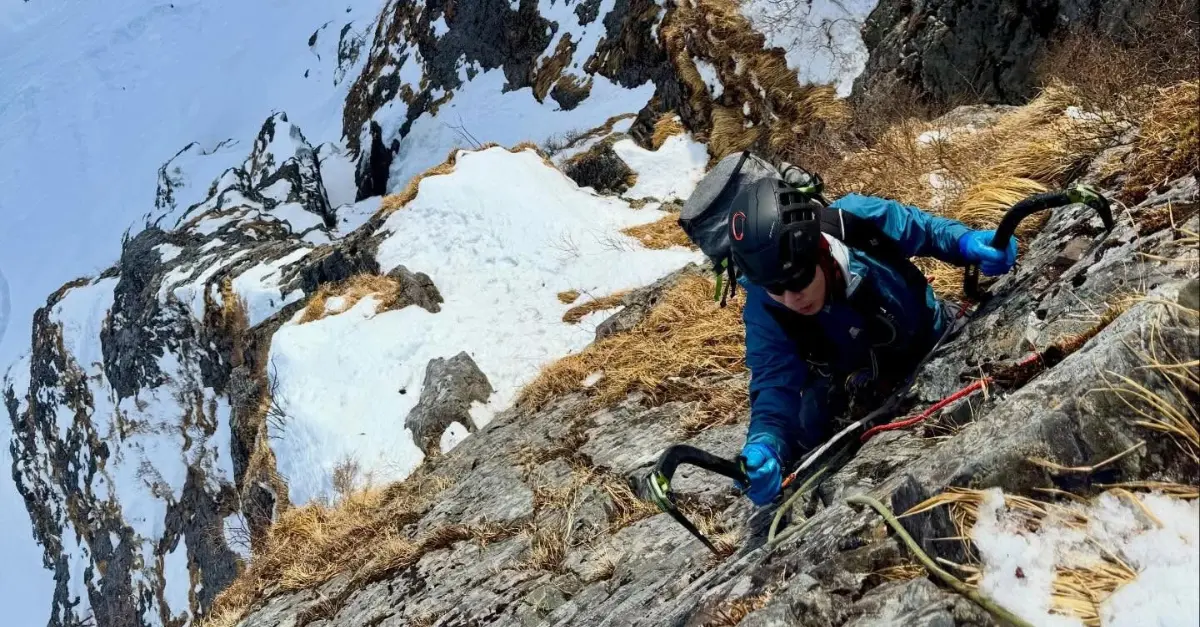
Four days on the wall. Four days pushing through terrain mixing extremely compact rock and variable ice, bivouacking in deteriorating conditions, managing uncertainty pitch after pitch. Then, 100 meters from the summit, the mountain said no. The difficulties were too sustained, the conditions too poor. They turned back.
One hundred meters. That’s the cruel margin that sometimes separates history from a footnote. At that point, the two climbers doubted they could pull it off. The season was advancing, temperatures rising, snow softening. Muck, who had joined them by then, shared that pessimism. They resigned themselves to the idea that this might be over for the season.
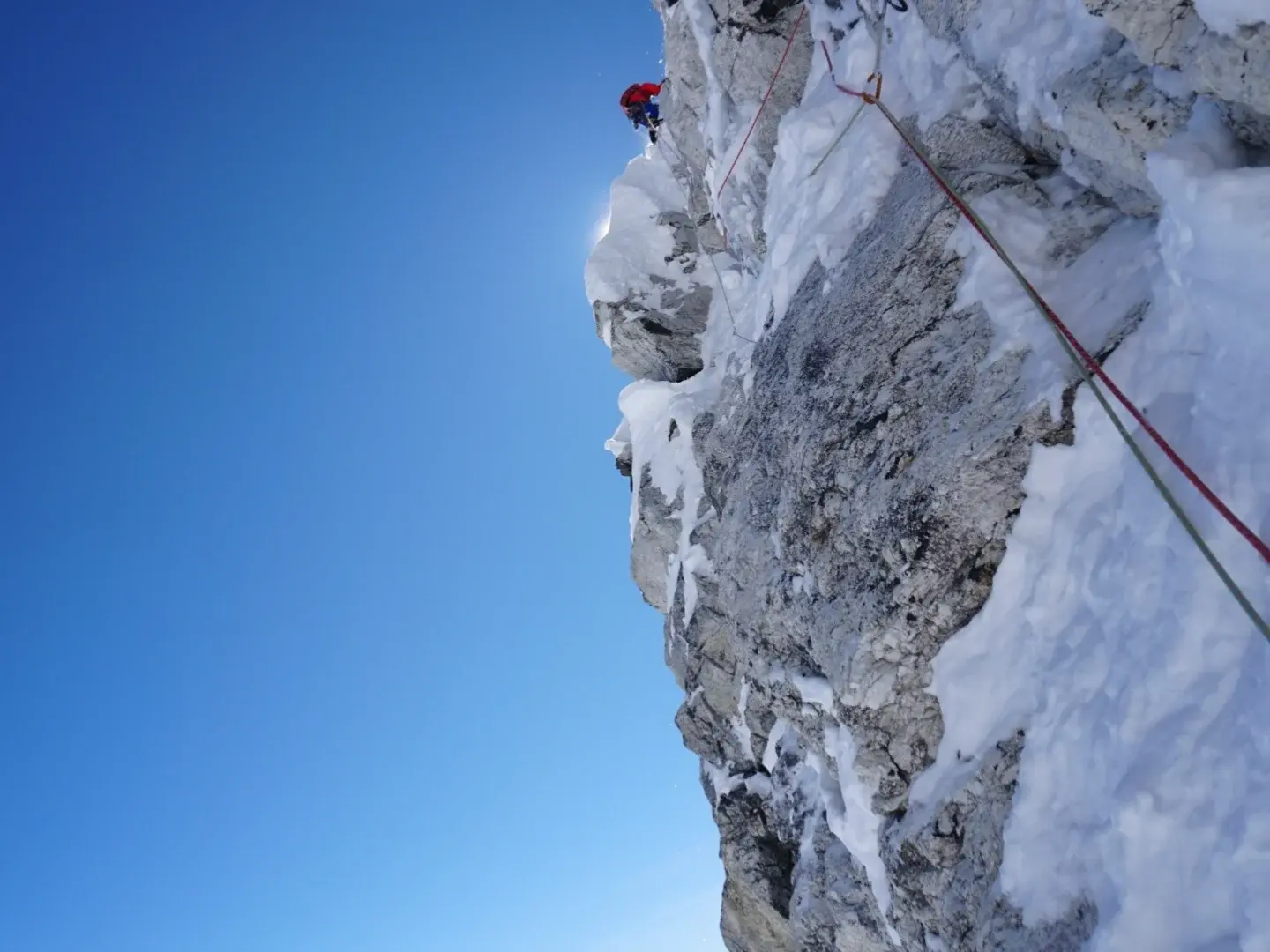
Photo : @elias hangweyrer
The storm that saved everything
Then the Khumbu weather played an unexpected card — in the right direction. A storm front settled over the region. Not good news on the surface, but the storm brought exactly what they’d been hoping for: a cold snap and stabilizing conditions on the north face.
“We were almost certain the season had become too warm and that we wouldn’t get another chance,” Hangweyrer recalled. “Then a storm front arrived and brought exactly the drop in temperature we had been hoping for.”
But the storm didn’t release its grip quickly. Day after day, the three climbers waited in a refuge, watching the sky, grinding through the wait. Weeks of forced immobility. I know that feeling, on a much smaller scale — stuck by snowfall on a pass between Namche and Tengboche during my Khumbu trek, that grinding wait that wears on the mind as much as the altitude does. For them, it was that feeling multiplied by a hundred, with the prize of an unclimbed wall at the end of it.
The weather window didn’t open until the very last week of their stay in Nepal.
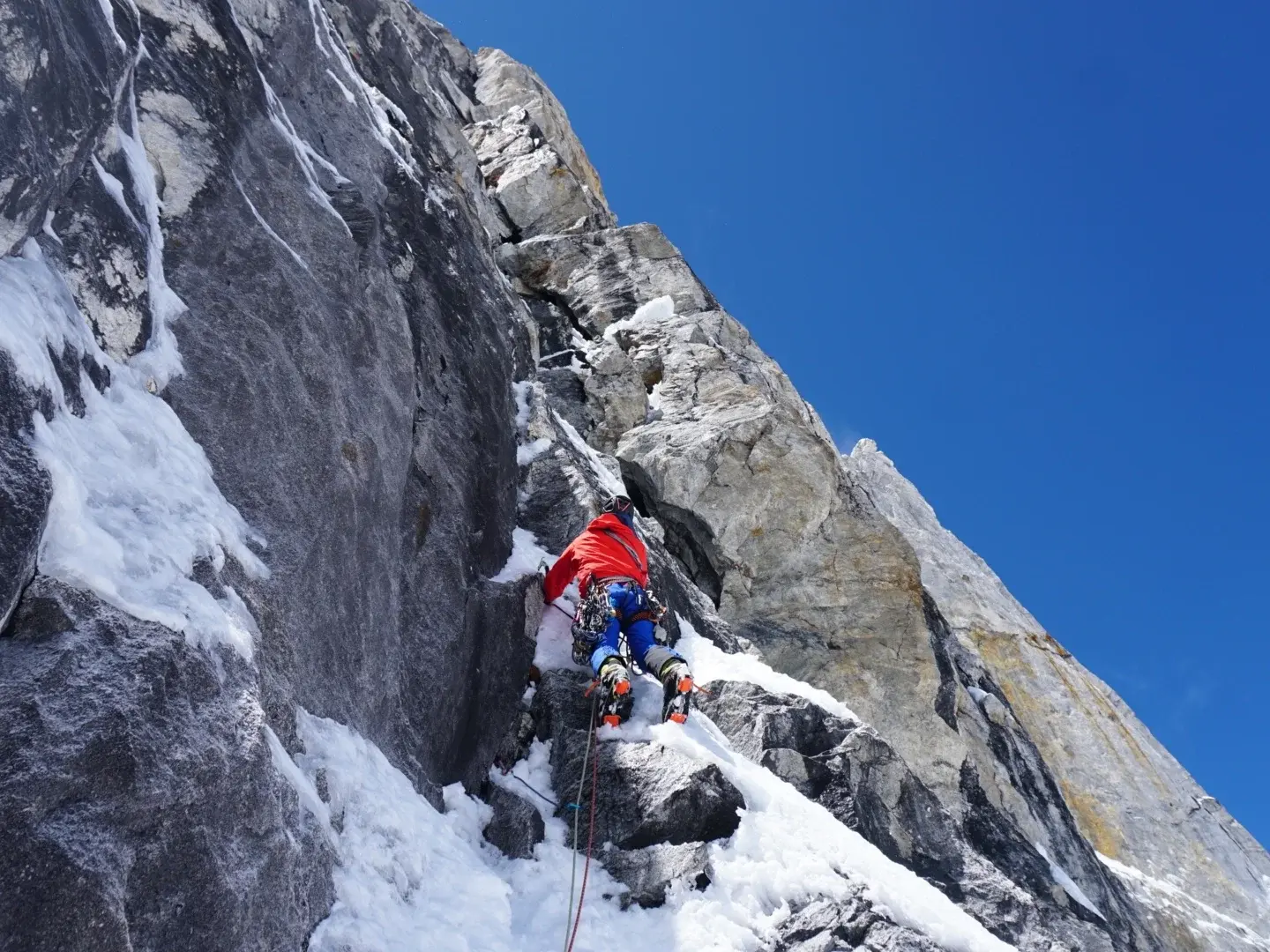
Photo : @elias hangweyrer
Six days on the wall
Back they went, backs against the wall in every sense of the phrase. One day of approach to the base of the face, five days of climbing on the wall itself, one day of rappelling down. Seven days total for an objective that could easily have been written off as “too hard, going home.”
What the climbers describe in their reports gives a precise picture of what AI6 R means on a Himalayan north face:
- Extremely compact rock making protection precarious across many pitches
- Poor ice quality forcing the use of aid climbing (A2) on certain sections
- Wet bivouacs in damp sleeping bags
- Endless traverses to find the path of least resistance
- Unstable rock and unconsolidated terrain throughout the face
- Constant uncertainty about the terrain ahead on the upper pitches
“It was six days of loose rock, thin ice, wet sleeping bags, sleet, endless traverses, and more uncertainty than confidence,” Max Muck recalled.
You read accounts like this differently when you’ve spent weeks walking in the Khumbu yourself, spent nights at 5,000 meters with cold seeping through tent seams. These men were at 6,000 meters, on a wall, for days, with no safety net.
Reaching the summit
The final 30 meters
On the upper sections, Hangweyrer, Muck, and Ritzl were climbing on sight — no topo, no prior knowledge of the terrain. Every pitch could lead to a dead end. On a first ascent, that’s one of the purest forms of commitment that exists: you don’t know whether what you see from below matches what you’ll find up there.
“Even in the last 30 meters, we had to traverse to find the way out,” Hangweyrer said. “The relief I felt when I finally reached the summit snowfield was indescribable. I couldn’t hold back a shout of joy.”
The route’s grade
“The Edge of Patience” is graded M7+, A2, AI6 R with 2,500 meters of total development (for a face of 1,250 m actual height). To put it in context:
- M7+ means sustained mixed climbing requiring full mastery of crampon and ice axe technique on rock
- A2 indicates aid climbing sections on marginal placements
- AI6 corresponds to high-level technical ice climbing
- The R (Runout) flags sections where a fall could be fatal due to insufficient protection
This is a serious route, reserved for highly experienced teams. Not one of the Khumbu’s commercial lines.
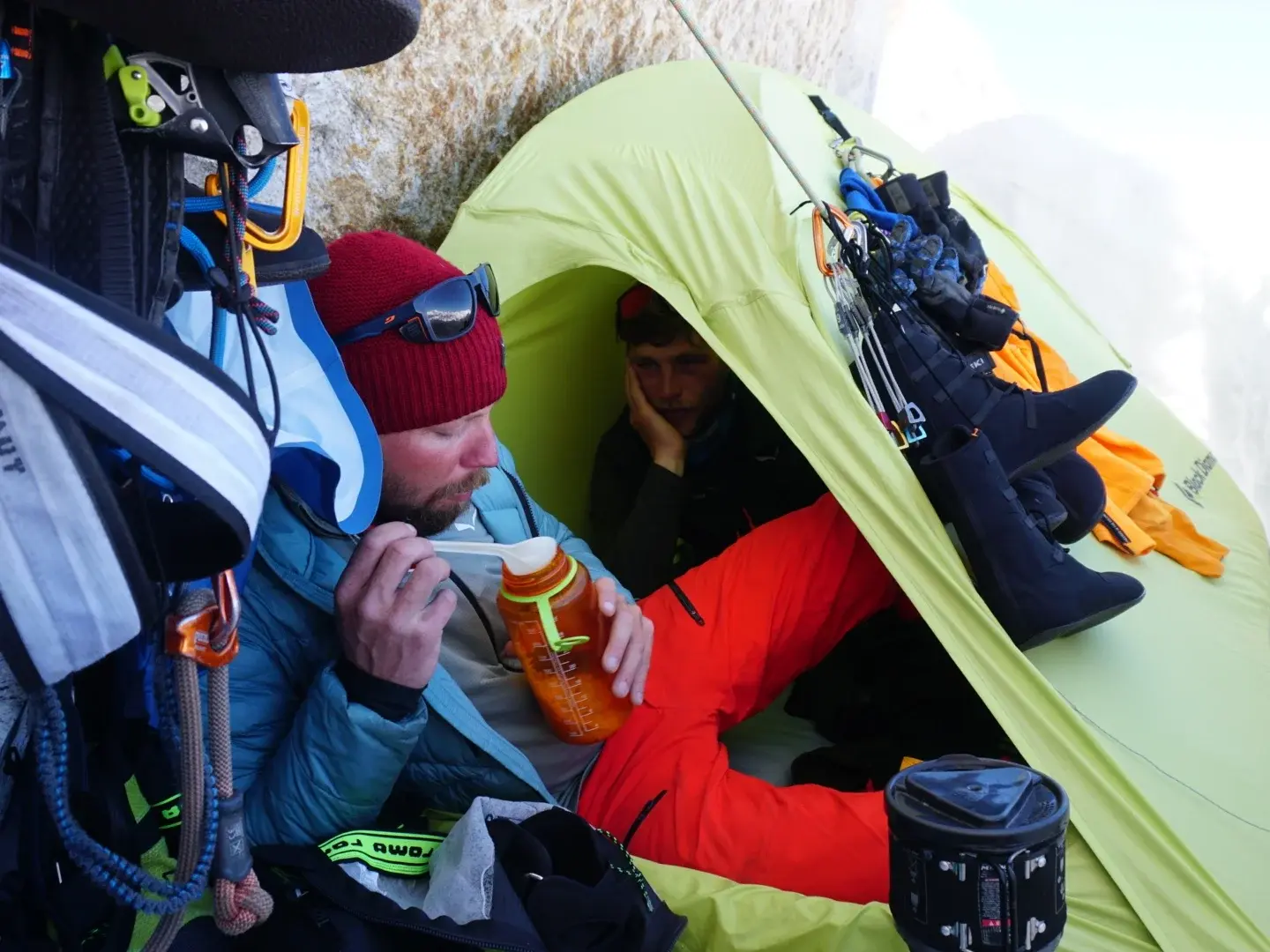
Photo : @elias hangweyrer
The descent and an unforgettable moment
The rappel descent was a further ordeal. The three climbers were exhausted and severely dehydrated, pushing their physical limits. What awaited them at the foot of the wall may have been the most powerful moment of the entire expedition.
“One of the most moving moments came when, somewhere at the base of the wall, long after nightfall, we suddenly spotted headlamps heading toward us,” Max Muck recalled. “Our host family from Thame had come out with tea, drinks, and food, thinking we might come home late and hungry.”
Thame is a small village west of Namche, in the Bhote Koshi valley — one of the most authentic Sherpa communities in the region. That kind of gesture speaks volumes about the particular bond that forms between alpinists and valley residents when you take the time to settle in, to wait, to actually live somewhere rather than passing through.
“After weeks on the mountain, that moment sitting in the grass, under the stars, with a warm cup of tea in hand, will stay with us forever,” Muck said.
I had something close to that feeling after reaching Gorak Shep during my Everest Base Camp trek — that exhaustion that dissolves the moment you find human warmth and a hot drink. But they were coming back from a world first. That cup of tea must have tasted different.
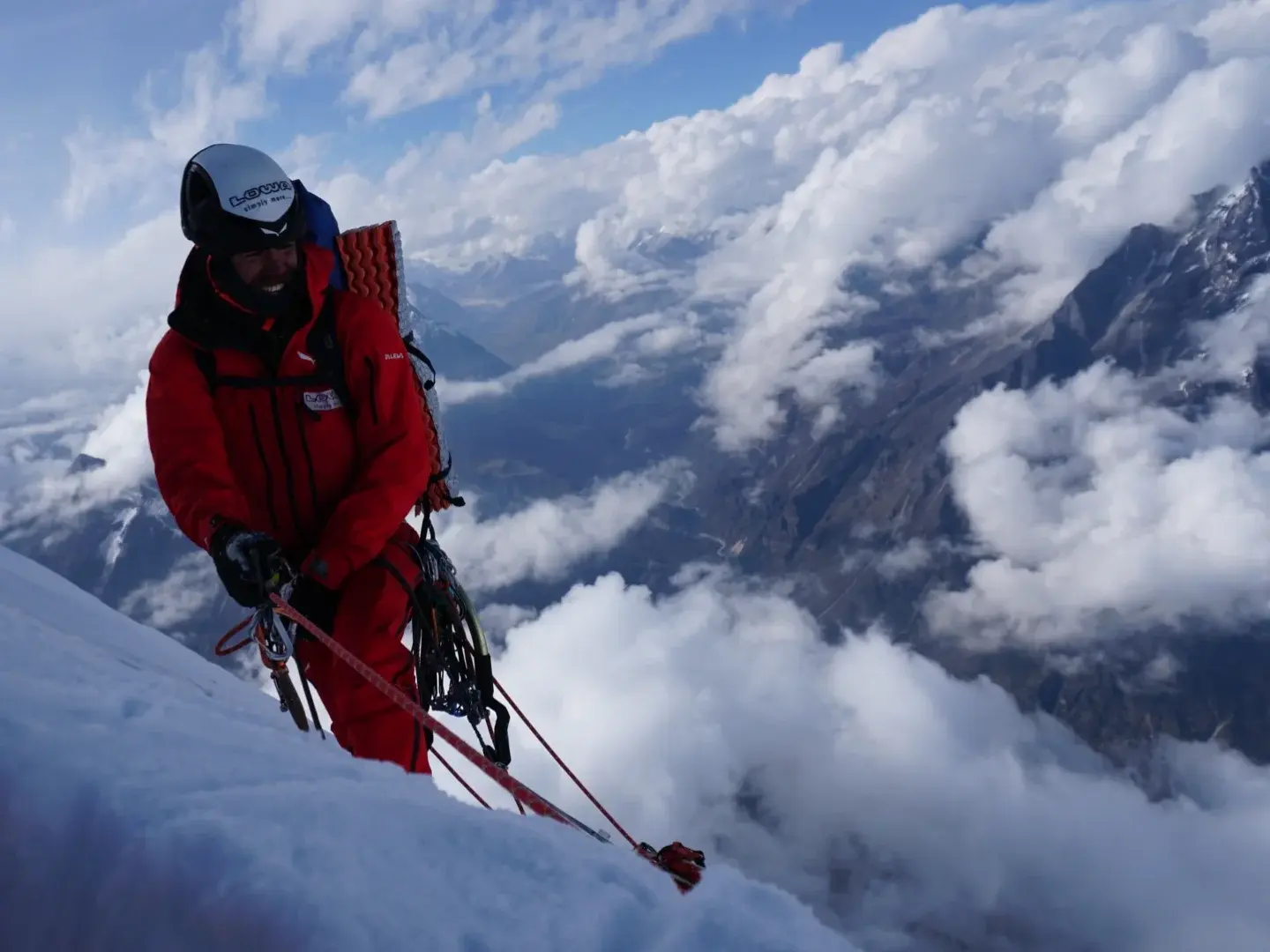
Photo : @elias hangweyrer
Why this ascent matters
In a Khumbu dominated by Everest statistics — record permit numbers in 2025, controversy over death-zone queuing management, high-profile helicopter rescues — the ascent of Kongde Ri Sar by its north face is the quiet counterpoint many alpinists had been waiting for.
No $11,000 permit. No high-altitude sherpas. No fixed tents, no oxygen bottles. Three climbers, a virgin wall, weeks of waiting, and the will not to go home empty-handed.
The name they chose — “The Edge of Patience” — may be the best description of what high-mountain alpinism truly demands: not just physical strength or technical skill, but the capacity to hold on through the wait, to not crack when the weather refuses to cooperate, to set off again when everything is telling you to quit.
That’s what separates the routes that endure from the ones that fade. And this first ascent of the north face of Kongde Ri Sar — I’m convinced we’ll be hearing about it again.
FAQ
What is Kongde Ri Sar and where is it located?
Kongde Ri Sar (6,093 m) is a summit in the Kongde Ri massif, located in Nepal’s Khumbu valley. It sits just a few kilometers from Namche Bazaar, the main logistical hub for Everest expeditions. Its 1,250-meter north face received its first direct route in May 2025.
How difficult is “The Edge of Patience”?
The route is graded M7+, A2, AI6 R with 2,500 meters of total development. It combines sustained technical mixed climbing, aid sections on marginal protection, and high-level ice climbing with committing runout sections. It is reserved for highly experienced alpinists in high-mountain terrain.
Who made the first ascent?
Elias Hangweyrer, Max Muck, and Jakob Ritzl — three Austrian alpinists. They spent several weeks in the Thame area in May 2025, waiting for a viable weather window after a first attempt failed just 100 meters below the summit.
Why had this route never been climbed before?
The north face of Kongde Ri Sar presents particularly demanding conditions: compact rock offering few solid protection placements, variable ice quality, and committing terrain from bottom to top. With the region’s attention dominated by Everest and the neighboring 8,000-meter peaks, the secondary faces of 6,000-meter summits often remain unexplored despite their proximity to Namche Bazaar.