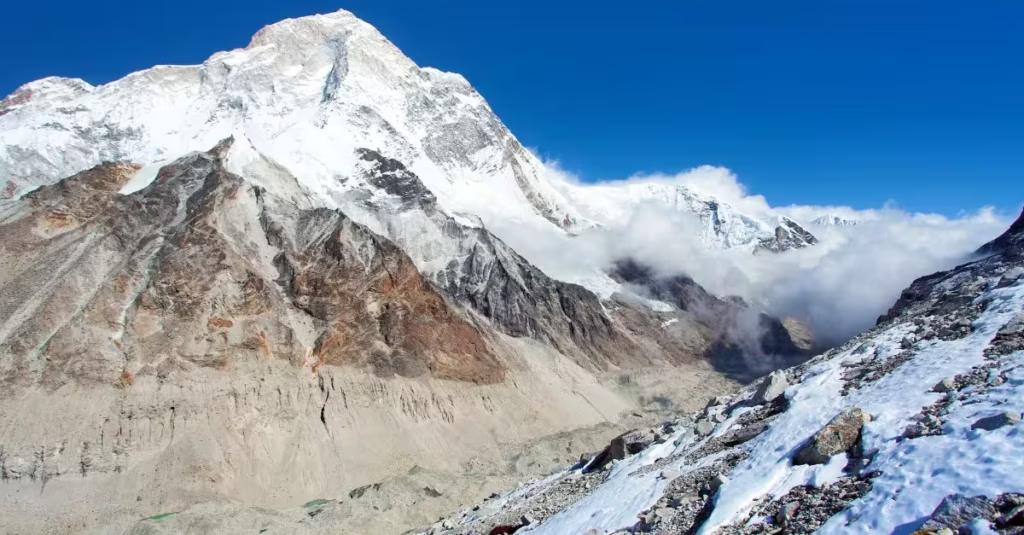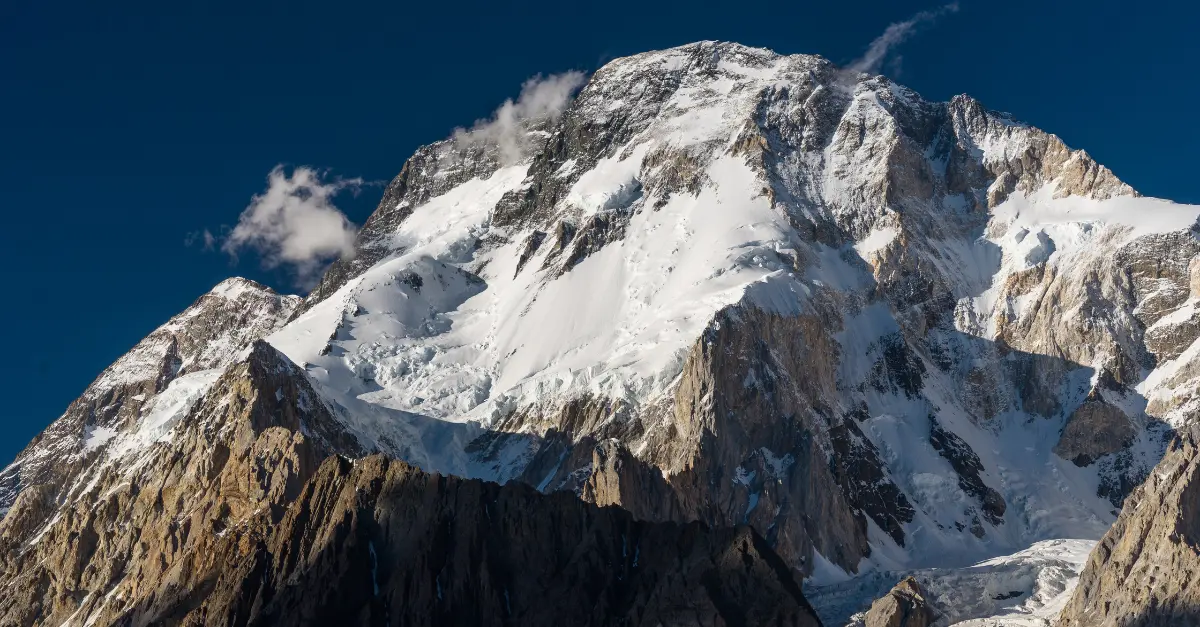

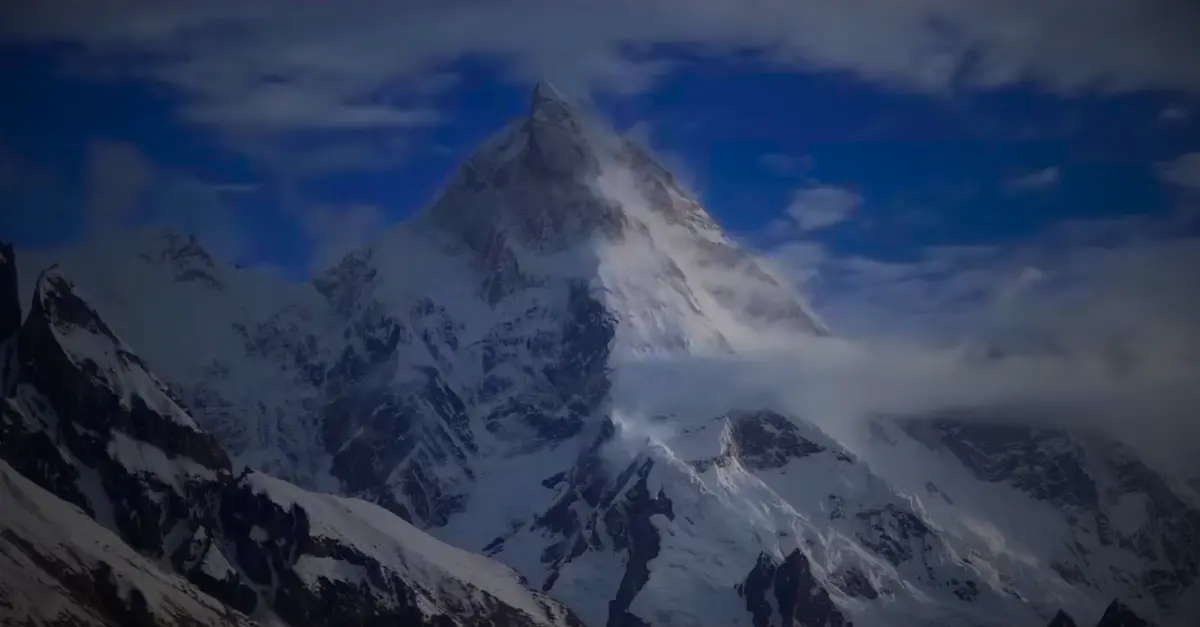
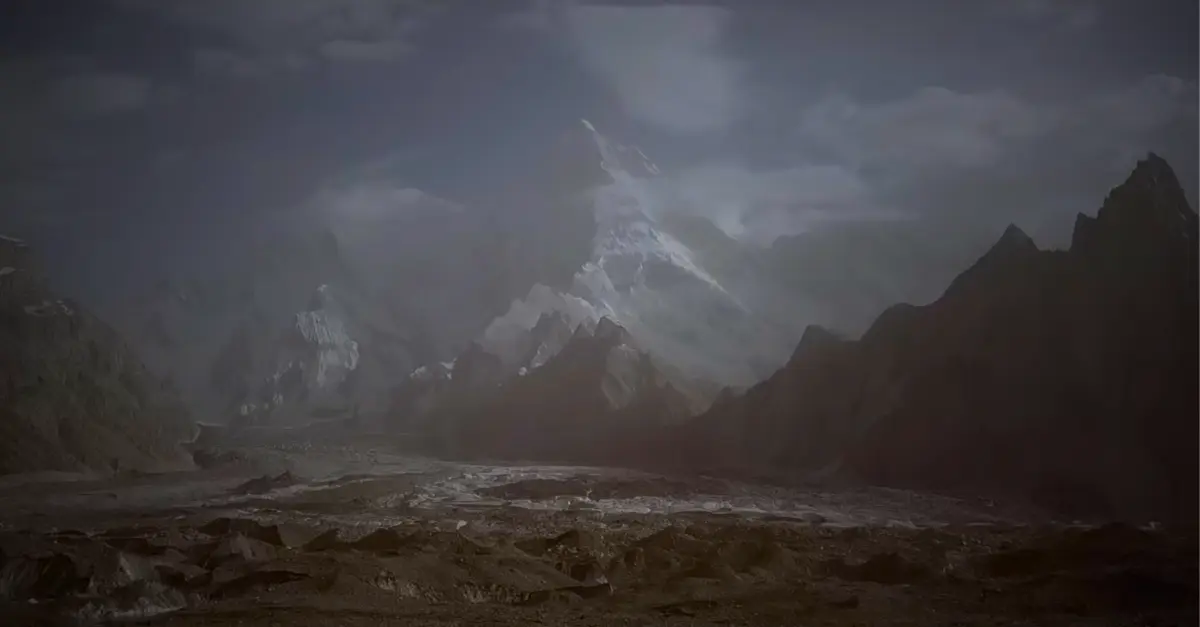
The Masherbrum ascent remains one of the rarest in the entire Himalaya-Karakoram range. This 7,821-meter Pakistani peak, long designated K1 before reclaiming its Balti name, has only been conquered four times since its first ascent in 1960, by roughly fifteen climbers in total. The last confirmed success dates back to 1985, more than forty years ago. Between recurring avalanches, unstable seracs, and tiny weather windows, Masherbrum has kept a reputation as an impregnable citadel that few 7,000-8,000-meter peaks still share today. This summer, Czech and Colombian teams are attempting precisely to join this very exclusive list.
A peak named K1 before becoming Masherbrum again
The story of this giant begins in 1856, during the Great Trigonometrical Survey of British India. Lieutenant Thomas Montgomerie, observing the Karakoram range from a distant outpost in Kashmir, assigned provisional codes to the peaks he spotted: K1, K2, K3… the “K” simply standing for Karakoram. What Montgomerie recorded as K1 corresponds to today’s Masherbrum.
Subsequent mapping surveys uncovered the local Balti name, Masherbrum, often translated as “queen of peaks,” although some older interpretations trace a darker root, closer to “mountain of the apocalypse.” The neighboring K2, meanwhile, never had a widely recognized local name and has kept its alphanumeric designation to this day. A cartographic curiosity that says a lot about how isolated this region is.
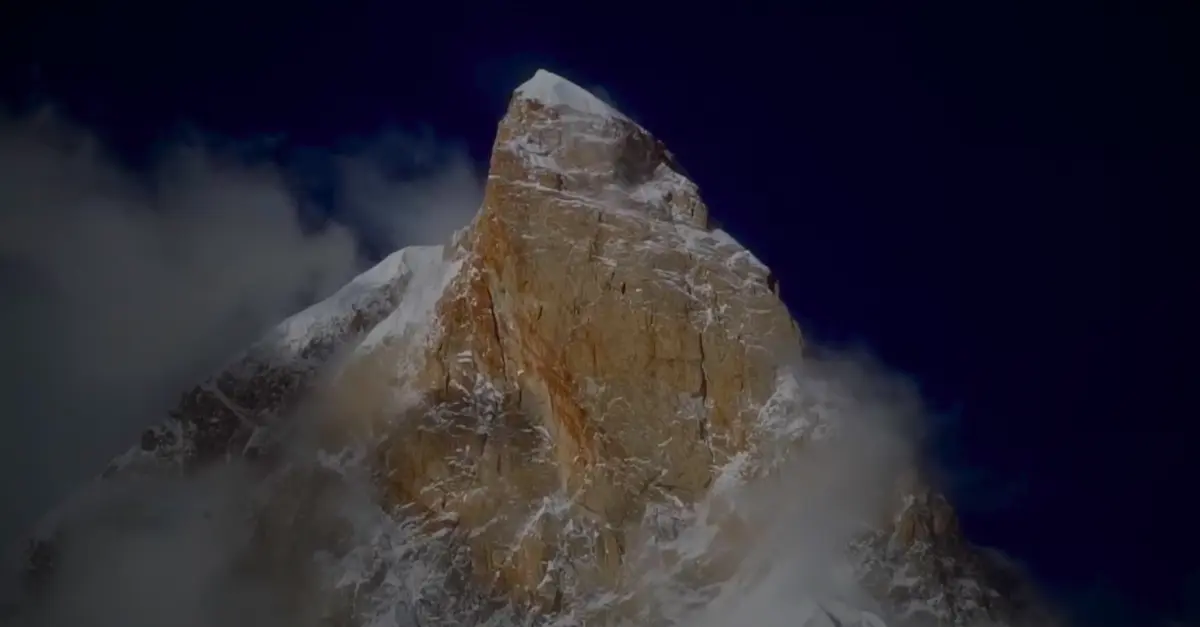
Why so few climbers have succeeded in ascending Masherbrum
On paper, 7,821 meters doesn’t place Masherbrum among the planet’s absolute giants: it ranks 22nd in the world. Yet the attempt-to-success ratio here is catastrophic compared to much higher peaks. There have been around ten failed attempts, the most recent in 2022 with the Czech trio Marek Holecek, Radoslav Groh, and Tomas Petrecek, stopped at 7,300 m on the west face.
The objective dangers that deter expeditions
The mountain alone combines nearly every classic hazard of the high Karakoram. It’s this accumulation, more than any single danger, that makes every attempt so uncertain.
- Frequent avalanches, especially on the southeast and west faces, triggered by sudden snowfall
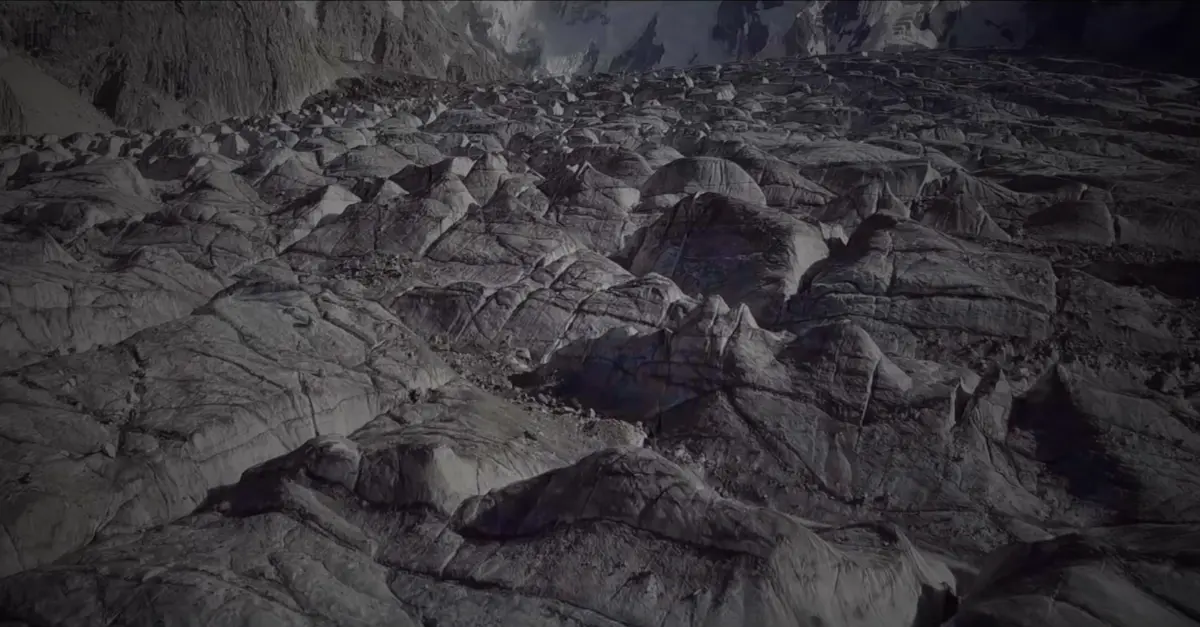
- Unstable serac fields that must be crossed for several hundred meters during the approach
- Summit cornices that are hard to anticipate on the final ridge
- Very short weather windows, sometimes just a few days between storms
- Logistical isolation that complicates resupply and evacuation in case of trouble
This combination explains why the neighboring southwest summit, only slightly lower (7,806 m), has also seen just a single recorded ascent since its discovery.
The 1957 tragedy on the southeast face
Before success came, there were pioneers and their tragedies. After a British attempt in 1938 and a New Zealand expedition in 1955, it was the 1957 Manchester Himalayan Expedition, led by Joseph Walmsley with Don Whillans and Bob Downes, that pushed furthest on the southeast face. The team set up Camp 6 at around 7,315 m, from where Whillans and Geoffrey Smith bivouacked at 7,560 m, just a few hundred meters from the goal, before retreating in the face of unstable snow in the final couloir.
The following night, Bob Downes was struck by a violent cough at Camp 6. He died the next morning, likely from high-altitude pulmonary edema. Whillans and Walmsley, after bringing his body down, made one last push and reached 7,711 m, just about a hundred meters from the main summit, before soft snow forced them to turn back. They left a 90-meter fixed rope on the rocks, a silent witness to an attempt that gave everything except the final victory.
1960, the year of the first successful ascent
Three years later, the American-Pakistani Karakoram Expedition, led by Nick Clinch, finally reached the summit. On July 6, 1960, Willi Unsoeld and George Bell reached the highest point, followed two days later by Nick Clinch and Pakistani Captain Jawed Akhter Khan, who thus became the first Pakistani to climb a major Karakoram peak.
The team used classic siege tactics: fixed ropes, a series of camps up to 7,315 m, and methodical progress through seracs, a dome, and an upper basin. This approach, heavy but proven, remains to this day the only method to have worked without major setbacks on this side of the mountain.
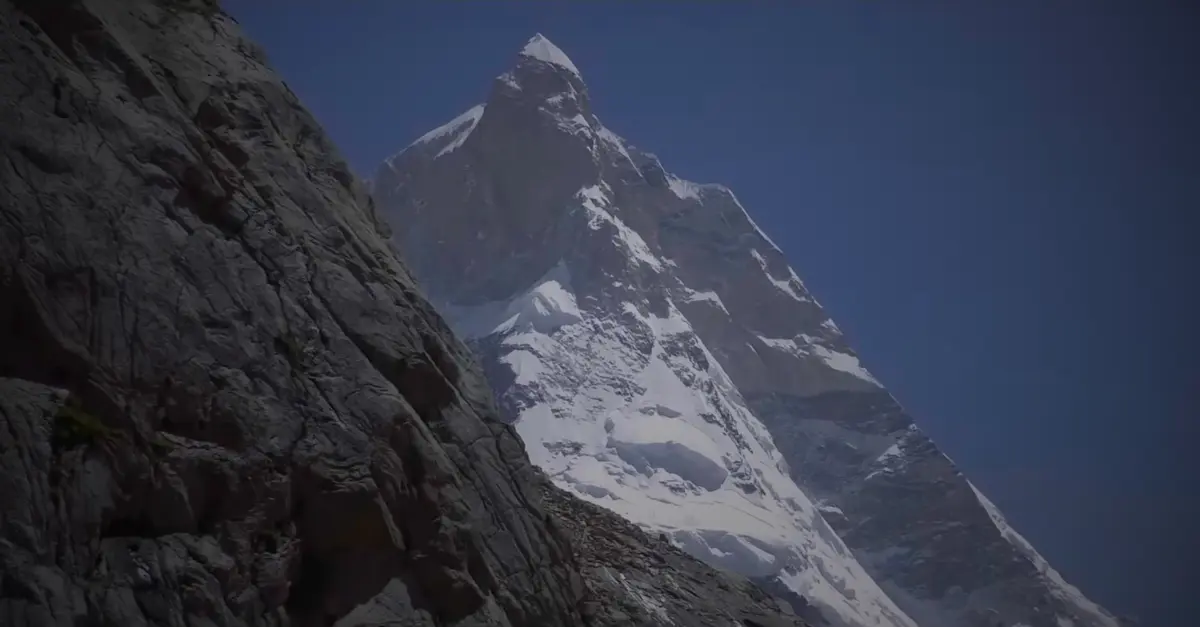
The 1980 alpine-style gamble, between boldness and avalanches
Twenty years later, mountaineering had evolved, and with it ambitions on Masherbrum. French climber Christine de Colombel and American David Belden chose a radically different approach: no high-altitude porters, no fixed ropes, no oxygen. Just two climbers and their packs.
After judging the west ridge too exposed to seracs, the pair fell back on the southeast face. In early August, at 7,200 m, an avalanche swept away their tent and injured Christine de Colombel’s ribs. Sheltering under an ice cliff for several days, they describe in the book Voyage au bout du vide a wait in which every rumble of the mountain could have been the last. The descent that followed, over three days, in a storm and with an injured teammate, shows just how little room for timing errors this mountain allows.
The southwest summit and the 1981 Polish tragedy
The same decade also saw the first and only ascent of the southwest summit (7,806 m), then considered the highest unclimbed point in the Karakoram. A Polish expedition led by Piotr Mlotecki reached it on September 17, 1981, with Zygmunt Heinrich, Marek Malatynski, and Przemyslaw Nowacki.
The descent turned into a nightmare. An improvised bivouac on an exposed ridge, amid worsening weather, cost Malatynski and Nowacki their lives. Heinrich, sheltered on the leeward slope, found them dead in the morning and descended alone, surviving a fall along ice cliffs. His companions’ bodies remained on the mountain. Four years later, a Japanese team climbing the north ridge would find one of the two bodies on their way to the main summit, a chilling reminder of the toll this face has taken.
The last confirmed ascents, in 1983 and 1985
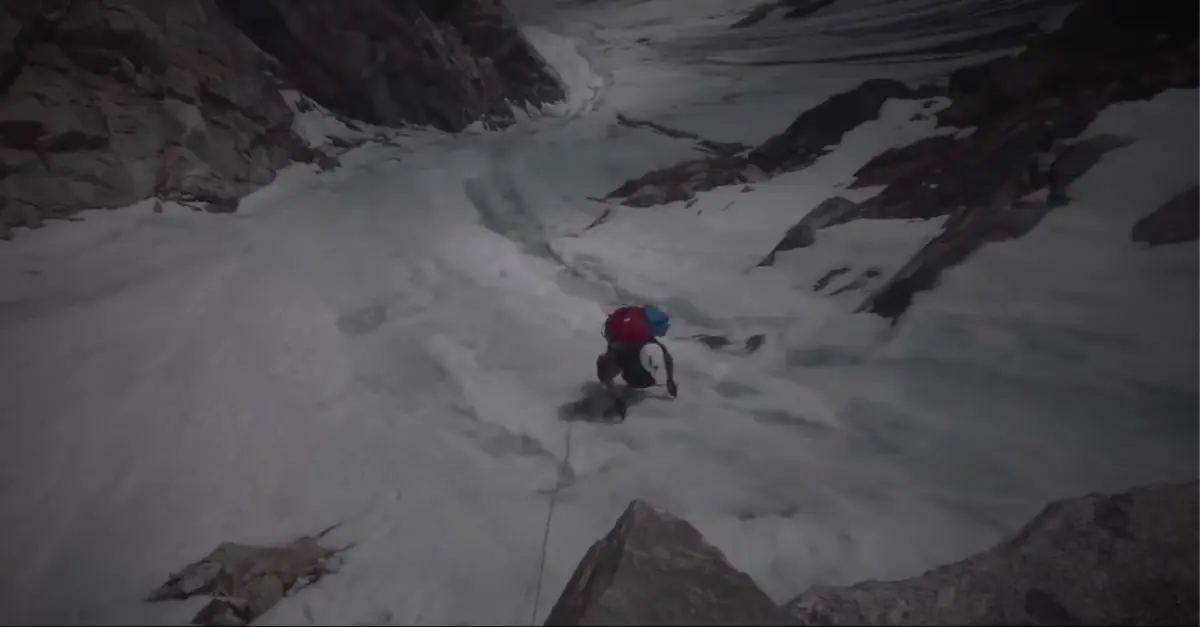
After the American success of 1960, only two more successful windows followed on the main summit. In August 1983, a Japanese team repeated the 1960 route, and two of its members, Masahiro Nomura and Takeyasu Minamiura, reached the top. In July 1985, a Japanese team via the northwest ridge and an Austrian team via a technical mixed rock-and-ice route also completed the ascent.
Since then, no new ascent of the main summit has been confirmed, despite numerous attempts between 1985 and 2022 on the north ridge, the east ridge, the northeast face, and the west face, all halted by avalanches, serac falls, or unstable weather. In 2013-2014, the trio David Lama, Hansjorg Auer, and Peter Ortner advanced only 400 m on the untouched northeast face before giving up due to extreme avalanche risk.
My take on this peak the spotlight forgot
I’ve followed several Karakoram expeditions over the past few years, and Masherbrum keeps coming up in bivouac conversations like a kind of ghost mountain: everyone knows the name, almost no one has been there. What strikes me most in digging into its history is the near-total absence of high-altitude tourism around this peak, unlike its much more publicized neighboring giants. I fully agree with the idea that this low profile comes less from its altitude than from the rare combination of objective dangers it concentrates on a relatively compact terrain.
My view, after talking with climbers who’ve spent time in the region, is that Masherbrum embodies an old-school style of mountaineering, where logistical preparation matters almost as much as pure technique. That’s also what makes alpine-style attempts, like the one in 1980, so striking: they show you can cut down on gear, but never on the real risk the mountain itself poses.
What this summer’s expeditions could change
The Czech and Colombian teams announced for this season are reviving interest in a peak that has stayed quiet since 1985. Radoslav Groh, who already reached 7,300 m in 2022, is among the most credible contenders for a new success. A successful ascent would mark the first in 41 years and would likely renew attention on the routes that remain untouched, particularly the northeast and west faces, where large sections of the wall have never been touched by a climber.
FAQ
How many people have successfully climbed Masherbrum?
Only around fifteen climbers in total have ever set foot on Masherbrum’s main summit throughout history.
- An absolute rarity: This overall feat represents only four successful expeditions in total since the first successful ascent in 1960.
- Forty years of silence: The last official summits date back to the summer of 1985, which speaks to the extreme difficulty of repeating an ascent of this Karakoram giant.
Why is Masherbrum also called K1?
The code K1 comes from the very first mapping work done on the Karakoram range in the 19th century.
- The British origin: In 1856, Lieutenant Thomas Montgomerie numbered the peaks visible from his observation point, designating Masherbrum as the first peak on the list (K1).
- The return to its local name: Unlike the neighboring K2, which kept its technical designation, K1 was quickly replaced in common usage by its traditional, original Balti name: Masherbrum.
What is the most commonly used route to climb Masherbrum?
The southeast face stands out as the mountain’s most classic and historic route.
- The original line: It was via this southeast side that the first American-Pakistani expedition of 1960 succeeded in opening the route to the summit.
- The other sides: The west and northeast faces remain largely untouched and wild, representing major challenges today reserved for the elite of alpine-style climbing.
Is Masherbrum dangerous for experienced climbers?
Yes, Masherbrum is considered one of the most fearsome peaks under 8,000 meters in the world.
- Constant objective hazards: The mountain experiences massive, frequent avalanches as well as unstable serac collapses that directly threaten the access routes.
- Merciless weather: Weather windows there are extremely short and unstable, which explains an overall success rate below 10% for expeditions that venture there.